 Society

PM Hưng meets with Cambodian People's Party, Senate leader Hun Sen
1.
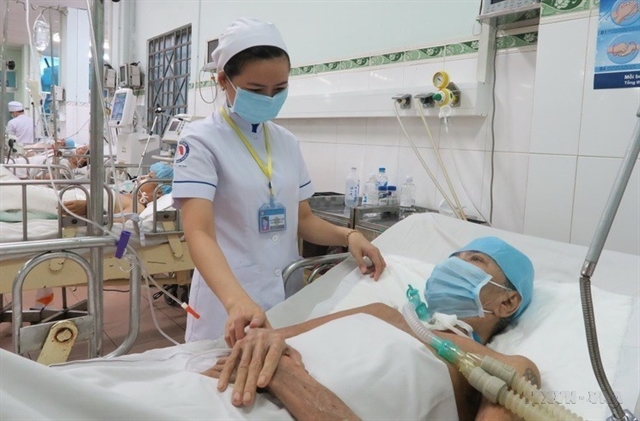 |
| A patient with tuberculosis is treated at Phạm Ngọc Thạch Hospital in HCM City. —VNA/VNS Photo |
HCM CITY — As tuberculosis remains an infectious disease that places a high burden on the population, multi-drug resistant tuberculosis and underdiagnosis are the main challenges to prevent and control the disease, health experts said.
More than 119,000 tuberculosis cases were detected nationwide in 2025, accounting for around 63 per cent of new cases in the community, according to the National Tuberculosis Control Programme report.
The treatment success rate reaches 90 per cent, higher than the global average of 88 per cent.
However, the burden of tuberculosis in Việt Nam remains very high.
In HCM City and the southern region, the number of tuberculosis cases detected is the highest in the country, accounting for around 60 per cent of the total number of tuberculosis cases detected nationwide.
In HCM City alone, a total of 16,148 tuberculosis cases were detected and treated in 2025, accounting for 14 per cent of the country’s total tuberculosis cases.
Explaining the reasons for the increase in tuberculosis cases in HCM City in recent years, Lê Hồng Nga, deputy director of the HCM City Centre for Disease Control (HCDC), said that the disease is transmitted through the air and can be cured if detected early and treated according to the correct regimen.
Although medicine has made many advances in treating tuberculosis, the increase of multidrug-resistant tuberculosis has become a serious challenge for the health system, Nga said.
Not only does it prolong treatment time and increase costs, multidrug-resistant tuberculosis also reduces treatment effectiveness and threatens the goal of ending tuberculosis in the community, she said.
Proactive screening
Dr. Đinh Văn Lượng, head of the National Tuberculosis Control Programme, said tuberculosis screening is currently not included in the list of periodic health check-ups. As a result, around 40-50 per cent of the population has not had adequate access to tuberculosis screening.
Therefore, tuberculosis screening needs to be integrated into routine health checkups and annual free screenings, Lượng said.
Dr Nguyễn Văn Vĩnh Châu, deputy director of HCM City Department of Health, said that the city's health sector has been implementing a large-scale tuberculosis screening campaign in the community with an aim to reach locals in wards, communes, and special zones in the city.
Promoting proactive screening in the community not only helps to detect tuberculosis patients early for treatment but is also a practical action to protect public health and end tuberculosis in the near future, Châu said.
Dr Đặng Thị Minh Hà, deputy director of Phạm Ngọc Thạch Hospital in HCM City, said that the progress in controlling tuberculosis remains slow, with the number of new cases in the 2015-2025 period decreasing by only 8.4 per cent and the number of deaths dropping by 28 per cent.
The target for 2025 was to reduce new cases by 50 per cent and deaths by 75 per cent compared to 2015.
The goal of successful treatment of all forms of tuberculosis has not been achieved due to the ineffectiveness of the public-private partnership model for treatment, she said.
Tuberculosis prevention and control is not only a medical task but also a social responsibility, requiring multi-sectoral coordination and the joint efforts of the community, she added.
As the focal point of the HCM City Tuberculosis Control Programme, Phạm Ngọc Thạch Hospital serves as the critical tertiary referral centre for lung diseases and tuberculosis in the south.
Việt Nam ranks 12th among the 30 countries with the highest tuberculosis burden and 10th for multi-drug resistant tuberculosis, according to the World Health Organization's 2024 Global Tuberculosis report. — VNS
Society
 Society
 Society
 Society
 Society
 Society
 Society
 Society
 Society
 Society
 Society
 Society
 Society
 Society
 Society