 Society

AIMCONNECT 2026 Held in Singapore, Bringing Global Automotive Leaders Together to Explore the Future of AI, Trust and Connected Mobility
1.
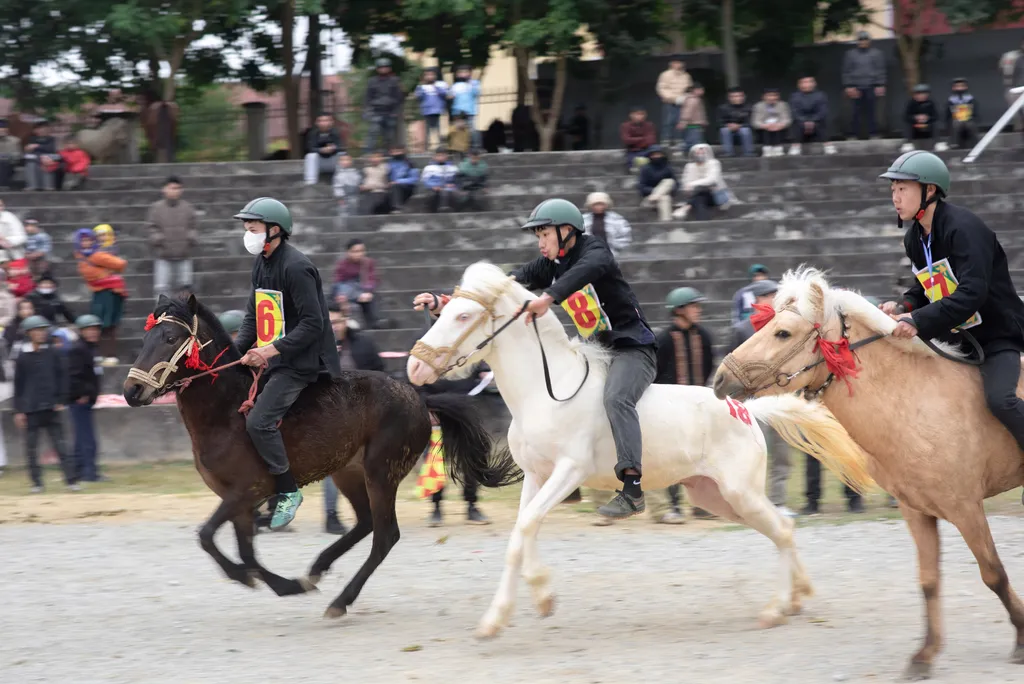 |
| Once an annual festival, Bắc Hà Stadium now hosts the event every weekend to boost tourism and local livelihoods. |
By Bảo Long
For centuries in Bắc Hà, horses have become a defining mode of transport for the ethnic communities settled across the White Plateau. Shaped by each group's way of life, these horses navigate steep, precarious slopes, reaching mountain passes and valleys along rivers and streams, carrying people and goods, enabling trade, and connecting communities across the region.
Today, the landscape has changed. Grey strips of asphalt now snake through the hills, and the roar of motorbikes has largely replaced the clip-clop of hooves in daily transport. But the horse has not vanished; only its role has shifted.
"The horse is not just livestock, but it is the life of the people here. The horse is inextricably linked to the locals. In the past, horses went to the fields and the market, but now they have shifted towards tourism horses," said Thàn Văn Duy, chairman of the Bắc Hà horse club.
With bold, innovative ideas from local youth, supported by the active involvement of authorities, horses have emerged as a new cultural ambassador for Bắc Hà, attracting both domestic and international visitors and helping drive the region's tourism and economic development.
Reimagining the Equine Economy
The annual horse racing festival in Bắc Hà, a tradition spanning hundreds of years, has long stood out for the unique cultural identity of this highland region. Each year, as the races begin, crowds of visitors pack the Bắc Hà stadium to capacity. Many are unable to get in, while others who miss the occasion altogether often speak of their regret at having missed such a remarkable and distinctive festival.
For residents themselves, this has also become a limitation, as they are unable to fully capitalise on the advantages already available.
"If we only organised the race once a year, people would no longer be motivated to raise horses," Duy shared. "Raising a horse for an entire year is exhausting and costly. If the horse has no purpose other than one race, people will stop breeding them.”
To address this challenge, local authorities and the horse club have begun rethinking the structure of the festival itself.
"The government has organised this weekly horse racing festival through the organising committee, while the horse club manages the participants," Duy explained. "The authorities are very supportive of horse racing, actively promoting and developing these weekly events to boost the local brand."
With weekly races, locals can raise and train their horses more regularly, creating a steady stream of income. This frequency draws more tourists to Bắc Hà, allowing every resident to benefit from the ripple effect.
"With this weekly format, the club requires a larger membership than the number of participants in a single event. We currently have 32 horses competing per week. We draw lots to decide which horses race, ensuring those that compete this week rest the next to maintain their health. If a horse is sick or injured, we can easily swap them out," Duy added.
A key attraction for tourists
"Even though I've watched horse racing many times, I feel excited every time the jockeys in Bắc Hà demonstrate their galloping skills without a saddle or reins. They use only their bodies to control the horses. That is the unique feature of Bắc Hà horse racing," Hải An, a visitor, shared with Việt Nam News.
The strategy is working. The stadium now echoes with a polyglot of cheers as international tourists join the local frenzy. For Sarah, a visitor from Austria, the experience is a refreshing contrast to the disciplined races of her homeland. "It's really interesting how the people cheer for their favourite rider. It's fun to see that energy," she says.
Thomas Müller, a visitor from Spain, echoes this sentiment: "The vibe of the stadium is very cool. Even if I don't fully understand all the rules, the passion is infectious." This international appeal elevates the horse from a local agricultural tool to a global cultural product, bringing vital tourism revenue into the district.
As 63-year-old local Lâm Văn U puts it simply: "More tourists, more fun. And the more people come, the better our lives become."
Sustainable tourism development
Compared to Sa Pa, a well-known tourist destination, Bắc Hà retains a more untouched charm, with its vibrant ethnic markets and distinctive cultural traditions. With horses now leading the way for visitors, local people have begun to draw on these unique cultural elements to create memorable experiences and encourage tourists to stay longer.
"I've introduced horse-riding experiences at the field and organised tours where visitors ride up the hills to see the grasslands, terraced fields, and streams. People learn how to ride and really enjoy it," said Thàn Văn Duy.
Nguyễn Thị Tuyết, a visitor from Phú Thọ experiencing horse riding for the first time, shared: "When I sat on the horse, I felt a real sense of closeness. I believe that if local people can successfully develop this tourism ecosystem, their livelihoods could improve significantly."
Perhaps the most vital sign of this economic shift is the enthusiasm of the youth. In many traditional villages, the younger generation is fleeing to the cities. In Bắc Hà, however, the horses are keeping the kids rooted in their culture.
Thàn Văn Duy, a veteran rider, watches the changes in the local community with pride and a sense of accomplishment. He said, "The youngsters these days are also passionate about horses and are preserving the cultural identity of Bắc Hà, which makes me very happy. They really cherish the horses."
He added, "Sometimes, kids in 12th grade who haven't gone to university yet, when they are at home, as soon as they get back from school, they take the horses out for training. Even after they go away for university, when they come back, I'm sure they will return to the horses."
Through the dedication of the older generation and the passion of the youth, the Bắc Hà horses continue to endure through the currents of modernisation, maintaining their vital role in the lives of the local people. VNS
Society
 Society
 Society
 Society
 Society
 Society
 Society
 Society
 Society
 Society
 Society
 Society
 Society
 Society
 Society