 Society

Weaving the unique heritage of the Thu Lao
1.
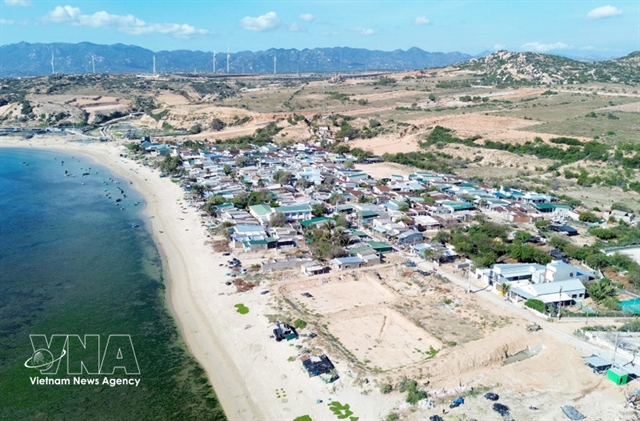 |
| The Ninh Thuận 1 Nuclear Power Plant project is planned to be built in Khánh Hòa Province. — VNA/VNS Photo |
HÀ NỘI — Deputy Prime Minister Nguyễn Chí Dũng has signed Decision No. 438/QD-TTg approving Việt Nam’s Strategy for the Development and Application of Atomic Energy for Peaceful Purposes to 2035, with a vision to 2050.
A key objective of the strategy is to broaden the use of radiation and radioisotopes across key economic and technical sectors.
Trần Chí Thành, director of the Vietnam Atomic Energy Institute under the Ministry of Science and Technology, underscored that in the coming period, the institute and its affiliated units will continue promoting their strengths to study the safe and secure application of atomic energy, contributing effectively to socio-economic development goals.
In this new phase, the Hanoi Irradiation Centre has been tasked with enhancing its research capacity, investing in advanced laboratories and accelerator systems, and prioritising the development of high-quality human resources. These efforts aim to accelerate technology transfer and orient research towards practical applications. The centre is also targeting the irradiation treatment of fresh fruits for quarantine purposes prior to export to the US, alongside advancing radiation, accelerator, and electronic technologies, as well as the production of radiopharmaceuticals for healthcare and daily life.
Phan Việt Cương, director of the Hanoi Irradiation Centre, highlighted plans to strengthen research and deployment capacity, establish leading research groups in radiation and accelerator technologies and radiochemistry, and develop atomic energy-based products serving national development. The centre is also focusing on emerging technologies such as artificial intelligence, expanding radiopharmaceutical production using accelerator systems, and enhancing international cooperation to gradually access advanced global technologies.
In recent years, the centre has conducted initial studies to promote irradiation technology in sterilisation and preservation, extending the shelf life of goods. Currently, the centre processes over 100 tonnes of fruit annually for export to Australia and is upgrading its infrastructure to meet requirements for participation in the US pre-clearance irradiation programme under the Animal and Plant Health Inspection Service (APHIS).
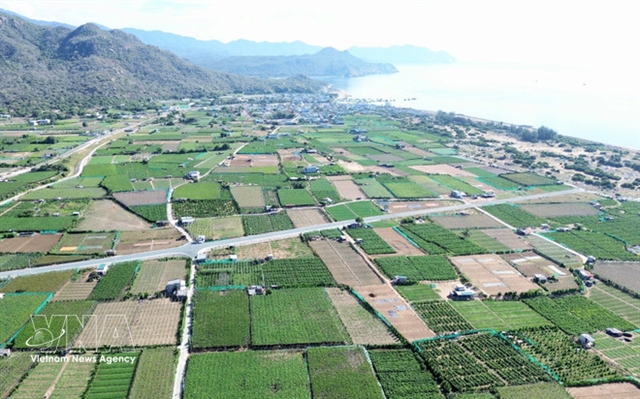 |
| The area for Ninh Thuận 2 Nuclear Power Plant project. — VNA/VNS Photo |
In nuclear medicine, the 18F-FDG product and Vinatom-FDG radiopharmaceutical have been officially licensed and introduced into early cancer diagnosis. Approximately 200,000 mCi of Vinatom-FDG is supplied annually to major hospitals, significantly supporting diagnostic and treatment needs.
Nguyễn Nhị Điển, former vice director of the Vietnam Atomic Energy Institute and chairman of the Việt Nam Atomic Energy Society for the 2024–29 term, affirmed the vital role of atomic energy applications in industry, agriculture, healthcare, and environmental protection. Notably, Việt Nam has developed a nationwide network of X-ray, nuclear medicine, and radiotherapy facilities, and employed advanced techniques such as CT, PET/CT, and accelerator-based radiotherapy systems.
To realise the strategy’s goals and fulfil national development priorities and international commitments, Việt Nam will continue to expand and enhance atomic energy applications, while strengthening policy advisory, oversight, and nuclear safety and security frameworks in the years ahead. — VNA/VNS
Society
 Society
 Society
 Society
 Society
 Society
 Society
 Society
 Society
 Society
 Society
 Society
 Society
 Society
 Society