 Society

Việt Nam defeat Northern Mariana Islands 20-0, set national record
1.
 |
| Mr. Ngô Đình Loát, Deputy Director of the Hanoi Sub-Department of Livestock, Fisheries and Veterinary Department, speaks at the event. — Photo courtesy of the organiser |
HÀ NỘI — Hà Nội has stepped up efforts to curb rabies and reshape the dog and cat meat trade, with health and veterinary staff receiving training on disease prevention and sustainable livelihoods at a workshop held on Tuesday.
The workshop was jointly organised by the Hà Nội Sub-Department of Livestock, Fisheries and Veterinary Medicine, Soi Dog Foundation and the Behaviour Change Communication for Sustainable Development Company (SBCC Vietnam).
Participants were updated on rabies exposure management, pet vaccination techniques and shared experience on inter-agency coordination in disease prevention and control.
Discussions focused on State management in rabies prevention and control, alongside measures to strengthen coordination in regulating the slaughter, trade and transportation of animals and animal products.
Nguyễn Đình Đảng, head of the sub-department, stressed the pivotal role of grassroots officials in implementing effective rabies prevention measures.
“Veterinary and local management officials must tighten control over animal slaughter, trade and transportation; strengthen food traceability, firmly address violations and eliminate business establishments that fail to meet biosafety and environmental standards. This is a direct and urgent responsibility of the sector given the complex rabies situation currently unfolding in the capital,” Đảng said.
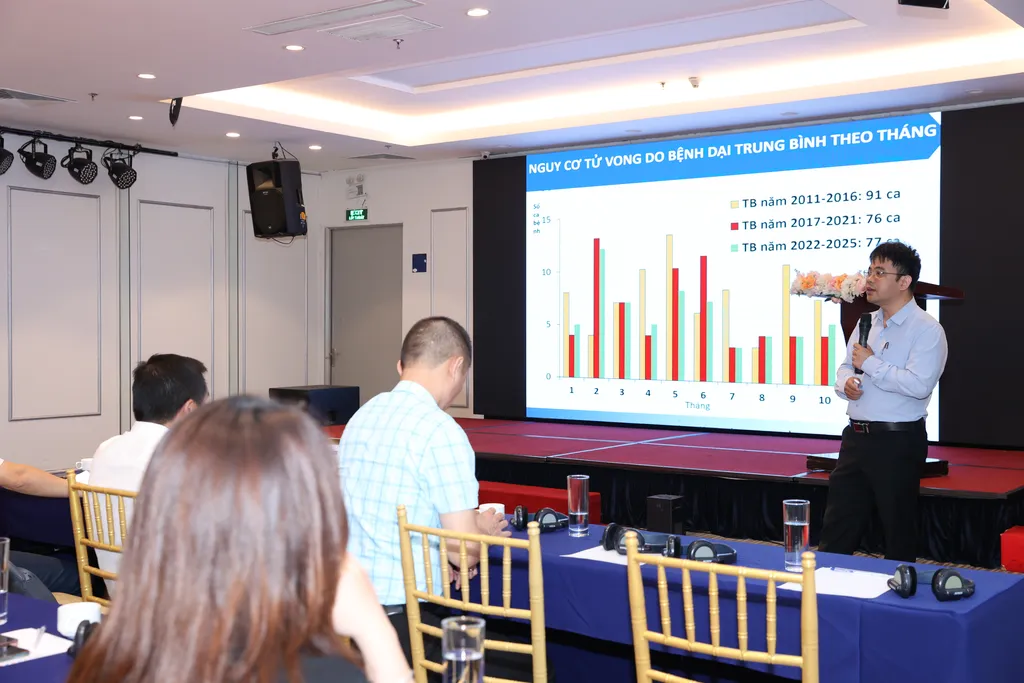 |
| Dr. Đào Hữu Thân, Deputy Director of the Hanoi Centre for Disease Control and Prevention, speaks at the event.— Photo courtesy of the organiser |
Participants also examined the link between dog and cat meat trade and slaughter activities and the risk of rabies transmission, while discussing strategies to achieve the goal of zero human rabies deaths by 2030, as well as communication solutions and livelihood transition support for affected households.
Alongside disease control, the workshop set out directions for public communication to promote more sustainable consumption practices, including gradually reducing the raising of dogs and cats for meat and encouraging a shift from red meat to poultry in line with safe nutritional standards.
With recent rabies outbreaks recorded in Hà Nội, residents were also warned against direct contact with unvaccinated raw dog and cat meat, identified as a potential source of transmission.
In the longer term, the capital is aiming for a more regulated and modern urban model, in which the slaughter and trade of dog and cat meat are progressively controlled and transitioned to more sustainable economic activities.
The training programme also addressed behaviour change communication and pathways for sustainable livelihood transitions among those engaged in the trade.
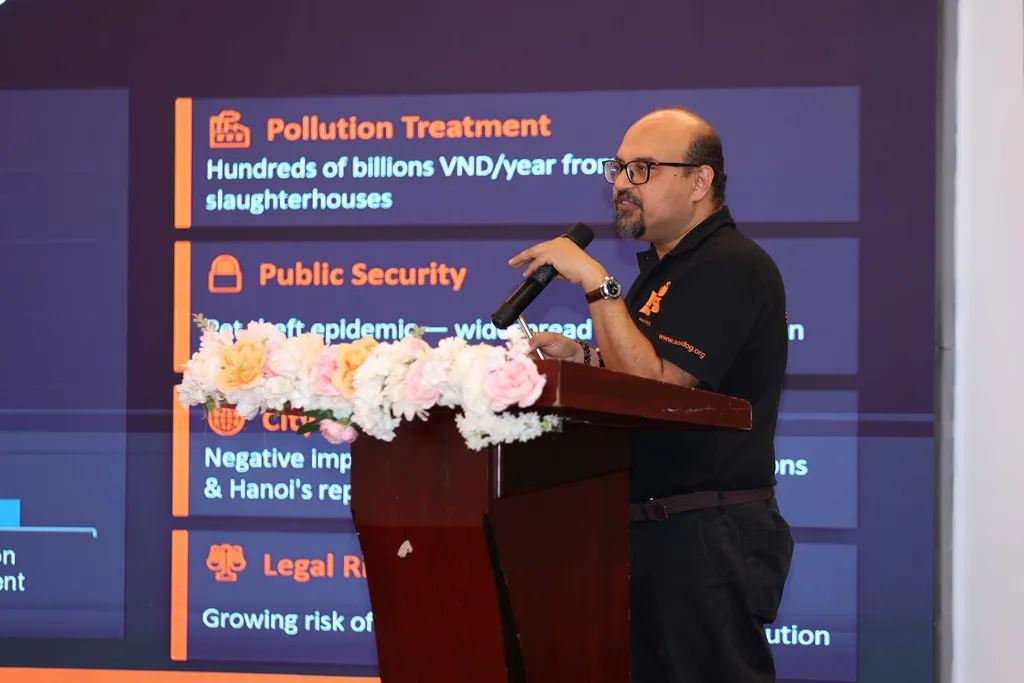 |
| Mr. Faizan Jalil, Senior Manager at Soi Dog Foundation, speaks at the workshop. — Photo courtesy of the organiser |
Senior Manager at Soi Dog Foundation, Faizan Jalil, said: “Animals transported and slaughtered outside veterinary supervision represent the weakest link in the disease prevention chain. That is why the role of grassroots officials in ensuring that business and slaughter operators comply with regulations and animal welfare practices is a critical factor.
“Strictly controlling animal slaughter and trade is the first line of defence in effectively preventing zoonotic diseases, most notably rabies. In the long term, a roadmap must be implemented to transition all dog and cat slaughter and trade households to more appropriate economic models, working toward a safe, civilised and humane urban environment.”
Ms. Bùi Thị Duyên, Director of SBCC Vietnam, emphasised: “Community behaviour change cannot succeed without a team of grassroots officials who both guide awareness and enforce and monitor the behaviour of residents and slaughter and business operators. SBCC Vietnam accompanies the project in developing communication tools relevant to local realities to support officials in fulfilling that dual role.”
The workshop forms part of the project Piloting a Model for Rabies Prevention and Sustainable Economic Development - Phased Transition of Dog and Cat Meat Trade Activities in Selected Wards of Hà Nội, approved by the municipal People’s Committee on July 24, 2025.
The project aims to support the National Target Programme to achieve zero human rabies deaths by 2030, while strengthening management capacity, improving disease control and gradually aligning animal welfare standards with international practices.
According to the latest statistics, since the beginning of 2026 Việt Nam has recorded 16 suspected rabies cases and deaths across 10 provinces and cities. Hà Nội has reported animal rabies outbreaks in three hamlets in two communes, Hòa Lạc and Hạ Bằng, with 28 animals culled, including 27 dogs and one cat. A significant number of people have required post-exposure prophylaxis treatment, underscoring the continued complexity of the disease and the need for coordinated and decisive action. — VNS
Society
 Society
 Society
 Society
 Society
 Society
 Society
 Society
 Society
 Society
 Society
 Society
 Society
 Society
 Society