 Society
Weaving the unique heritage of the Thu Lao
1.
|
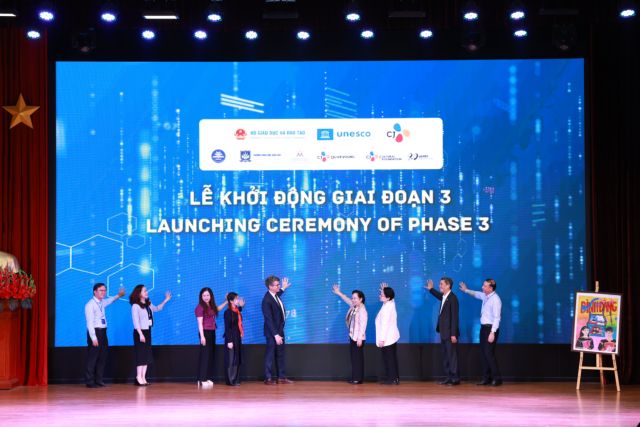
| The launching ceremony of the third phase of the ‘We Are ABLE’ initiative takes place in Hà Nội on Tuesday. Photos courtesy of the United Nations Educational, Scientific, and Culture Organization (UNESCO) |
HÀ NỘI — The United Nations Educational, Scientific and Cultural Organization (UNESCO), in partnership with the Ministry of Education and Training of Việt Nam and CJ Group, on Tuesday launched a new phase of the ‘We Are ABLE’ initiative to strengthen science, technology, engineering, arts and mathematics (STEAM) education for girls, particularly those from disadvantaged and ethnic minority communities.
The third phase, themed We Are ABLE for a Seamless Future: From Learning to Leading through STEAM Education, will run over 36 months from 2026 to 2029. It seeks to advance gender-transformative STEAM education in Việt Nam, empowering girls and ethnic learners to take on leadership roles in an innovation-driven economy.
As demand for STEAM skills continues to grow in Việt Nam, girls still face persistent barriers to participation, especially in remote and ethnic communities. Women currently account for only around 37 per cent of the STEM workforce, highlighting the need for more inclusive and transformative approaches.
The project is expected to directly benefit at least 6,000 students, including 3,000 girls, while strengthening the capacity of more than 100 educators and counsellors trained in gender-responsive teaching. It will also engage policymakers and communities in shaping and sustaining these changes.
|
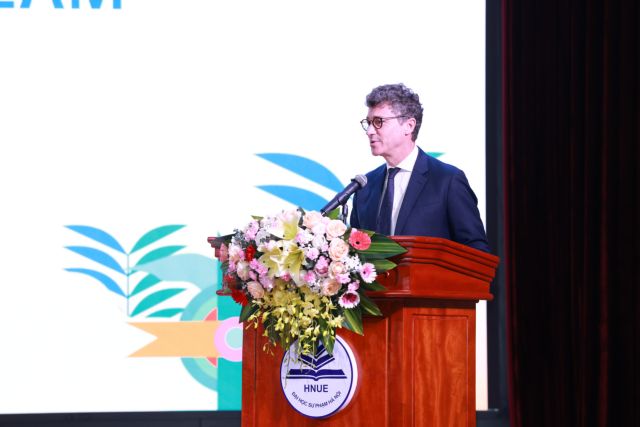
| UNESCO Representative to Việt Nam Jonathan Wallace Baker delivers a speech at the event. |
Beyond its immediate impact, the initiative will generate evidence-based models and policy recommendations to support nationwide scaling, contributing to Việt Nam’s long-term goals of inclusive human capital development and innovation-led growth.
The programme aligns with the United Nations Sustainable Development Goals, particularly Sustainable Development Goal 4 (Quality Education) and Sustainable Development Goal 5 (Gender Equality), while also supporting progress in decent work, innovation and sustainable development.
Under this phase, the project will equip students, especially girls and those from ethnic backgrounds, with creativity, problem-solving skills and the confidence to pursue pathways in science, technology and innovation.
It will focus on three key areas: enhancing the capacity of teachers and education leaders, expanding hands-on learning opportunities, and fostering partnerships among schools, businesses, innovation communities and women leaders in science and technology.
|
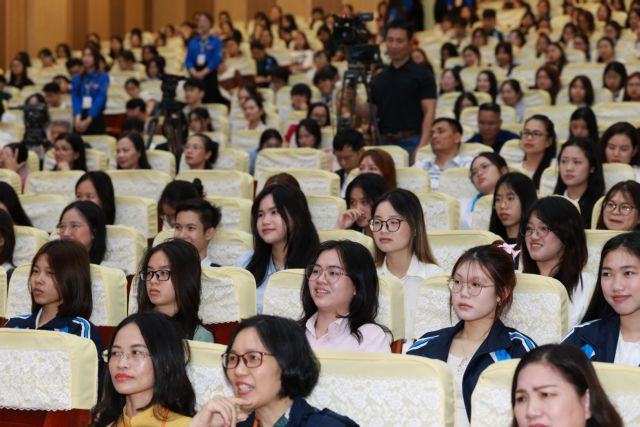
| Participants, mostly young girls, at the event. |
Addressing the launch, UNESCO Representative to Việt Nam Jonathan Wallace Baker said advancing gender equality in and through education remains one of UNESCO’s core priorities.
“When girls gain meaningful opportunities to build the skills, confidence and leadership needed for the future, including through STEAM education, they unlock their potential and contribute to the social and economic progress of their communities. With We Are ABLE, UNESCO is honoured to support Việt Nam in creating learning environments where all students can imagine, innovate and lead.”
Vũ Minh Đức, Director General of the Department of Teachers and Educational Administrators under the Ministry of Education and Training, said the project has delivered tangible progress in building safe, inclusive learning environments and strengthening teachers’ capacity to support gender equality in schools.
“Moving forward, integrating gender equality more systematically into teacher education and the national system will be key to ensuring sustainable impact at scale," he said.
Heekyung Jo Min, Head of Corporate Social Responsibility at South Korean-based CJ Group, said the group would continue to deepen the partnership, expand access to quality learning opportunities, and support girls and ethnic minority students in building the skills and confidence to thrive, particularly through STEAM education.
“As we enter the third phase, CJ remains committed to these efforts.”
At the event, organisers also announced the successful completion of the second phase of the We Are ABLE project, which ran from 2023 to 2025. During this period, the initiative reached more than 8,000 students and their families in the provinces of Cao Bằng, Vĩnh Long and Khánh Hòa, strengthened the capacity of over 650 teachers, and mobilised 300 youth leaders to promote inclusion and gender equality in schools and communities. — VNS
Society
 Society
 Society
 Society
 Society
 Society
 Society
 Society
 Society
 Society
 Society
 Society
 Society
 Society
 Society