 Society

Việt Nam has five Halal certification bodies recognised by Malaysia
1.
|
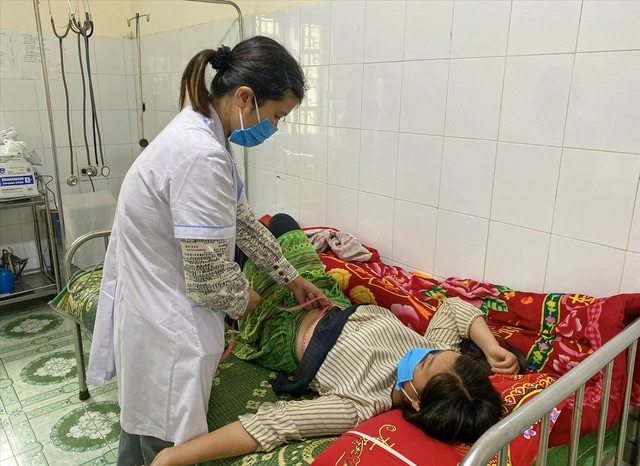
| A woman is undergoing routine prenatal checkups. Photo suckhoedoisong. vn |
HÀ NỘI — Innovative maternal health care interventions are delivering life-saving results in Việt Nam’s most disadvantaged areas, with no maternal deaths recorded over four years across 60 targeted communes.
The milestone was highlighted at a conference reviewing the project Leaving No One Behind: Innovative interventions to reduce maternal mortality among ethnic minority populations in Việt Nam, co-hosted by the Ministry of Health, MSD for Mothers and the United Nations Population Fund (UNFPA) on Tuesday in Hà Nội.
With a total budget of US$2 million supported by MSD for Mothers and UNFPA, the project was implemented in 60 particularly disadvantaged communes across six provinces: Lai Châu, Bắc Kạn, Sơn La, Gia Lai, Đắk Nông and Kon Tum.
Results show that evidence-based, culturally tailored interventions have markedly improved maternal health indicators in hard-to-reach areas, opening pathways to narrowing health care disparities in ethnic minority regions, said Deputy Minister of Health Nguyễn Tri Thức.
“Việt Nam is proud to be among the global bright spots in implementing the Sustainable Development Goals,” Thức told the conference.
He highlighted that in 2015 Việt Nam was one of six countries worldwide to achieve the Millennium Development Goal on reducing maternal mortality. The national maternal mortality ratio (MMR) fell from 165 per 100,000 live births in 2000 to around 46 per 100,000 in 2023.
“However, we still face major challenges in inequality: MMR in remote and mountainous areas, particularly among ethnic minority communities, remains two to three times higher than the national average, in some places reaching 100–150 per 100,000 live births,” the deputy minister said.
To tackle this gap, the Ministry of Health has implemented a range of decisive measures. Under the National Target Programme on Health, Population and Development for 2026–2035, maternal health care and family planning for ethnic minority groups and disadvantaged areas are prioritised.
Limited resources mean innovative approaches are essential. The ministry has identified the use of digital technologies and the integration of traditional cultural practices into primary healthcare in mountainous areas as key directions for sustainably reducing maternal mortality.
The 60 communes targeted by the project face geographical barriers and limitations in grassroots health system capacity. Home to large ethnic minority populations, these areas feature rugged terrain and long distances to health facilities, factors contributing to high rates of home births without skilled assistance.
The project addressed these challenges by bringing services closer to the people and introducing culturally sensitive interventions that overcome language barriers and build trust, demonstrating a strong commitment to health care equity.
After four years, the project recorded zero maternal deaths in the intervention areas. These outcomes were achieved through coordinated efforts to strengthen maternal health care, including capacity-building for over 200 health workers and 650 community volunteers, alongside more than 2,300 communication activities reaching around 17,000 people.
Between 2021 and 2025, the proportion of ethnic minority women accessing essential maternal health care services increased from 11 per cent to 36 per cent, while facility-based births rose from 29.9 per cent to 57.1 per cent.
“Improving maternal health in remote, mountainous and ethnic minority areas remains a top priority for the national health sector,” said Dr. Đinh Anh Tuấn, Director of the Maternal and Child Health Department.
“The evidence from this project will also inform the design and monitoring of national action plans on maternal and child health at the grassroots level,” Tuấn added. — VNS
Society
 Society
 Society
 Society
 Society
 Society
 Society
 Society
 Society
 Society
 Society
 Society
 Society
 Society
 Society