 Society
Việt Nam has five Halal certification bodies recognised by Malaysia
1.
|
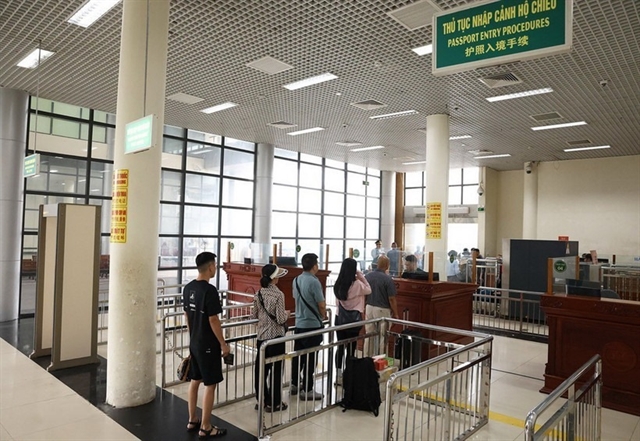
| Passengers complete entry procedures at Bắc Luân 1 Bridge, Móng Cái International Border Gate in Quảng Ninh Province.— VNA/VNS Photo |
QUẢNG NINH — Travellers crossing between Việt Nam and China at the Móng Cái International Border Gate in the northeast are being rerouted as the construction of a 'smart' border gate has begun on the Chinese side.
The move, which took effect on March 23, shifts most travellers away from the Bắc Luân 1 Bridge – one of two crossings linking Móng Cái with the Chinese city of Dongxing – to the Bắc Luân 2 Bridge, where full immigration procedures are now being handled.
Officials say the adjustment is intended to keep cross-border travel and trade running smoothly while China upgrades facilities at Bắc Luân 1, a key transit point along the Việt Nam–China border.
Under the new arrangement, access to Bắc Luân 1 is limited to specific groups. These include border residents using local travel permits, Chinese nationals holding one-year multiple-entry passes and travellers who need to apply for visas on arrival at the crossing.
Most other travellers, including organised tour groups, are being directed to Bắc Luân 2. At that crossing, authorities are processing all categories of valid travel documents, effectively making it the main gateway for passenger traffic during the construction period.
Border operating hours remain unchanged, running daily from 7am to 8pm on the Vietnamese side and from 8am to 9pm in China. Officials say the aim is to minimise disruption to trade, tourism and routine cross-border movement.
The move comes as both sides push ahead with plans to modernise the crossing. Launched in February, the smart border gate project is expected to introduce technologies like biometric identification, automated control gates and 5G-enabled cargo transport systems.
Authorities say the longer-term goal is a largely digitised border model capable of operating around the clock.
In the meantime, local officials have moved to bolster capacity at Bắc Luân 2. Additional equipment has been installed, staffing levels increased and traffic management tightened in an effort to reduce waiting times and prevent bottlenecks.
Service providers have also been asked to expand electric shuttle services to move passengers between facilities, while upgrading waiting areas and other basic infrastructure.
Despite the logistical shift, trade flows appear to be holding steady.
Over March 21 and 22, about 3,600 tonnes of goods with total trade value exceeding US$50 million moved through Bắc Luân 2, according to provincial data.
The crossing has also been piloting weekend customs clearance for cargo, a measure aimed at easing pressure during peak periods. After three consecutive weeks, weekend trade volumes have surpassed 7,000 tonnes. — VNS
Society
 Society
 Society
 Society
 Society
 Society
 Society
 Society
 Society
 Society
 Society
 Society
 Society
 Society
 Society