 Society

Việt Nam-Singapore digital ID link: a test for ASEAN interoperability
1.
|
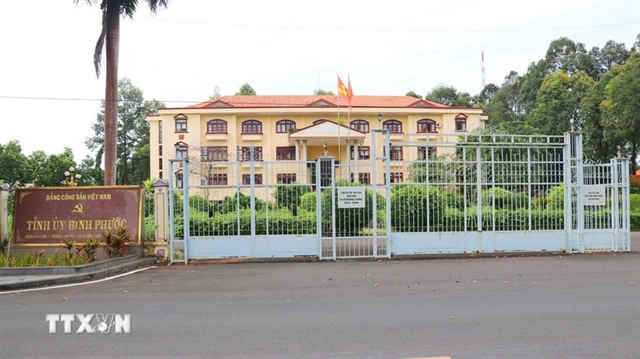
| Đồng Nai Province approved Bình Phước ward to take over the former Bình Phước Provincial Party Committee headquarters for conversion into a dual‑use ward administrative centre. — VNA/VNS Photo |
HÀ NỘI — Plans are underway to transform surplus public assets into key drivers of socio-economic development, as ministries, sectors and localities intensify efforts to reorganise, repurpose and make effective use of redundant state-owned properties following administrative restructuring.
Following the reorganisation of the state apparatus and administrative units at all levels, a substantial volume of surplus offices, land and other public assets has emerged nationwide. Through coordinated efforts to review, restructure and manage these resources, they are now being utilised more effectively, becoming valuable assets for development.
According to the Ministry of Finance (MoF), 34 localities have completed the arrangement and handling of state-owned housing and land under their management. A total of 25,885 facilities have been processed, ensuring that each is assigned to entities responsible for management, use or disposal in accordance with regulations.
The ministry said these results have played an important role in stabilising organisational structures and ensuring the smooth operation of the two-tier local administration model. They have also contributed to improving the efficiency of public asset management, preventing waste, abandonment and misuse.
Of the total, 8,515 facilities have been repurposed for administrative and public service use, while 2,913 are now used for education and training, 618 for healthcare, and 2,296 for cultural and sports activities. A further 677 serve other public purposes, and 91 have been converted into official residences.
Meanwhile, 4,495 facilities have been transferred to land development or housing management entities, and 6,280 are being used for other purposes in line with regulations.
Alongside the handling of housing and land, localities have ensured that newly established communes are fully equipped with working facilities and equipment, enabling grassroots administrations to operate smoothly immediately after restructuring.
Local authorities are continuing to review and allocate funding to replace outdated equipment, in line with the requirements of digital transformation, administrative reform and improved governance in the new phase.
To further enhance the efficiency of public asset management and utilisation, Prime Minister Phạm Minh Chính on February 26 issued an official dispatch urging ministries, sectors and localities to accelerate the arrangement, handling and effective use of public assets following administrative restructuring, in order to prevent losses and waste.
He called for redundant properties to be promptly put into use, alongside strengthened inspection, supervision and oversight.
Nguyễn Tân Thịnh, Director of the MoF’s Department of Public Asset Management, attributed the positive outcomes to the concerted efforts of ministries, agencies and the proactive role of local authorities.
The MoF has urged provincial and municipal People’s Committees nationwide to tighten the management of public assets after reorganisation, ensuring transparency, efficiency and the prevention of waste. Localities have also been asked to promptly issue relevant regulations, particularly on decentralised asset management and usage standards, to accelerate handling and utilisation.
They are required to properly arrange and manage public offices, land and assets during the restructuring of public service units, in line with regulations and government directives.
In addition, authorities must review the use of vehicles, machinery and equipment to ensure cost-effective and appropriate use in accordance with approved standards. — VNA/VNS
Society
 Society
 Society
 Society
 Society
 Society
 Society
 Society
 Society
 Society
 Society
 Society
 Society
 Society
 Society