 Society
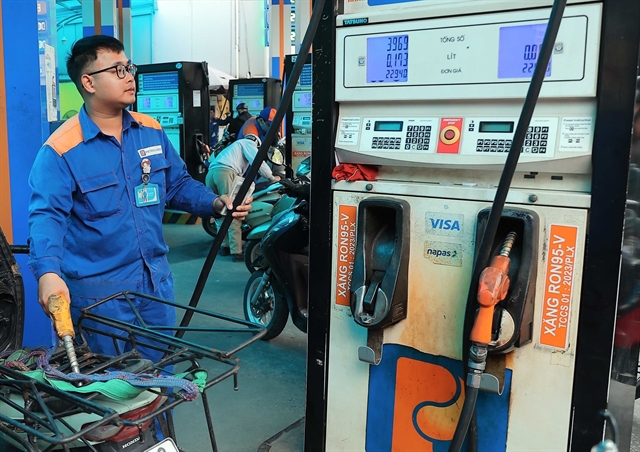
PM orders urgent completion of decree on petroleum trading by November 10
1.
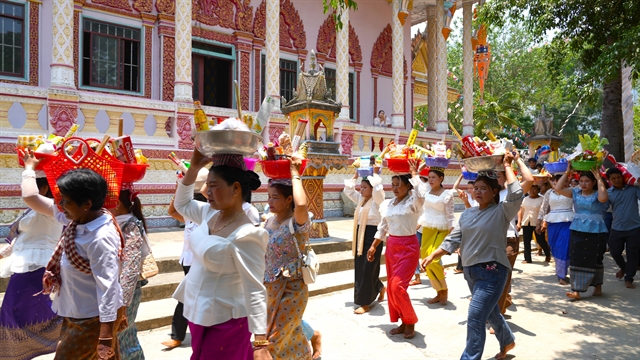 |
| Khmer residents in the southern province of Tây Ninh offer prayers and make offerings at the Botum Kiri Rangsay Pagoda during the Sen Dolta Festival. — VNA/VNS Photo Minh Phú |
Trần Quang Vinh
HÀ NỘI — Religious freedom in Việt Nam is reflected across multiple dimensions, from legal safeguards and electoral participation to the steady growth of religious followers and places of worship, alongside a vibrant calendar of spiritual festivals.
A recent example is the elections for the 16th National Assembly (NA) and People’s Councils for the 2026–2031 term, which recorded voter turnout of 99.69 per cent, with participation from many members of religious communities.
Ahead of polling day on March 15, the Ministry of Ethnic and Religious Affairs issued an official letter to provincial and municipal authorities, calling for favourable conditions to enable religious followers to exercise their democratic rights.
The 15th NA, whose tenure runs from 2021 to 2026, includes five religious dignitaries: Father Nguyễn Văn Riễn; Most Venerable Thích Bảo Nghiêm; Most Venerable Thích Thanh Quyết; Venerable Lý Minh Đức; and Venerable Thích Đức Thiện.
Under the Law on Election of Deputies to the National Assembly and People’s Councils (2015, amended in 2025), all citizens of the Socialist Republic of Việt Nam aged 18 and above, regardless of belief, have the right to vote, while those aged 21 and above are eligible to stand for election.
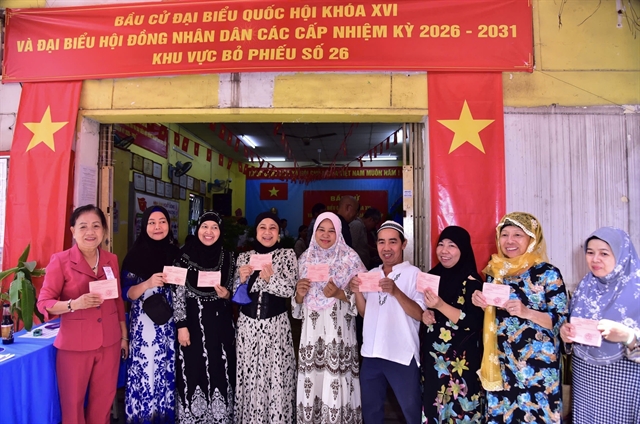 |
| Chăm voters go to the poll in Gia Định Ward, HCM City for the general election on March 15, 2026. — VNA/VNS Photo Xuân Anh |
An open legal framework and a culture of tolerance have helped shape a society in which around 95 per cent of the population practises folk beliefs or follows a religion, with members of different faiths often living side by side in the same communities.
The latest data from the Pew Research Center, collected between 2010 and 2020, shows that Việt Nam has a high level of religious diversity, ranking among the top 10 in the Asia-Pacific region.
According to Việt Nam’s 2023 White Book on Religion and Religious Policy in Việt Nam, the country has 43 recognised religious organisations across 16 religions, with more than 27.7 million followers, nearly 28 per cent of the national population.
Five major religions each have more than one million followers. Buddhism has about 14 million followers, more than 54,000 dignitaries and officials, 47 training institutions and over 18,500 places of worship. Catholicism has around seven million followers, with three archdioceses, 52 bishops, nearly 6,000 priests, 31,000 religious members, more than 200 congregations, 27 dioceses, over 3,000 parishes and about 9,000 places of worship.
Hòa Hảo Buddhism has roughly 1.5 million followers, with 4,000 officials and 51 temples. Protestantism includes 11 churches with around 1.2 million followers, more than 2,300 dignitaries, over 6,800 officials, four training institutions and about 600 places of worship. Caodaism has more than 1.1 million followers across 10 organisations, with around 10,000 dignitaries, 30,000 officials, three training institutions and approximately 1,300 places of worship.
Religious organisations are encouraged to participate actively in socio-economic activities.
According to the Government Committee for Religious Affairs under the Ministry of Ethnic and Religious Affairs, religious organisations manage around 300 kindergartens, 2,000 early childhood education facilities, 12 vocational training centres and charitable classes, more than 500 medical facilities and clinics and 125 social assistance establishments.
Việt Nam also has the Law on Belief and Religion (2016, amended in 2025), which stipulates that everyone has the right to freedom of belief and religion, including the right to follow or not follow a religion, to express religious beliefs, practise rituals, participate in festivals, study religious teachings and undertake religious training.
Religious dignitaries and practitioners are entitled to conduct religious ceremonies and preach at lawful venues. Religious organisations are permitted to operate in accordance with their charters, organise religious activities, renovate and build places of worship and receive lawful donations from both domestic and foreign individuals and organisations.
An increase of more than 10 million religious followers over the past 20 years is seen as evidence that the State safeguards and facilitates the exercise of religious freedom in practice.
Việt Nam’s 2023 White Book noted that the number of religious followers rose from 17.4 million in 2003 to 27.7 million in 2023, while recognised religious organisations increased from 16 to 43.
In addition, the number of dignitaries rose from 34,200 to more than 54,500, religious officials from nearly 79,000 to almost 145,000 and places of worship from 20,900 to 29,890.
Spring, the traditional festival season, offers a vivid illustration of religious freedom and peaceful coexistence.
According to the Department of Grassroots Culture under the Ministry of Culture, Sports and Tourism, 544 religious festivals take place across Việt Nam each year, in addition to many others that incorporate spiritual elements.
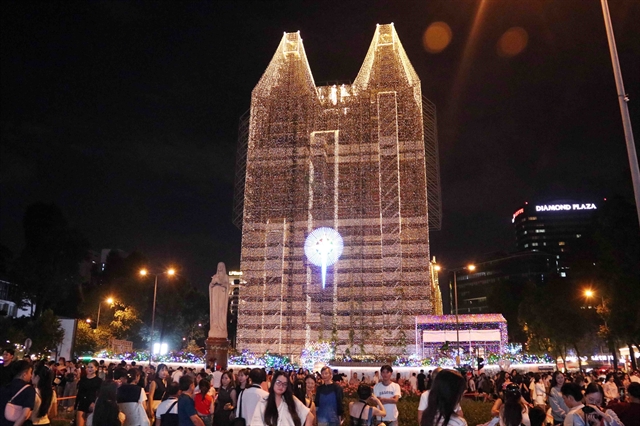 |
| A large crowd gather around the Notre-Dame Cathedral Basilica of Sài Gòn in HCM City to celebrate Christmas on December 24, 2025. — VNA/VNS Photo Xuân Khu |
While traditionally confined to religious communities, many festivals now extend beyond places of worship into wider society, reflecting both the inclusive nature of Vietnamese culture and the State’s policy on religious freedom.
Major religious holidays are increasingly marked on a larger scale, attracting not only followers but also the wider public, often accompanied by official greetings from Party and State leaders and supported by public security measures.
Despite their diverse origins and practices, religions in Việt Nam coexist without major conflict, often intersecting and integrating within local communities. — VNS
Society
 Society
 Society
 Society
 Society
 Society
 Society
 Society
 Society
 Society
 Society
 Society
 Society
 Society
 Society