 Society
Vietnamese scientist wins ASEAN-US Science Prize for Women
1.
|
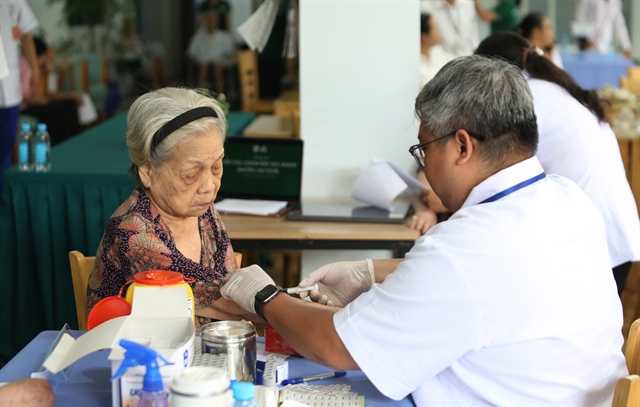
| Senior citizens at Tâm An Nursing Home receive a health check-up. VNA/VNS Photo Đinh Hằng |
HÀ NỘI — The Ministry of Health has released a draft decree proposing a flexible, multi-tiered community care model for the elderly.
By leveraging local infrastructure for daytime clubs and expanding home-based healthcare support, the initiative aims to improve seniors' quality of life, easing the burden on the national healthcare system, and promoting the role of this growing demographic group in society.
The draft decree details certain provisions and organisational measures to guide the implementation of the Population Law, which the Ministry of Health is currently consulting with, and seeking input from, ministries, agencies, organisations and individuals.
Home-based elderly care will focus on equipping knowledge and skills for disease prevention, early detection, and self-care for common illnesses. The elderly and their family members will also receive support in daily living activities, counselling on improving physical and mental health, maintaining social connections, and promoting their roles and share their experiences within the family and the community.
Senior citizens will also be offered guidance on relevant rights and policies, as well as medical examination and treatment, in accordance with the law.
Home-based care will not only be carried out by the elderly themselves and their family members, but will also involve the participation of community care workers as prescribed.
The Ministry of Health suggests developing community-based elderly care models, including daytime clubs and points of care, in which the clubs will organise various practical activities and cultural, artistic and recreational events.
The daytime elderly care points are expected to provide medical care, utilising existing infrastructure, such as community centres, village sports grounds, residential group buildings, and other suitable locations issued by commune-level authorities.
The decree requires three groups for participation in community-based elderly care, including volunteers, primary healthcare workers such as health centres, population collaborators, village health workers, and medical practitioners. These individuals must meet the required training, education, or professional practice to ensure quality care.
Regarding the proposal, the State will subsidise medical examination and treatment costs for elderly people who live alone, are seriously ill or unable to visit medical facilities. For other elderly people who need care to maintain their health and social functioning, the expenses will be paid by the individual.
For community-based models such as day care centres or clubs, funding will be allocated from the State budget, combined with other legally mobilised sources.
Depending on actual conditions, provincial and communal local authorities will determine the specific level of support.
The draft also emphasises encouraging the participation of socio-political organisations, enterprises, families, and individuals in contributing resources to elderly care. This is considered a crucial solution in the context of rapid population ageing.
According to the Population Change and Family Planning Survey, as of April 1, 2011, the elderly in our country accounted for 9.9 per cent of the population, and as of April 1, 2012, it was 10.2 per cent. These figures suggested that Việt Nam reached 10 per cent of elderly people and entered the population ageing process as early as 2011.
It is forecast that in two decades, this percentage will reach 20 per cent, meaning an "aged population" nationwide. By around 2050, this figure is expected to rise to 24 per cent with the number of elderly people reaching about 25 million.
In comparison, it took the French elderly population 115 years to increase from 10 per cent to 20 per cent, from 1865 to 1980, and Sweden 85 years from 1890 to 1975.
Việt Nam has one of the fastest population ageing rates in Asia. Its transition period from an ageing population to an aged population is 17 to 20 years, shorter than that of France or Sweden.
According to the National Population Database, as of 2025, the whole country currently has about 16.1 million elderly people, accounting for over 16 per cent of the population.
Among them, about 2.6 million people are 80 years old or older (accounting for 15.9 per cent of the total elderly), 9.05 million elderly people are female (57.8 per cent), and 10.3 million elderly people live in rural areas 64 per cent).
The overall average life expectancy is 73.6 years (71 years for men and 76.4 years for women). A typical senior citizen can suffer from two to three underlying health conditions on average.
According to population forecasts, the ageing index will exceed 100 by 2032, which is the time Việt Nam will begin to have more elderly people than children. In 2023, the elderly dependency ratio was seven working-age people to one elderly person, but by 2049, this ratio will drop to two working adults to one senior citizen.
Given these major demographic shifts, experts emphasise the urgent need to make the most of the remaining period of the golden population structure.
Concurrently, the country needs to prepare early for the rapid ageing phase by building a multi-tiered social security system, expanding long-term care services, and focusing on home-based and community-based care models. — VNS
Society
 Society
 Society
 Society
 Society
 Society
 Society
 Society
 Society
 Society
 Society
 Society
 Society
 Society
 Society