 Society
Việt Nam fosters comprehensive cooperation with Uruguay
1.
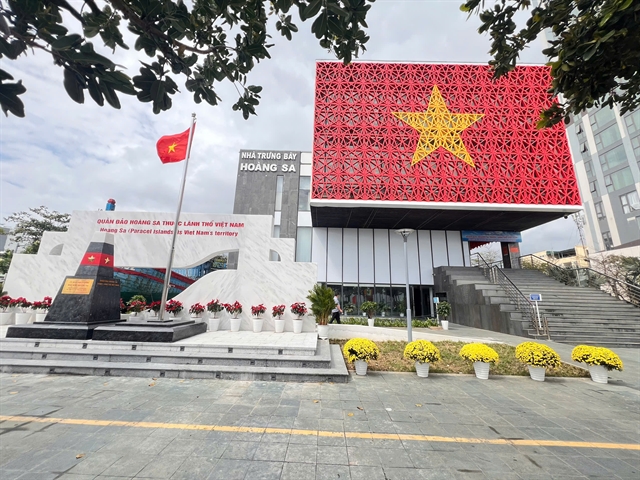 |
| A milestone of the Hoàng Sa (Paracel) Islands of Việt Nam is built in front of the Hoàng Sa Museum in Đà Nẵng City. The museum is given a new nameplate under the newly-established Hoàng Sa Special Administrative Zone. Photo courtesy of Hoàng Sa Museum |
ĐÀ NẴNG — Stone speaks softly but firmly at the Hoàng Sa Museum, where a newly installed milestone and an updated nameplate under the Hoàng Sa Special Administrative Zone underline Việt Nam’s sovereignty over the Hoàng Sa (Paracel) and Trường Sa (Spratly) archipelagoes.
The Hoàng Sa Islands Special Administrative Zone said the new decorative features are intended to strengthen recognition of the museum and enhance its appeal as a cultural destination.
Director of the city’s Home Affairs Department and chairman of the Hoàng Sa Islands Special Administrative Zone, Trần Thị Kim Hoa, said the granite-sculpted milestone follows the original 1938 design created during the French colonial period on behalf of the Annam State, a French protectorate covering central Việt Nam, to establish a sovereignty marker on the Hoàng Sa Islands.
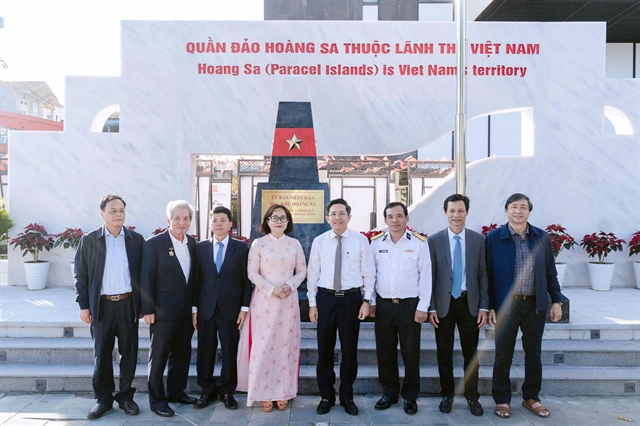 |
| Officials of Đà Nẵng City and the Hoàng Sa Special Administrative Zone join an introduction of newly built milestone of Hoàng Sa (Paracel) Islands. Photo courtesy of the Hoàng Sa Museum |
“The introduction of the new nameplate of the Hoàng Sa Islands SAZ helps recognise the new administration of the Hoàng Sa Islands, while strongly reaffirming Việt Nam’s sovereignty over the Hoàng Sa Archipelago,” Hoa said.
“Hoàng Sa Islands are a sacred part of Việt Nam’s territory, with historical evidence showing the continuous exercise of sovereignty by successive Vietnamese states under the Nguyễn Dynasty, during the French colonial period and today,” she said.
“French colonial authorities built various facilities on the islands in 1938, including the Hoàng Sa Islands milestone, a lighthouse, a meteorological and hydrological station and a radio transmitter station.”
She said the debut of the museum’s new identity, along with an exhibition of historical and legal documents related to Việt Nam’s sovereignty over the islands, will help visitors gain a clearer understanding of the evidence affirming Việt Nam’s territorial rights.
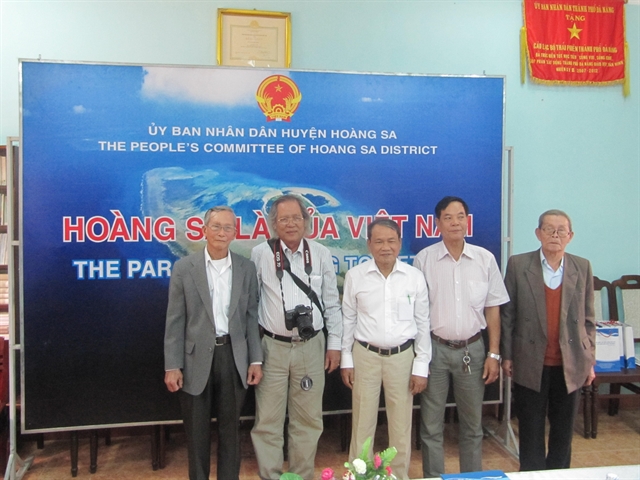 |
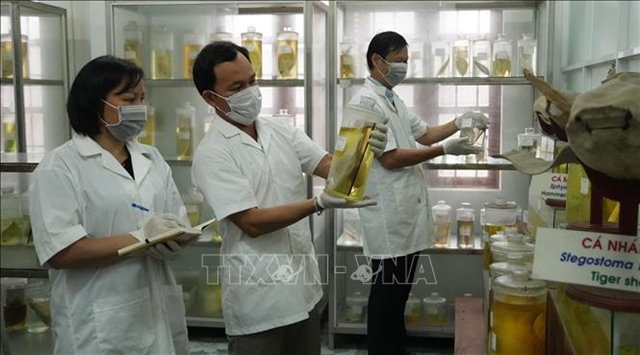
| Alive witnesses of the Hoàng Sa (Paracel) Islands of Việt Nam. At least 12 people in Đà Nẵng had lived, worked and fought for the archipelago from 1959-1974. VNS Photo Công Thành |
Located on Hoàng Sa coastal street on the Sơn Trà Peninsula, the museum is not only a significant landmark showcasing artefacts, legal evidence and documents on Việt Nam’s sovereignty over the Hoàng Sa (Paracel) and Trường Sa (Spratly) Archipelagoes, but also an official destination of Đà Nẵng.
The Hoàng Sa Museum preserves a collection of 150 maps published between 1618–1859 and 1626–1908, many of which provide evidence that the Paracel and Spratly archipelagoes belong to Việt Nam, as well as 102 books published in English, German, French, Spanish, Italian, Dutch and Hán (Chinese script) showing the southern frontier of China as Hainan Island.
The museum also displays the wreckage of the DNa 90512 fishing vessel, which was rammed by Chinese boats in Vietnamese waters off the Hoàng Sa Archipelago in 2014.
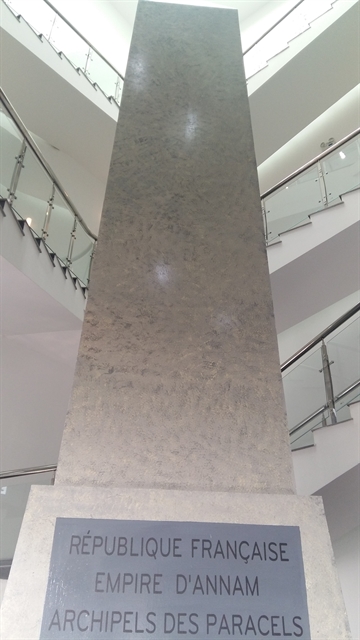 |
| A design of milestone of the Hoàng Sa (Paracel) Islands of Việt Nam is displayed at Hoàng Sa Museum in Đà Nẵng City. The 1938-built milestone on the Islands is a clear historical evidence of Việt Nam’s sovereignty on the Hoàng Sa and Trường Sa (Spartly) Archipelagoes. VNS Photo Công Thành |
According to the Hoàng Sa Islands Special Administrative Zone, 12 people from Đà Nẵng lived, worked and fought for the archipelago from 1959 to 1974. Hoàng Sa was illegally seized by Chinese forces on January 19, 1974.
Lý Sơn Islands, about 30km offshore from Quảng Ngãi Province, still preserve Âm Linh Pagoda, a place of worship for seamen dispatched to the Paracel Islands under the Nguyễn Dynasty since the 17th century. — VNS
Society
 Society
 Society
 Society
 Society
 Society
 Society
 Society
 Society
 Society
 Society
 Society
 Society
 Society
 Society