 Society
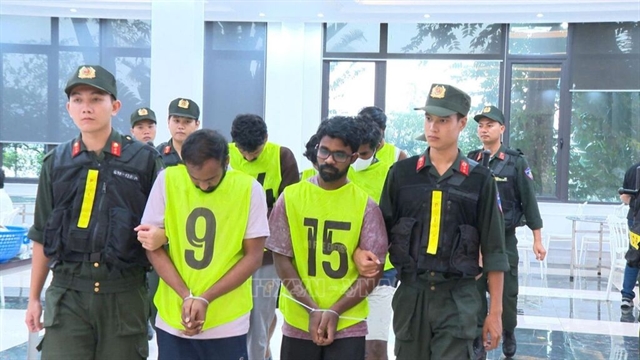
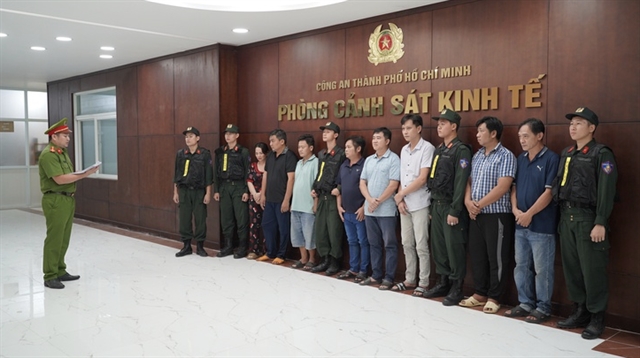
84 individuals investigated for transnational online frauds
1.
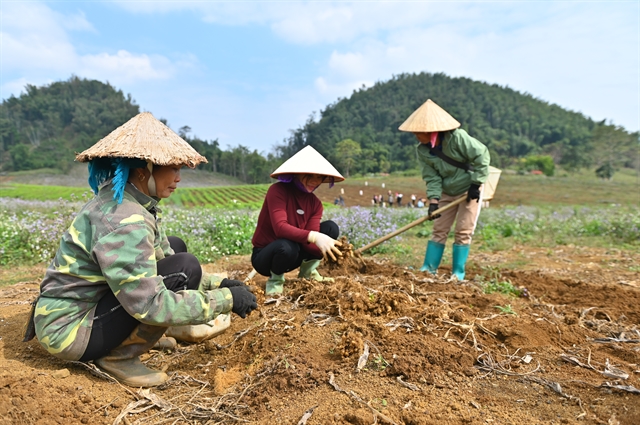 |
| Local farmers harvest ginger ginseng. VNS Photos Nguyễn Nam |
Lê Hương
SƠN LA — One grey winter afternoon, on a medicinal plant field in Song Khủa Commune, the northern mountainous province of Sơn La, dozens of farming households gather around plots of tam thất nam (ginger ginseng) that have just reached harvest time.
The soil is still damp, and the scent of freshly unearthed roots hangs in the air.
After more than a year of cultivation and careful tending, this is the day they reap their first results.
Among them, Mùi Thị Ngoan, 43, a Thai ethnic woman, cannot hide her joy.
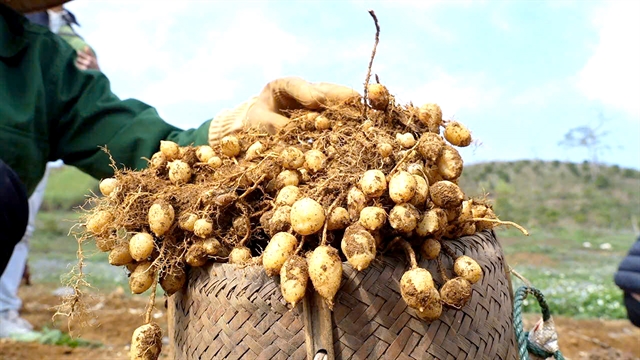 |
| The result of nearly one year of cultivation. |
This season, her family has harvested nearly 200 kilogrammes of ginger ginseng - an outcome she never thought was possible when the same land was planted with maize and rice.
“Growing medicinal plants is hard work, but with secure market access and stable income, we feel hopeful,” Ngoan said, her eyes reflecting confidence.
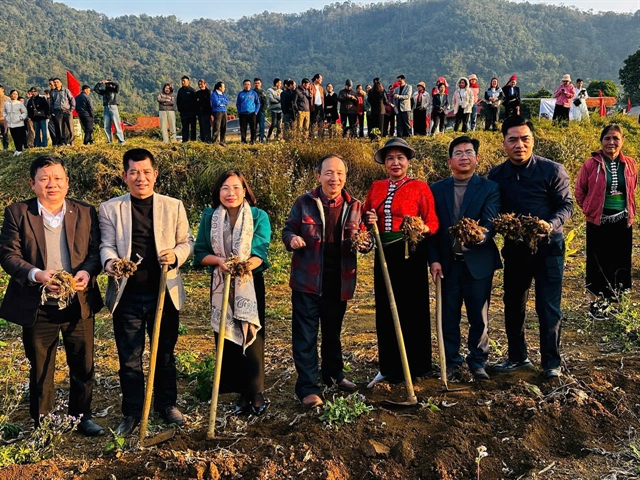 |
| Local authorities and representatives from VietRAP Company share the joy of the harvest with farmers. |
The scene unfolding on the Song Khủa fields is more than just the satisfaction of a single harvest.
It offers a vivid snapshot of an ongoing transformation in crop restructuring linked to women’s economic empowerment in Song Khủa and neighbouring Tô Múa Commune, a new pathway aimed at breaking the cycle of poverty in ethnic community areas.
Crop restructuring – an inevitable choice from reality
Song Khủa is home to 27 villages and nearly 4,000 households, with poverty and near-poverty rates remaining high. For many years, local livelihoods depended largely on maize, rice and other short-term crops. Low economic returns, unstable markets and high production costs made it difficult for households to improve their incomes.
Against this backdrop, crop restructuring has been identified as a key breakthrough in the Song Khủa Party Committee’s Resolution for the 2025–2030 term.
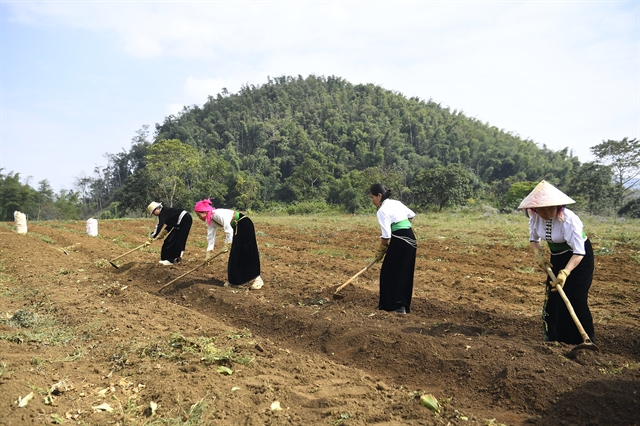 |
| Farmers’ health and the local environment have improved thanks to organic cultivation methods. |
With over 53 per cent of its land covered by forests, a cool climate and suitable soil conditions, medicinal plants have been selected as a strategic development direction, one that both leverages local natural advantages and responds to growing market demand.
In Tô Múa Commune, similar land and climate conditions provide a favourable foundation for change.
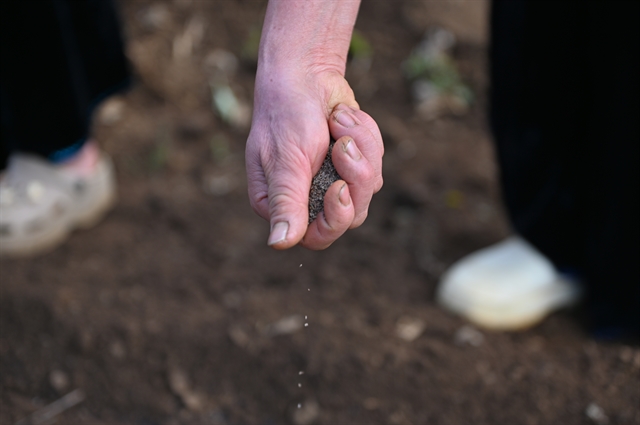 |
| A farmer spreads seeds. |
As tea and other traditional crops have struggled to generate significant income gains, medicinal herbs are increasingly seen as a high-potential alternative capable of delivering higher and more sustainable economic value.
Value chain linkages – the foundation for sustainable development
Crop restructuring in Song Khủa and Tô Múa has not occurred spontaneously.
Instead, it has been implemented through a value-chain approach involving local authorities, cooperatives, businesses and development programmes.
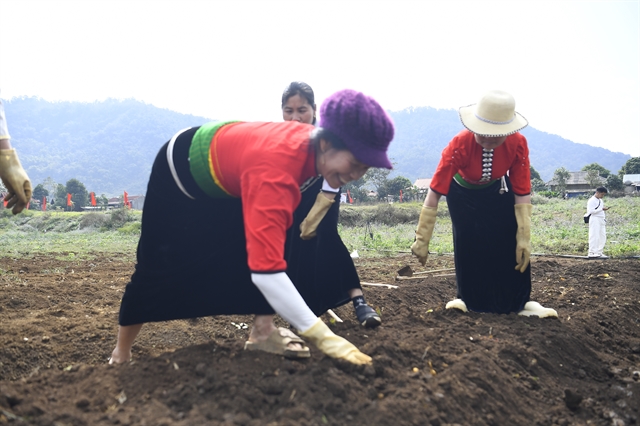 |
| Local women have joined a cooperative to share the workload in cultivating medicinal plants. |
The GREAT Project (Gender Responsive Equitable Agriculture and Tourism), funded by the Australian Government, has accompanied the localities in promoting gender equality through women’s economic empowerment.
In its initial phase, around 150 households, mostly ethnic women, have been supported to cultivate seven medicinal plant species across nearly 59ha in the two communes.
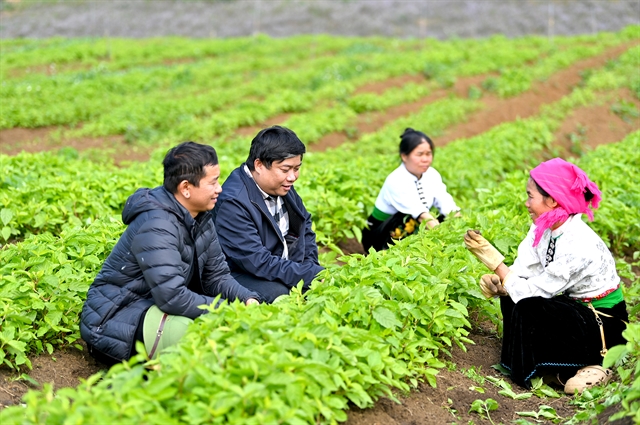 |
| Local women receive close guidance on cultivating the new plants. |
Farmers receive support in seedlings, fertilisers, land preparation and irrigation systems, alongside training in organic cultivation techniques and linkages with enterprises that guarantee product off-take.
These factors are crucial in enabling farmers to invest with confidence and commit to the model over the long term.
VietRAP Investment and Trading JSC play a central role in the value chain, from soil surveys and establishment of growing areas to procurement, processing and marketing. Contract farming with stable purchase prices has addressed the output bottleneck, one of the most persistent challenges facing mountainous agriculture.
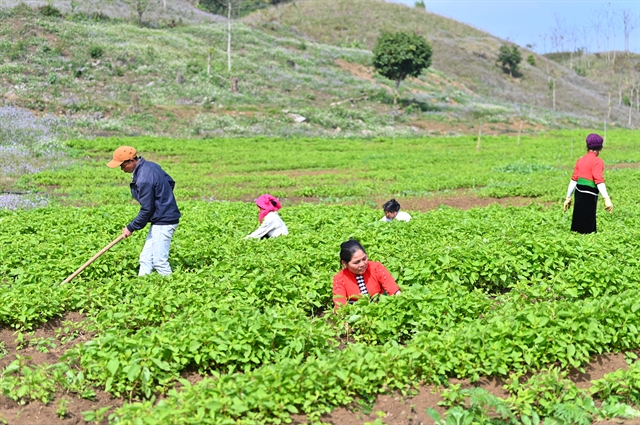 |
| Locals work on a medicinal plant field. |
Women at the centre of transformation
A defining feature of the medicinal herb model in Song Khủa and Tô Múa is the increasingly prominent role of women.
As many men migrate for work, women have become the main force in agricultural production and household livelihood management.
Đinh Thị Loan, 60, a Mường ethnic woman from Suối Sấu Village in Song Khủa, notes that with the same land area that once yielded only around VNĐ10 million (US$380) per crop from maize, medicinal plants now generate three to four times higher income.
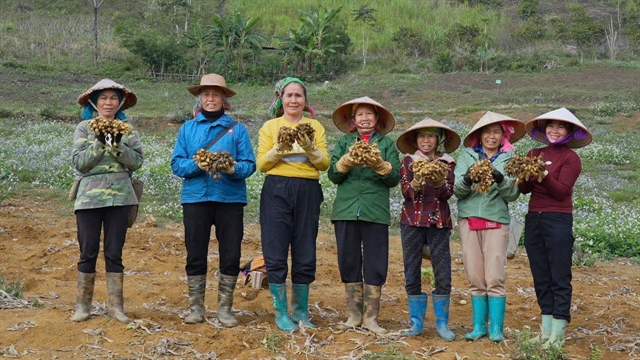 |
| Farmers are pleased with the new medicinal plant crop. |
Beyond income improvements, farmers are gaining access to new techniques and shifting toward organic production methods that avoid harmful chemicals.
Local medicinal plant cooperatives today are largely composed of ethnic women.
Participation enables them to enhance production skills, gradually engage in management, connect with markets, and gain a stronger voice in household economic decision-making.
Sustainable poverty reduction through economic empowerment
The shift toward medicinal plant cultivation has generated impacts extending beyond economics.
Stable income allows women to take greater control over household spending, invest in their children’s education, improve living conditions and enhance their status within both families and communities.
From a policy perspective, the model demonstrates that when crop restructuring is embedded within an inclusive development strategy, supported by the State, businesses and development programmes, it can serve as an effective instrument to simultaneously advance agricultural development, sustainable poverty reduction, environmental protection and gender equality.
 |
| VietRAP provides close technical consultation and guarantees wholesale purchase of the crops from local farmers. |
Towards scaling up the model
While challenges remain in terms of long-term policy support, capital access and technical training, initial outcomes in Song Khủa and Tô Múa affirm the soundness of this approach.
“We have proposed to higher levels of government, including provincial and central authorities, that support policies be introduced for ethnic minority people when they transition to new crops,” said Đỗ Như Kiên, Chairman of Song Khủa Commune’s People’s Committee.
“Most of the beneficiaries are ethnic women, and the commune is home to Thái and Mường communities.”
With strong commitment from Party committees, local authorities, enterprises and development partners, a medicinal plant production zone is gradually taking shape.
The project plans to expand the medicinal plant growing area in the two communes to 60ha by 2027, attracting more farming households to participate.
Vũ Thị Vân Phương, Chairwoman of the Board and General Director of VietRAP, said: “We hope and firmly believe that Song Khủa and Tô Múa will become a high-quality medicinal herb hub, with full traceability and transparency from cultivation and care to harvest and on-site consumption.
“At the same time, this will help enhance management capacity, communication, branding and commercial skills for local cooperatives.”
From rows of ginger ginseng and ích mẫu (motherwort) on a winter afternoon in Song Khủa, a broader story is being written, a story of livelihood transformation, women’s empowerment and the aspiration to escape poverty sustainably in Sơn La’s highlands. — VNS
Society
 Society
 Society
 Society
 Society
 Society
 Society
 Society
 Society
 Society
 Society
 Society
 Society
 Society
 Society