 Society

SBV to curb property price inflation, enforce lending rate rules
1.
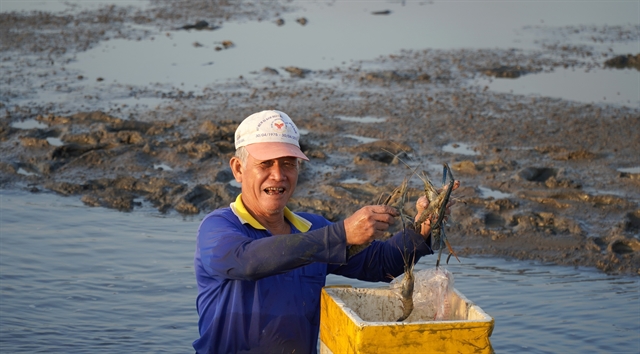 |
| Brackish-water shrimp farming in An Giang is being restructured to adapt to climate change and environmental risks in the Mekong Delta. — VNA/VNS Photo |
AN GIANG — The southern province of An Giang aims to maintain brackish-water shrimp output at more than 155,510 tonnes this year, equivalent to the 2025 level, supplying both domestic consumption and raw materials for export-oriented processing.
The province plans to cultivate shrimp across approximately 137,000 hectares, with production organised along sustainable lines, including climate-adaptive farming schedules and wider application of high-tech solutions to mitigate risks posed by climate change.
According to the provincial Department of Agriculture and Environment, shrimp farming in 2026 is expected to face significant challenges stemming from the impacts of the ENSO phenomenon.
A prolonged weak El Nino could result in extended dry spells and early saltwater intrusion in the Mekong Delta.
During the dry season, the region may experience not only intense heat but also unseasonal rainfall, leading to environmental instability that could adversely affect shrimp health and productivity.
In response, provincial authorities have developed a detailed seasonal stocking framework tailored to specific regions and farming models, urging farmers to strictly adhere to recommended schedules while maintaining flexibility in production planning.
For black tiger shrimp–rice rotation systems, stocking in the U Minh Thượng production area is recommended between January and May, with harvests completed by August.
In the Long Xuyen Quadrangle, stocking should begin from February and conclude by May, with harvests similarly finalised by August.
For integrated giant freshwater prawn–rice farming models, stocking is advised from April to August, with harvests occurring after five to six months, depending on local conditions.
Farmers are encouraged to establish nursery ponds or enclosures to rear post-larvae for one to two months before releasing them into commercial rice fields.
Extensive improved shrimp farming systems combined with crab and fish cultivation, as well as shrimp–mangrove models, may operate year-round depending on site conditions.
However, the fisheries sector recommends periodic fallowing, pond renovation, and environmental treatment to eliminate pathogens and prevent disease outbreaks.
For intensive, semi-intensive and high-tech farming of black tiger shrimp and white-leg shrimp, stocking is advised from January through October.
Facilities are urged to ensure full control over water sources, maintain strict environmental monitoring, and adopt staggered stocking strategies to cope with adverse weather conditions.
Provincial agricultural leaders stress that achieving economic efficiency in brackish-water shrimp farming this year will require a fundamental shift in production mindset.
Farmers are encouraged to move away from traditional practices towards advanced multi-phase farming processes, including the use of larger-sized post-larvae and pre-nursery systems to improve survival rates and reduce early-stage risks.
Training programmes on safe farming techniques will be strengthened alongside environmental and disease monitoring and early-warning systems.
Authorities will also intensify inspections of hatcheries and seed suppliers, while strictly controlling the quality of disease-free shrimp seed imported into the province.
Farmers are advised to source post-larvae only from reputable, certified suppliers and to register farming facilities for traceability purposes, ensuring compliance with export market requirements.
In addition, provincial agencies will manage and operate irrigation systems to support production needs and provide timely assistance in the event of natural disasters or disease outbreaks.
Shrimp farmers and enterprises are urged to closely monitor weather forecasts and environmental alerts, proactively apply new farming technologies, and invest in high-quality seed to enhance productivity and the overall quality of commercial shrimp. — VNS
Society
 Society
 Society
 Society
 Society
 Society
 Society
 Society
 Society
 Society
 Society
 Society
 Society
 Society
 Society