 Society

Top leader urges deeper, higher-value economic ties with EU, Belgium
1.
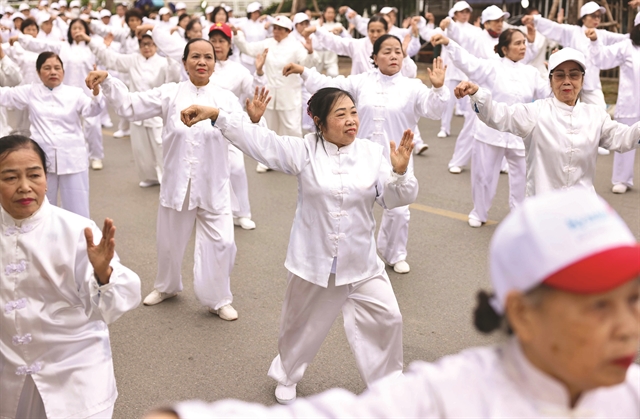 |
| Elderly residents participate in doing exercises at the 2024 Senior Citizens’ Health Training Day in Hà Nội. VNA/VNS Photo |
Khánh Dương
At 75, Vũ Mỹ Bình imagined retirement would be a gentle season of family gatherings, laughter from grandchildren, and long afternoons spent reminiscing with friends. Instead, her apartment in Vĩnh Tuy Ward, Hà Nội, often feels unusually still. With her children busy at work and her grandchildren away at school, the hours stretch long and quiet.
To fill the silence, she takes morning walks to chat with elderly neighbours and reconnects with former colleagues on Facebook — small rituals that make the day feel less empty. Like many seniors across Việt Nam, she is learning to navigate not only ageing, but also the unexpected emotional terrain that comes with growing older in a rapidly changing society.
A recent survey by the Việt Nam Association of the Elderly (VNAE) shows that about 60 per cent of senior citizens struggle to connect with their children and grandchildren due to generational gaps and differing lifestyles.
Around 40 per cent said they faced difficulties using modern technology, further deepening feelings of isolation.
Tô Lâm, general secretary of the Communist Party of Việt Nam, recently stressed the need for solutions to better support and “combat loneliness” among the elderly.
He highlighted day-care centres for seniors as the right direction, though progress has been slow despite years of discussion.
Noting that “in the mornings, children and grandchildren go to school or work, leaving the elderly at home feeling very lonely,” he called for concrete models and encouraged private-sector participation in building elderly care centres.
Caring for the elderly, he said, should be approached with the same priority as caring for school children.
“Elderly care centres should develop a model in which old people are picked up in the morning and brought home in the afternoon," said the party leader.
"In the morning, they can meet friends, colleagues or old classmates to chat, exercise, learn music, culture and arts and then return home in the evening to be with their families. Such models are very meaningful.”
According to the National Statistics Office, Việt Nam will officially enter an ageing population phase in 2038, when the proportion of people aged 60 and above exceeds 20 per cent.
The United Nations Population Fund (UNFPA) forecasts that by 2050, one in every six Vietnamese will be over 65 years old, a demographic shift marking a pace of population ageing faster than most countries in the region.
Meanwhile, Việt Nam’s elderly care system remains in its infancy. Fewer than 30 per cent of communes and wards have models to support older persons while the number of specialised care centres nationwide has not yet surpassed 100.
Care models, early demand
According to Trương Xuân Cừ, vice chairman of the VNAE, it is essential to expand day-care and semi-day care activities to help the elderly live happily, healthily and meaningfully,
There are currently three main types of elderly care in Việt Nam including residential (full-time), day care and home-based care. Among them, day-care or semi-residential care is the most common, attracting many elderly participants.
The association has set the goal to increase the proportion of elderly people receiving day care to 10 per cent (about 170,000 people) by 2045, he said.
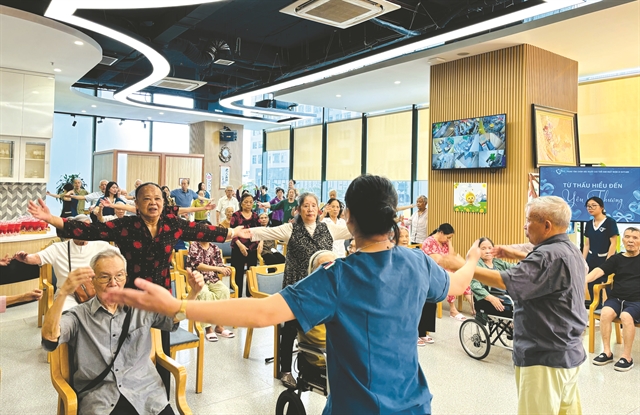 |
| A morning exercise session at the Nhân Ái Day Care Centre in Hà Nội. VNS Photo Khánh Dương |
In major cities, private pioneers have begun developing day care centres for the elderly. The Nhân Ái Day Care Centre in Hà Nội is one example.
For the past two years, 81-year-old Lê Thị Lan has followed a daily routine of visiting the centre in the morning at 8am, starting her day with group exercises, joining physical therapy, having lunch, taking a short nap and returning home around 4 to 5pm.
Lan said her daughter visited the centre to learn more and encouraged her to attend.
With her children and grandchildren busy with work and school, Lan used to feel lonely at home.
“The centre is not only a place where my health is monitored and cared for according to a set plan. I have also made many new friends of the same age, which makes me less lonely and much more relaxed,” she said.
Ota Hisako, 84, from Japan, experienced a one-day service at the Nhân Ái Day Care Centre during her holiday in Việt Nam in October.
The day care model is common in Japan, and she currently attends a similar centre twice a week.
Her daily routine there includes blood pressure and health checks, morning bathing, exercise, physical therapy and recreational activities such as birthday celebrations.
“I feel the atmosphere at Nhân Ái is very lively and engaging,” she told Việt Nam News.
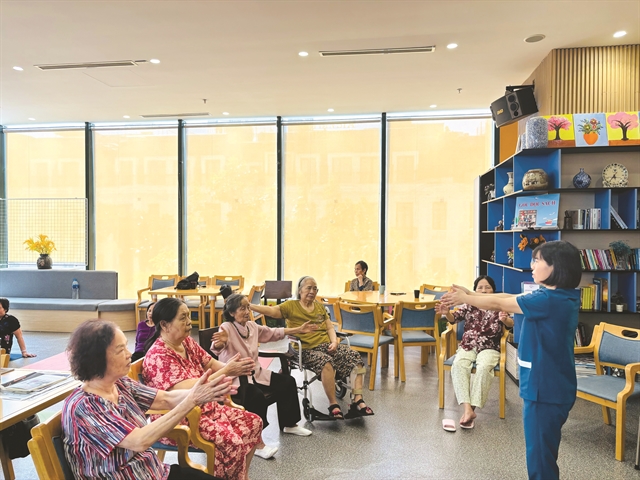 |
| Small activity groups at the Nhân Ái Day Care Centre help elderly participants stay active and socially connected. VNS Photo Khánh Dương |
Nguyễn Thị Kim Thanh, chairwoman and general director of Nhân Ái International JSC, said elderly day care centres were becoming a notable new trend in Việt Nam.
“Usually, when older people are still healthy, they can take care of themselves. As they grow weaker, they may just stay at home with simple routines," Thanh said.
'When their health declines further, they may need to move to care facilities or hire care helpers. At that stage, the quality of life is often no longer the same.
“Instead of waiting until later stages of ageing to provide care, we should start active and positive care early on, helping older adults stay healthier and live more fulfilling lives.”
She added that demand for proactive elderly care was expected to rise in the future, driven by growing social awareness of the importance of preventive and community-based care for older people.
Breaking stereotypes
Although the demand for elderly day care is real, a stereotype still persists among many people in Việt Nam about sending their ageing parents to senior care facilities.
Many elderly people themselves also hesitate due to high costs.
Vũ Mỹ Bình said the day care model had not yet fitted the financial conditions of most Vietnamese families.
She and her 90-year-old husband live in an apartment building with the help of a part-time domestic worker. Their children and grandchildren only visit them on weekends.
She said most of her elderly neighbours would try to save money for rainy days, let alone spending on day care centres.
“For those who are still healthy enough, they join dancing and singing clubs," Bình said, adding that in the future, perhaps in five to ten years, if Việt Nam wants to expand the day care model, both the State and the private sector would need to join hands to make it more affordable.
Party General Secretary Tô Lâm also noted that if a retiree’s pension is VNĐ6 million (US$230) while a nursing home charges VNĐ10 million, then even if such facilities are opened, many elderly people still would not be able to afford them.
He urged for solutions with the government already discussing this issue.
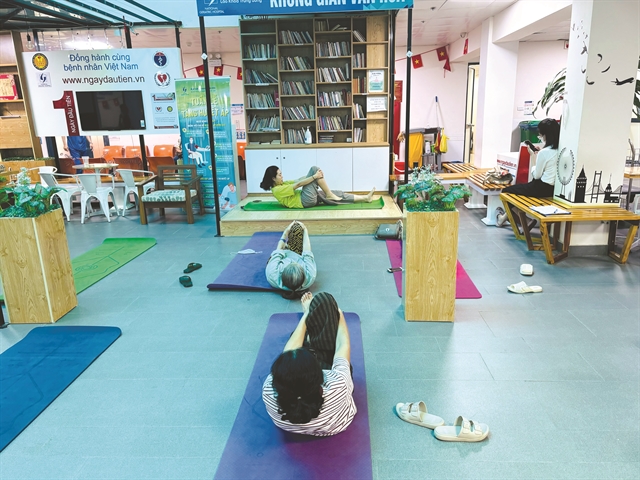 |
| A yoga and wellness session for elderly patients at the National Geriatric Hospital in Hà Nội. VNS Photo Khánh Dương |
Dr Trần Viết Lực, deputy director general of the National Geriatric Hospital, said the Party General Secretary’s idea was not only for the present but also an orientation for the future.
“In the coming years, the demand for elderly care centres will rise as older people themselves become less prejudiced toward this kind of model,” he told Việt Nam News.
“The younger generation will probably have a more positive attitude toward this issue. When people have the chance to go abroad, their minds open up.
"If we see sending parents to nursing homes or similar places as something normal, without any sense of guilt or shame, then the demand for such services will naturally increase in the future.”
More incentives expected
He said the private sector alone offering day care service for the elderly would not be enough. If only a few small private facilities exist, they could possibly not meet the social demand. Clearly, there must be participation from the State.
Once the State invests in nursing homes, they would be more systematic. If the government truly invests in elderly care, a national standard system would eventually take shape, he said.
 |
| An elderly woman receives a routine health check-up at the Tâm An Elderly Care Centre in HCM City. VNA/VNS Photo Đinh Hằng |
“At present, Việt Nam does not yet have a specific health insurance scheme for nursing homes. In the future, I hope that elderly at day care centres can enjoy insurance coverage for certain services, both medical and non-medical," Dr Lực said.
Partial insurance coverage for nursing homes, both part-time and full-time, would make elderly care services much more accessible, he said.
In the future, if the State identifies elderly care as an inevitable part of the healthcare system, then incentive policies would be needed for developing nursing homes, just like those for social housing, he said.
He also proposed policies on land incentives, tax exemptions, and construction cost support to encourage private investors to develop elderly care systems. VNS
Society
 Society
 Society
 Society
 Society
 Society
 Society
 Society
 Society
 Society
 Society
 Society
 Society
 Society
 Society