 Society
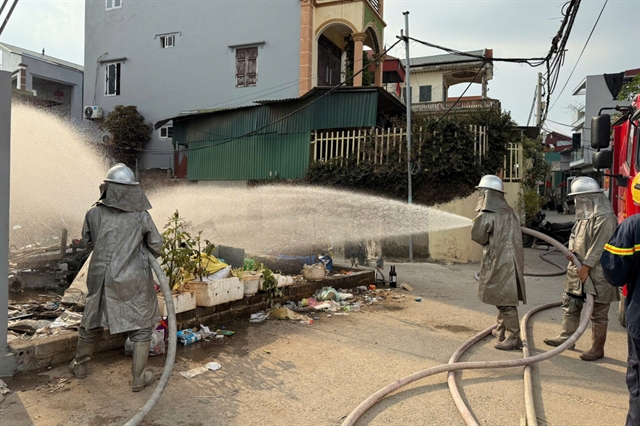
42 people hospitalised over suspected gas leak in Hà Nội
1.
 |
| Doctors measure blood pressure for the elderly during a free health check-up in Đa Phúc Ward, Hà Nội.—VNA/VNS Photo Nguyễn Thắng |
HÀ NỘI — At Đông Ngạc Ward Health Station in Hà Nội, the morning rain did little to deter 72-year-old Nguyễn Hoàng Yến and hundreds of other elderly residents from gathering at the Chèm Polyclinic.
They had arrived early, following notifications from their residential group, to receive a full range of free medical check-ups.
Doctors, nurses and health workers were on hand to measure blood pressure, conduct rapid blood-sugar tests, provide general internal examinations, eyesight checks, musculoskeletal assessments, osteoporosis screening, mental-health consultations, abdominal ultrasounds and chest X-rays – all at no cost.
Yến said that currently the State’s attention to the wellbeing of older people had become more frequent and of higher quality.
“It is not only a source of encouragement, but the advice, the examinations and the free medicines truly help us feel happier and more assured in our later years,” she said.
Her visit also revealed early signs of fatty liver for which doctors gave her tailored dietary guidance.
The free check-ups form part of Hà Nội’s health-sector activities in line with Resolution 72-NQ/TW, issued in September by the Politburo, which outlines breakthrough measures to strengthen public healthcare and improve population health.
As Hà Nội faces the growing realities of an ageing society, the city’s health sector has expanded initiatives to support older residents, from routine check-ups and health-record management to lifestyle-health counselling.
The efforts aim to help the elderly stay healthy, active and confident in later life.
The municipal authorities have also issued numerous plans and directives to enhance both the physical and mental wellbeing of older people at community level.
Hứa Thị Minh Huệ, head of Đông Ngạc Ward’s Health Station, said the ward’s Social and Cultural Office, in coordination with the health station and other units, had provided free examinations, consultations and medicines for 1,000 elderly residents.
For individuals facing mobility challenges, the health station worked with the residential groups to ensure they still receive medical assessments and relevant laboratory services to screen for diseases, facilitate treatment and monitor chronic conditions.
In the same spirit, the People’s Committee of Cửa Nam Ward offered free health examinations to more than 4,200 residents aged 75 and above so far this year.
Vice Chairwoman of the People’s Committee Trịnh Ngọc Trâm said the programme sought to strengthen healthcare for the elderly and advance efforts towards universal health management, aiming for all residents to receive at least one medical check-up each year.
The initiative also encourages organisations and businesses to support elderly welfare in the ward.
Supporting wellbeing in later life
Nguyễn Đình Hưng, Acting Deputy Director of the city’s Department of Health, said that community healthcare, especially for elderly populations, would remain a key priority for the city.
The free medical programmes held across communes and wards are highly meaningful, bringing to life the city’s strategic plans to promote elderly health, according to Hưng.
The city has set targets for 2030 that 85 per cent of older people and their caregivers will be informed about population ageing and elder healthcare rights; all elderly residents will receive at least one routine medical check-up per year; all elderly patients will be examined and treated with 90 per cent diagnosed, treated and managed for non-communicable diseases.
One of the targets is to ensure that every elderly person unable to care for themselves will receive family or community-based care; all intergenerational self-help clubs and elderly associations will include health-care components; 90 per cent of older people capable of self-care will receive training on basic health-care skills.
To achieve these goals, the city’s health sector continues strengthening elderly health services, including maintaining personal medical records, offering regular health checks and distributing free medication.
Health campaigns delivered through commune and ward health stations allow older residents to access care close to home.
Along with screening and free medicines, preventive services have been expanded, particularly in managing hypertension, diabetes, cancer and chronic obstructive pulmonary disease to aid early diagnosis and prevent complications.
According to Ngô Văn Nguyên, head of the Geriatric Cardiology Department at Mê Linh General Hospital, older people frequently suffer conditions such as stroke, pneumonia, high blood pressure, diabetes, chronic obstructive pulmonary disease, heart failure, Parkinson’s disease, vestibular disorders, osteoporosis, acute bronchitis, eye diseases and fatty liver.
Therefore routine health checks are vital for maintaining quality of life. They enable early detection of serious illnesses and allow timely effective treatment.
The hospital has increased programmes supporting the mental wellbeing of older patients over the past time.
Doctors and nurses regularly offer guidance on nutrition and light physical exercise and the hospital organises health-education sessions covering diet, lifestyle and fitness.
It also works with local authorities to provide free examinations, consultations, blood-pressure checks, testing and ultrasound services.
Many cases of diabetes, high cholesterol and heart failure have been detected early and placed under timely management.
Data from the Hà Nội Division for Population, Children and Social Issues showed that 75.9 per cent of elderly residents underwent routine medical check-ups in the first nine months of this year.
The figure reflects the city’s ongoing commitment to comprehensive healthcare, enabling older people to live healthier and happier lives. — VNS
Society
 Society
 Society
 Society
 Society
 Society
 Society
 Society
 Society
 Society
 Society
 Society
 Society
 Society
 Society