 Society
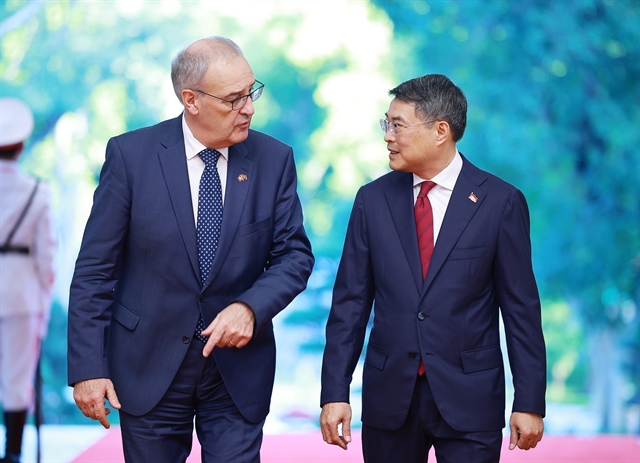
Việt Nam, Switzerland to turn education, sci-tech, innovation into cooperation focus
1.
 |
| Prof. Dr Phạm Mạnh Hùng, Vice President of the Việt Nam National Heart Association, speaks at the symposium in Hà Nội. — Photo courtesy of the organiser |
HÀ NỘI — In a discussion that aimed to close the gaps between prevention and treatment, health experts stressed that proactive vaccination is one of the most effective measures to help prevent infectious diseases in cardiovascular patients, especially adults and the elderly, at a recent symposium in Hà Nội.
The symposium is part of the 2025 National Cardiology Scientific Conference jointly organised by the Việt Nam National Heart Association and GSK Vietnam.
At the event, leading health experts focused discussions on the relationship between cardiovascular diseases and infectious diseases, a two-way relationship that has been under-recognised but is affecting patients’ health.
According to the Ministry of Health, more than 200,000 Vietnamese die each year from cardiovascular diseases, accounting for about 33 per cent of total deaths.
Professor Dr Phạm Mạnh Hùng, Vice President of the Việt Nam National Heart Association, said that individuals with cardiovascular diseases face a higher risk of complications compared to healthy people when infected with illnesses such as influenza, COVID-19, pneumococcal pneumonia and lower respiratory infections caused by respiratory syncytial virus (RSV).
A study also showed that patients with congestive heart failure are four to 33 times higher risk of being hospitalised due to RSV compared to individuals without this condition. Moreover, in cases of pneumococcal pneumonia, the incidence of onset heart failure events increases by more than 14 per cent and the risk of myocardial infarction rises by more than seven per cent compared to baseline.
This creates a two-way relationship: the underlying cardiovascular conditions make patients more susceptible to infections such as influenza, COVID-19 or pneumococcal disease, while acute infections, in turn, contribute to an increased risk of serious adverse events in individuals with cardiovascular conditions.
Therefore effective prevention of infectious diseases – especially through vaccination – is one of the crucial solutions to help break this vicious cycle.
In Việt Nam, the Vietnam National Heart Association has updated its Consensus on vaccination against certain infectious diseases for adults who have cardiovascular disease or are at high risk while also fostering healthcare professional training, community education and improved vaccine access for high-risk groups. The goal is to make infectious disease immunisation an integral part of cardiovascular patient care.
 |
| According to Assoc. Prof. Dr Dương Thị Hồng, Deputy Director of the National Institute of Hygiene and Epidemiology, speaks at the event. — Photo courtesy of the organiser |
To implement this strategy, healthcare professionals play a key role. According to Associate Professor Dr Dương Thị Hồng, Deputy Director of the National Institute of Hygiene and Epidemiology (in Hà Nội), an impressive 86 per cent of patients would agree to be vaccinated against influenza if recommended by their cardiologist.
Therefore, Hồng emphasised that preventive and treatment physicians need to collaborate to incorporate vaccination counselling as an essential part of routine medical consultations, and that infectious disease vaccination practices should be integrated into medical care, particularly for adults with underlying conditions.
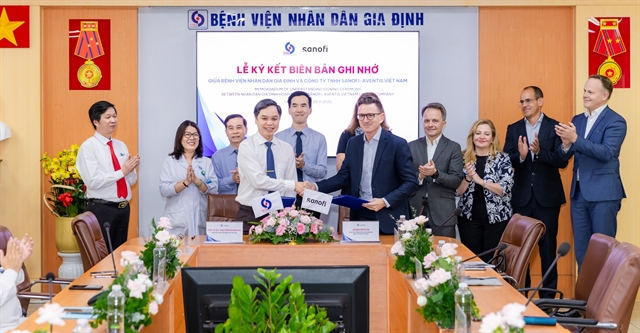
Addressing how to integrate vaccination within hospital management, Dr Nguyễn Hoàng Hải, Director of Gia Định People’s Hospital in HCM City, suggested that physicians should regularly discuss vaccination with their patients and provide clear recommendations and explanations about why vaccines are necessary for disease prevention, and most importantly guide patients through a simple vaccination process.
“Only then can we overcome vaccine hesitancy, protect the elderly from vaccine-preventable diseases and make infectious disease vaccination a medical pillar not only for cardiovascular patients but also for those with other chronic conditions,” said Hải. — VNS
Society
 Society
 Society
 Society
 Society
 Society
 Society
 Society
 Society
 Society
 Society
 Society
 Society
 Society
 Society