 Politics & Law
Top Vietnamese leader meets with Belgian Senate Speaker, House President
1.
|
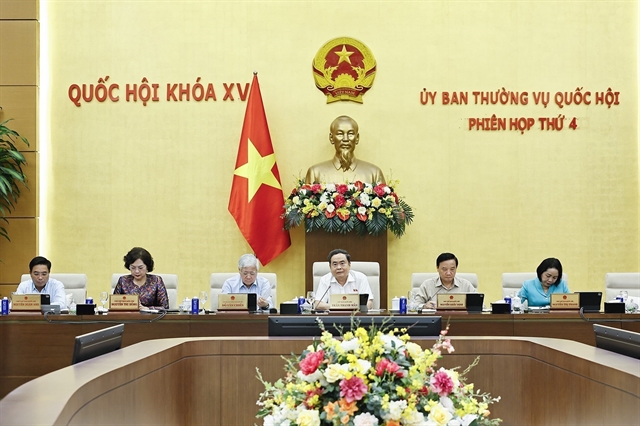
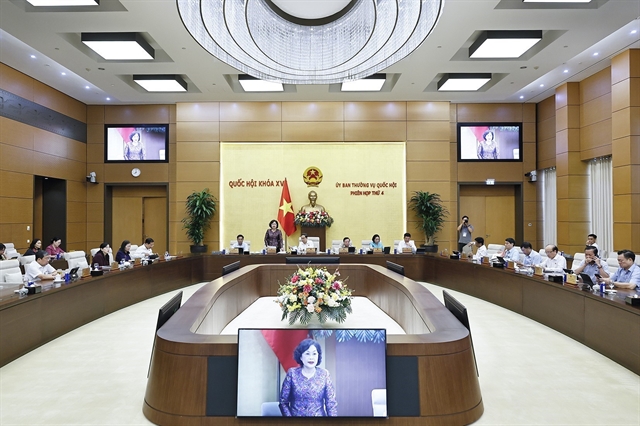
| NA Chairman Trần Thanh Mẫn chairs the NA Standing Committee's fourth session on Tuesday. —VNA/VNS Photo |
HÀ NỘI — Law dissemination and education must become a driving force in fostering a culture of respect for the rule of law rather than being carried out in a routine or perfunctory manner, National Assembly (NA) Chairman Trần Thanh Mẫn stressed on Tuesday.
The chief legislator made the request while addressing the second phase of the NA Standing Committee's fourth session, which focused on the draft revised Law on Law Dissemination and Education.
Mẫn said digital transformation in law communication and education must deliver tangible results rather than amounting to "mechanical digitalisation". He called for interactive digital platforms equipped with mechanisms to gather public feedback and assess citizens' understanding of legal information.
The leader also stressed the need to clearly identify target groups and tailor law education accordingly, while promoting community-based approaches and strengthening the role of grassroots cultural institutions.
Presenting the Government's proposal, Minister of Justice Hoàng Thanh Tùng said the revised law is intended to address shortcomings in the current legislation, modernise the dissemination and education work, and safeguard people's rights to access such information as well as contribute opinions and recommendations on laws and policies. The draft also seeks to expand the application of information technology, accelerate digital transformation, foster a culture of legal compliance, and contribute to building Việt Nam's socialist rule-of-law state.
The draft law comprises five chapters and 42 articles, retaining the same number of chapters as the 2012 Law on Law Dissemination and Education while adding one new article.
It sets out regulations on the rights and obligations of stakeholders, target groups, content, methods, state management responsibilities, and the duties of agencies, organisations and individuals in the work. It would apply to agencies, organisations and individuals in Vietnam, as well as overseas Vietnamese involved in law education activities, while updating state policies in line with new developments.
Presenting the preliminary verification report, head of the NA Committee on Legal and Judicial Affairs Phan Chí Hiếu said permanent members of the committee and other NA bodies agreed on the need for a comprehensive revision of the 2012 law based on the political, legal and practical grounds outlined in the Government's proposal.
He said the draft broadly aligns with the Party's guidelines and policies, but urged the drafting agency to further review and fully institutionalise orientations and requirements set out in Conclusion No. 80-KL/TW and Directive No. 58-CT/TW, while embracing a more innovative approach to lawmaking.
However, some opinions argued that including provisions on policy communication is inconsistent with the title of the draft law, as policy communication takes place during the policy-making stage rather than after legal provisions are enacted, and is already governed by the Law on the Promulgation of Legal Documents.
Other lawmakers said the current scope of amendments will not adequately address the fundamental shortcomings of law dissemination and education, recommending broader provisions that would make it easier for citizens and businesses to proactively access and understand legal documents.
Also on Tuesday afternoon, the NA Standing Committee discussed the draft law amending and supplementing a number of articles of the Law on State Compensation Liability and the draft revised Law on Grassroots Mediation. — VNA/VNS
Politics & Law
 Politics & Law
 Politics & Law
 Politics & Law
 Politics & Law
 Politics & Law
 Politics & Law
 Politics & Law
 Politics & Law
 Politics & Law
 Politics & Law
 Politics & Law
 Politics & Law
 Politics & Law
 Politics & Law




