 Politics & Law
Government considers easing market access conditions for foreign investors
1.
|
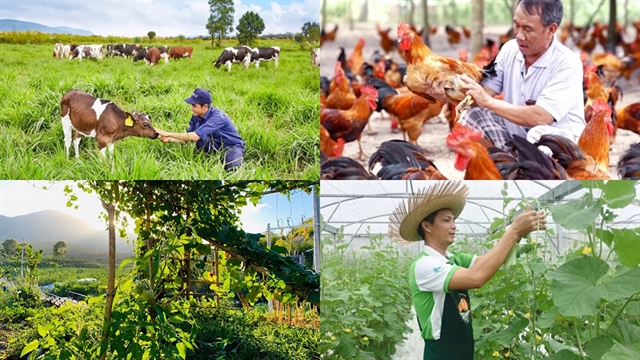
| Violations relating to the trading, production, import and export of livestock breeds, animal feed and waste-treatment products will be subject to a statute of limitations for sanctions of up to two years. Photo chinhphu.vn |
HÀ NỘI — New regulations taking effect in August will make duty-free shopping easier, tighten penalties for land-use violations and introduce new rules on child safety, courtroom recording and financial leasing.
On the roads, drivers carrying children under 10 years old and shorter than 1.35 metres without appropriate child safety equipment will receive a warning from August 15 under Decree No. 238/2026/NĐ-CP, which amends regulations on road traffic penalties. Vehicles used for passenger transport services are exempt from the requirement.
Purchasing duty-free goods will become simpler from August 21 under Decree No. 273/2026/NĐ-CP. Buyers whose information is already available through the National Population Database or a specialised database will no longer have to present paper documents. Under the previous rules, each category of buyer was required to provide documents proving their eligibility.
The provision applies to people departing from, transiting through or arriving in Việt Nam, international passengers, people entitled to privileges and immunities, and crew members working on international routes.
In courtrooms, devices capable of recording video, including mobile phones, tablets, laptops and smartwatches, may not be brought in without the presiding judge’s permission from August 1, under Circular No. 12/2026/TT-TANDTC. Video recording will be permitted only during the opening of a court session and the pronouncement of judgments, subject to the judge’s consent.
Land-use violators will face tougher penalties from August 31 under Decree No. 281/2026/NĐ-CP. All proceeds derived from unlawful land use must be paid in full into the state budget. Where several parties jointly commit a violation involving a single plot of land, the financial obligation will be divided equally among them.
The maximum fine that chairpersons of commune-level People’s Committees may impose will rise to VNĐ250 million (US$10,000), while the limit for department-level authorities and inspectorates will increase to VNĐ400 million ($16,000).
Investors using high or green technology will receive a five per cent preference in bid evaluations, while those committing to technology transfer will receive a two per cent preference, under Decree No. 274/2026/NĐ-CP on investor selection for business investment projects, which takes effect on August 21.
The decree also caps the costs of preparing bidding documents, evaluating bids and resolving complaints at VNĐ200 million ($8,000) for each task, while electronic copies of international bidding documents will cost no more than VNĐ30 million ($1,200).
Enterprises will find it easier to lease assets such as software, data and intellectual property under the State Bank of Việt Nam’s Circular No. 31/2026/TT-NHNN, which takes effect on August 15. The new framework introduces financial leasing through electronic means and establishes a simplified package for small-value leases of less than VNĐ400 million ($16,000), helping enterprises access medium- and long-term capital for technological upgrades.
Contract-based passenger transport operators will also face new data-sharing requirements under Decree No. 218/2026/NĐ-CP, which takes effect on August 10. From January 1, 2028, they will be required to connect to the Ministry of Public Security’s Traffic Police Department and share contract data before each journey begins. The data will also be shared with the Ministry of Construction, the Ministry of Finance and provincial People’s Committees.
In the livestock sector, maximum fines of VNĐ100 million ($4,000) for individuals and VNĐ200 million ($8,000) for organisations will apply from August 5 under Decree No. 211/2026/NĐ-CP. A limitation period of up to two years will apply to violations involving the trading, production, import and export of livestock breeds, animal feed and waste-treatment products.
Offending enterprises may also face additional penalties, including licence revocation, business suspension, the mandatory recall or destruction of substandard products and the confiscation of all illegal proceeds. — VNS
— VNS
Politics & Law
 Politics & Law
 Politics & Law
 Politics & Law
 Politics & Law
 Politics & Law
 Politics & Law
 Politics & Law
 Politics & Law
 Politics & Law
 Politics & Law
 Politics & Law
 Politics & Law
 Politics & Law
 Politics & Law
.jpg)

.jpg)



