 Politics & Law
Ministry proposes fund to boost energy efficiency
1.
|
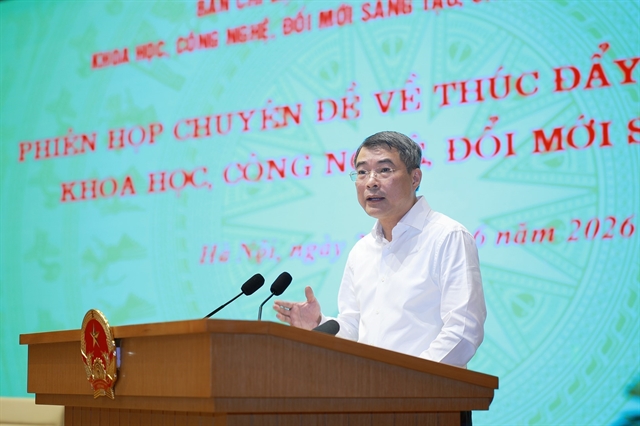
| Prime Minister Lê Minh Hưng chairs a meeting of the Government’s steering committee for the development of science, technology and innovation, and digital transformation on Tuesday. —VNA/VNS Photo Dương Giang |
HÀ NỘI — The approach to developing science, technology and innovation must shift towards measuring success by tangible outputs, practical applications, potential for commercialisation and contributions to economic growth, Prime Minister Lê Minh Hưng said.
He made the statement as he was chairing a meeting of the Government’s steering committee for the development of science, technology and innovation, and digital transformation on Tuesday.
Discussions at the meeting centred on policies needed to shorten the path from research to commercialisation, particularly special financial mechanisms for digital transformation and science, technology and innovation.
Officials also examined how ministries and sectoral leaders can lead value chains and define the roles of localities, research institutes, universities and businesses, as well as how each locality can identify priority development challenges and solutions aligned with the strengths and advantages of each.
Of the 53 tasks assigned following the steering committee’s previous meeting, 11 have been completed, 24 are on schedule, two have missed their deadlines, while 16 are ongoing.
Regarding digital infrastructure and databases, the State has invested approximately VNĐ967 billion (US$37 million) in the construction of 16 key national laboratories. Meanwhile, of the 12 critical national databases, four have fully met all required criteria.
In terms of funding, 3 per cent of the total State budget expenditure has been prioritised for science, technology, innovation and digital transformation. More than VNĐ100 trillion ($3.8 billion) has been allocated for the sector in 2026.
Agreeing with the reports presented at the meeting, PM Hưng noted that progress has been made and many overdue tasks have largely been addressed.
However, several shortcomings and limitations have persisted in terms of management, infrastructure, database development, strategic technologies and products, human capital and resource allocation.
The PM stressed the need to continue implementing the directives of Party General Secretary and State President Tô Lâm, head of the Central Steering Committee.
Science and technology, innovation and digital transformation must directly serve socio-economic development, act as key drivers of double-digit growth and enhance productivity, quality, efficiency, competitiveness and national autonomy, he said.
Outlining key directions for the next few years, Hưng told ministries and departments to identify major tasks tied to their roles and align with local development needs, noting that localities should select products based on their strengths and practical demands.
Businesses should be placed at the centre of the innovation process, while research institutes and universities should align studies with demands. The State should provide frameworks, standards, testing environments and initial markets.
Noting that financial mechanisms must be made more flexible for science, technology, innovation and digital transformation, the PM added that priority should be given to core technologies, commercially viable products and initiatives with broad impacts.
The Government leader instructed ministries, agencies and localities to review all assigned tasks and fully resolve those that are overdue, without proposing deadline extensions unless causes, responsibilities and solutions are clearly identified. All overdue tasks must be completed by June 30.
The Ministry of Public Security (MPS) is assigned to monitor task progress and submit monthly reports to the PM.
As for digital infrastructure, research infrastructure and databases, Hưng tasked the Ministry of Science and Technology (MoST) with refining the National Digital Architecture Framework to ensure coherence, consistency and efficiency for nationwide adoption.
The MoST was also directed to coordinate closely with the MPS in developing the national data architecture and data development plan, while urgently finalising a proposal for a national network of research centres, testing facilities and key laboratories for submission by the end of the month.
In terms of strategic technologies and priority products, the PM instructed each relevant ministry and all localities to design one to three major programmes.
He also asked ministries and localities to clearly define markets, resources, value chains, areas of strengths, priority technologies, leading enterprises, standards, testing milestones and commercialisation pathways by the end of June.
These proposals will be appraised by the MoST, which will ensure clear funding estimates and allocation plans so that projects can begin immediately upon approval.
The Ministry of Education and Training is tasked with coordinating with the MoST and other relevant departments to comprehensively review training programmes and mechanisms for attracting, utilising and rewarding talent.
As for financial mechanisms, the MoST and the finance ministry will conduct research and submit proposals to the Government on breakthrough policies for financial allocation and the delegation of authority to ministries, sectors and localities. A report will be submitted to the PM by Q3 2026.
The steering committee is also tasked with organising a series of thematic conferences in Q3 2026 to support the goal of achieving double-digit economic growth. — VNS
Politics & Law
 Politics & Law
 Politics & Law
 Politics & Law
 Politics & Law
 Politics & Law
 Politics & Law
 Politics & Law
 Politics & Law
 Politics & Law
 Politics & Law
 Politics & Law
 Politics & Law
 Politics & Law
 Politics & Law