 Politics & Law
Draft law proposes to expand eligible tissue and organ donors
1.
|
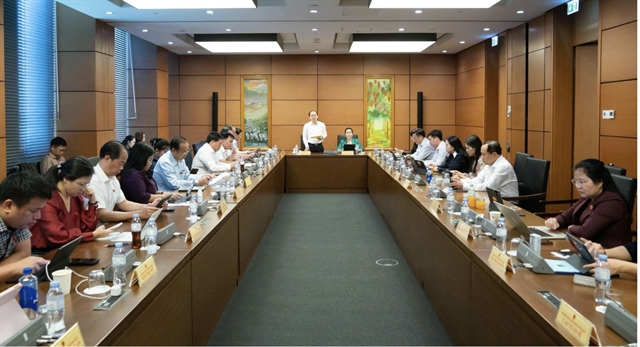
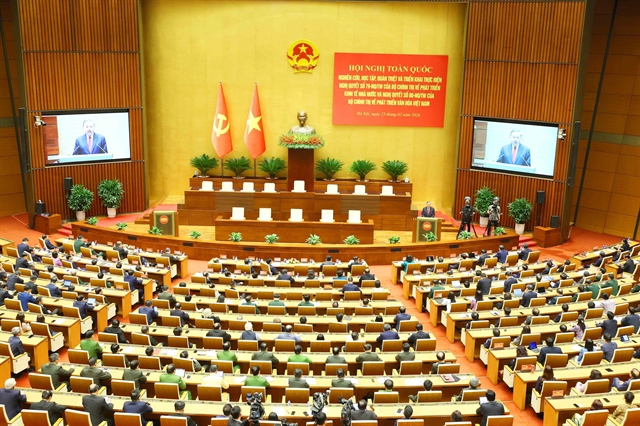
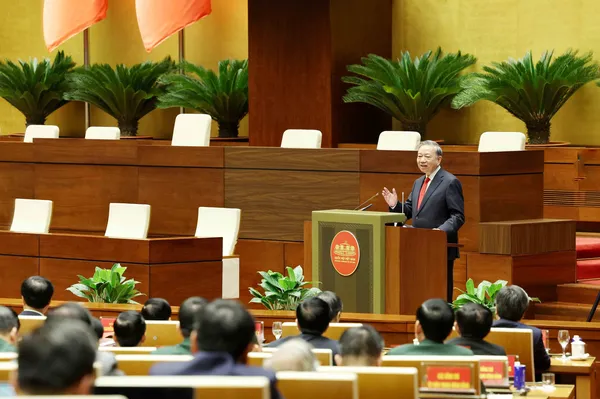
| The national conference on the implementation of Politburo Resolution 79 and Resolution 80 on Wednesday. — VNA/VNS Photo |
HÀ NỘI — The government has unveiled an action programme to translate recent Politburo resolutions on the state economy and cultural development into enforceable law, pledging regulatory reform, targeted investment and institutional overhaul to unlock full national resources.
Presenting the plan at a national conference on February 25, Permanent Deputy Prime Minister Nguyễn Hòa Bình said the government’s priority is to create a clear legal framework that allows resources to be mobilised and deployed effectively, ensuring that the resolutions go into real life rather than remaining policy statements.
The programme implements Politburo Resolution 79 on the development of the state economy and Resolution 80 on the development of Vietnamese culture.
Together, they form part of the Party’s broader push to recalibrate growth drivers and strengthen what officials describe as the country’s internal foundations.
According to the Deputy Prime Minister, the government has assigned 230 specific tasks, including 99 related to the state economy and 131 focused on cultural development.
These tasks are structured around five pillars: building a coherent legal framework; developing high-quality human resources; investing in strategic infrastructure; introducing tailored incentive mechanisms; and clearly assigning responsibilities, timelines and deliverables to ministries and local authorities.
On culture, the government plans an expansive overhaul combining institutional reform with tighter information governance.
Measures include drafting new laws and amending existing legislation to address gaps in investment incentives, taxation, land use and public-private partnerships for cultural institutions.
A National Cultural Index and new statistical indicators will be introduced to measure the contribution of cultural industries to economic growth.
The programme also places heavy emphasis on what officials call a clean information environment, with commitments to strengthen digital governance, expand post-inspection enforcement and intensify efforts to curb harmful or offensive online content.
A nationwide digital cultural platform is to be rolled out, offering online access to libraries, museums and performing arts, while artists and intellectuals are expected to play a central role in shaping public values.
At the same time, the government is seeking to develop cultural industries and creative markets.
Plans include building creative ecosystems linked to start-ups and new technologies, forming cultural and entertainment industry clusters in major cities and developing five to ten nationally branded cultural and tourism products rooted in regional identities.
Hà Nội, Quảng Ninh, Ninh Bình and Huế are earmarked for heritage-based economic models.
A new Cultural Diplomacy Strategy to 2030, with a vision to 2045, is to be issued, embedding cultural cooperation into bilateral and multilateral economic agreements as well as high-level leadership visits.
Việt Nam will also work with UNESCO to prepare dossiers seeking recognition for five additional world cultural and natural heritage sites, while stepping up efforts to regulate cross-border digital content and block what authorities describe as offensive or harmful foreign cultural products online.
The government has committed to ring-fencing a minimum of 2 per cent of annual state expenditure for cultural development, with funds to be allocated on a focused, output-based basis rather than dispersed administratively.
On the state economy, the action programme focuses on tightening control and improving returns from land, natural resources and public assets.
The government plans to review the Land Law to strengthen decentralisation while reclaiming abandoned or wastefully used land, digitise and integrate land data nationwide and carry out a comprehensive inventory of mineral resources.
New regulatory frameworks are also planned for offshore wind power, rare earths and underground space, alongside a pilot sandbox regime for what officials describe as the spatial economy and the low-altitude economy, including infrastructure for unmanned aerial vehicles.
Fiscal reforms feature prominently. The government is studying new asset-based and carbon-related taxes in line with international practice, while seeking to limit the embedding of social policy goals within revenue policy.
It also plans to restructure off-budget financial funds, dissolve overlapping or ineffective vehicles and entrust some state financial assets to professional financial institutions.
State-owned enterprises will be subject to governance reforms aligned with OECD standards, with performance assessed on final outcomes rather than administrative compliance.
Leading state firms may be allowed to reinvest the full proceeds from divestments, and the government is considering a shortlist of large state enterprises capable of playing a dominant role in strategic sectors, including candidates for the global Fortune 500 by 2030.
Ministries and local authorities are required to issue detailed action plans by the end of the first quarter of 2026, with senior officials held directly accountable. The Ministry of Finance and the Ministry of Culture will oversee progress and report annually to the government. — VNS
Politics & Law
 Politics & Law
 Politics & Law
 Politics & Law
 Politics & Law
 Politics & Law
 Politics & Law
 Politics & Law
 Politics & Law
 Politics & Law
 Politics & Law
 Politics & Law
 Politics & Law
 Politics & Law
 Politics & Law