 Politics & Law
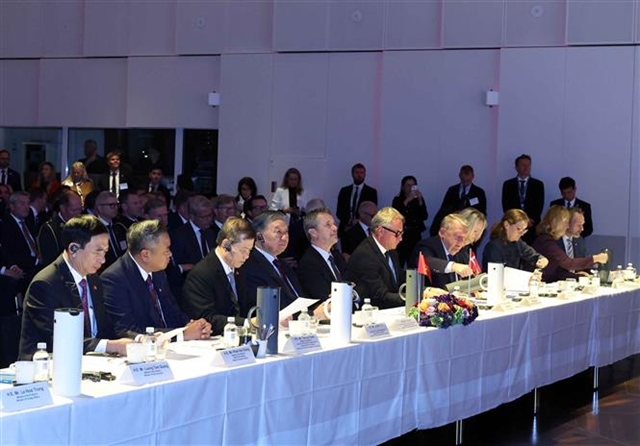
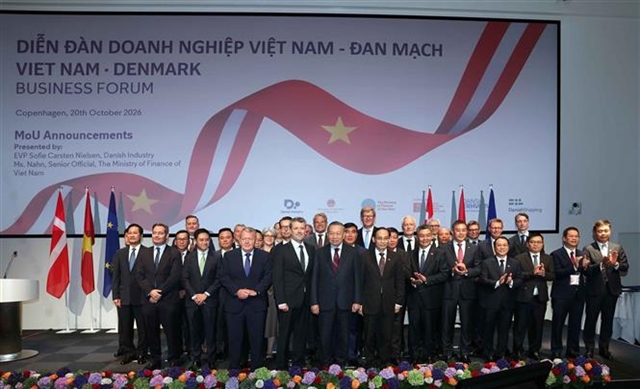
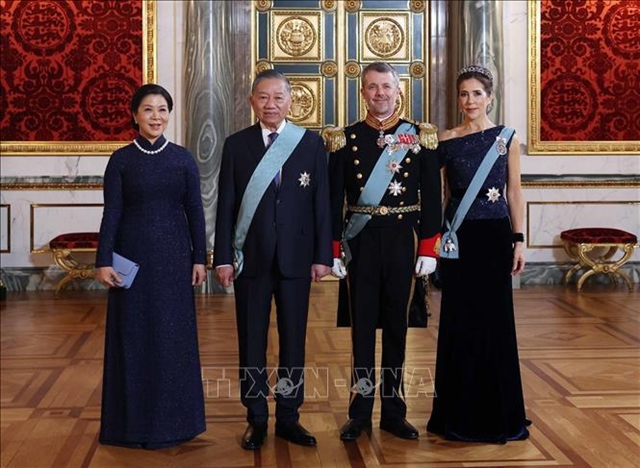
General Secretary and President Tô Lâm witnesses exchange of Việt Nam-Denmark cooperation agreements
1.
|
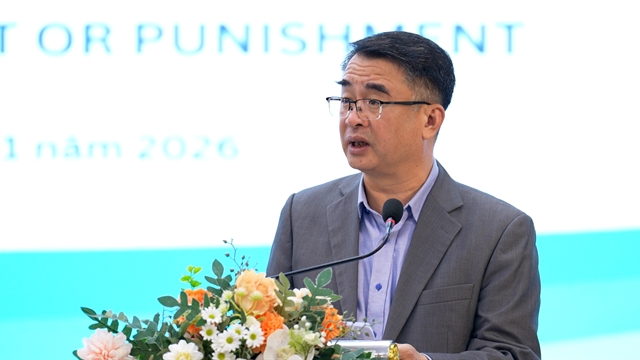
| Colonel Trần Viết Trung, Deputy Head of the Foreign Relations Department at the Ministry of Public Security, gives a speech at the workshop. — Photos courtesy of the Ministry of Public Security |
GIA LAI — Việt Nam has been a party to the Convention against Torture since 2015 and, over the past decade, has consistently worked to effectively implement measures to ensure the right to freedom from torture.
Colonel Trần Viết Trung, Deputy Head of the Foreign Relations Department at the Ministry of Public Security, made the statement on Friday in an address at an international workshop titled 'Introducing the Istanbul Protocol: A manual on effective investigation and documentation of torture and other cruel, inhuman or degrading treatment or punishment'.
The event was held in Gia Lai Province and organised by the Vietnamese Ministry of Public Security in collaboration with the United Nations Development Programme (UNDP).
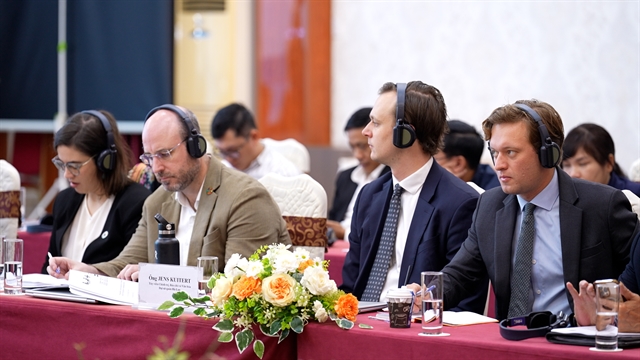
It was attended by leading UN human rights experts, as well as representatives from various ministries, sectors, judicial bodies, law enforcement agencies and health services in Việt Nam.
Việt Nam continues to advance deep and comprehensive international integration, reaffirming its consistent commitment to respecting, protecting and promoting human rights, particularly in fully implementing its obligations under the United Nations Convention against Torture.
The workshop aimed to introduce the content of the Istanbul Protocol, a manual on the effective investigation and documentation of torture, with support from international experts.
|
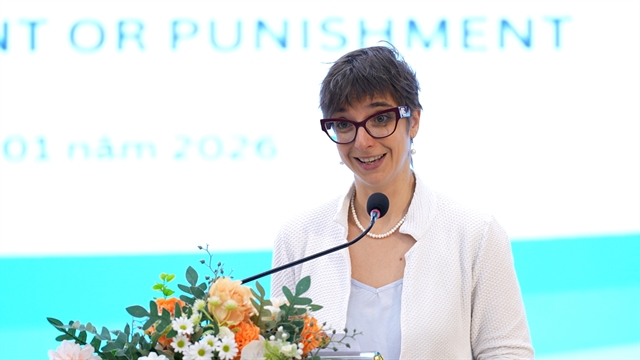
| Federica Dispenza, assistant to the Resident Representative and head of the Governance and Participation Team at UNDP Việt Nam. |
Federica Dispenza, assistant to the Resident Representative and head of the Governance and Participation Team at UNDP Việt Nam, stated that adopting the Istanbul Protocol not only enhanced the quality, transparency and reliability of investigations but also strengthened protections for persons in detention or custody, while creating clear legal safeguards for law enforcement officers themselves.
According to Dispenza, this is seen as a crucial foundation for building public trust in the justice system and law enforcement agencies.
Dispenza emphasised that the workshop was part of a broader effort to ensure that Vietnamese agencies are increasingly well-equipped, both technically and strategically, to engage effectively in human rights diplomacy and implementation, aligned with national priorities, implementation roadmaps and Việt Nam's specific context.
The Istanbul Protocol serves a practical purpose by providing professional standards for the effective investigation and documentation of torture and other cruel treatment or punishment, combining legal and medical expertise to ensure that evidence is collected reliably, consistently and admissibly in legal proceedings.
According to the protocol, preventing and responding to torture is not the responsibility of any single agency or entity. It requires a whole-of-system and whole-of-society approach, involving investigators, detention facility managers, medical personnel, forensic services, prosecutors, defence lawyers and the court system – each playing their role within a coordinated and unified framework.
Dispenza said: “It is precisely here that the Istanbul Protocol aligns closely with Việt Nam's national priorities, including the goal of strengthening and ensuring the rule of law.”
The workshop's discussion sessions focused on clarifying the context of the protocol's development, its structure and core principles, the roles of various actors in preventing and countering torture and international and regional experiences in applying its standards.
Attendees and experts participated in the workshop as an open forum for exchanging views on opportunities, challenges and suitable approaches for Việt Nam moving forward.
The event also represents Việt Nam's effort to implement the Convention against Torture in line with UN standards and to reduce discrepancies between the convention and national law.
Both the Istanbul Protocol and the Méndez Principles on Effective Interviewing for Investigations and Information Gathering are key documents to help officials better implement the nation's obligations under the convention.
Đào Anh Tới, deputy head of the Department of Legal Affairs and Judicial Administrative Reform at the Ministry of Public Security, confirmed that the expert opinions and international experiences shared at the workshop will serve as important references for Việt Nam to continue researching, determining roadmaps and proposing suitable and effective applications of the protocol.
This will help fulfil the country's obligations under the Convention against Torture and the recommendations of UN human rights mechanisms.
|
| The workshop was attended by leading UN human rights experts, as well as representatives from various ministries and sectors. |
Promulgated by the United Nations in 1999, the Istanbul Protocol is an important international guiding document on the investigation, collection and documentation of allegations of torture and other cruel treatment.
It sets out scientific, legal and ethical standards, integrating legal and medical expertise to ensure evidence is gathered independently, objectively, reliably and admissibly in proceedings.
Although not legally binding, the Istanbul Protocol has been applied in over 100 countries and is regarded as a practical tool directly supporting the implementation of Article 12 of the Convention against Torture, which requires states to conduct prompt, effective and impartial investigations into all allegations of torture. — VNS
Politics & Law
 Politics & Law
 Politics & Law
 Politics & Law
 Politics & Law
 Politics & Law
 Politics & Law
 Politics & Law
 Politics & Law
 Politics & Law
 Politics & Law
 Politics & Law
 Politics & Law
 Politics & Law
 Politics & Law
.jpg)