 Politics & Law
Southern industrial output, trade grow in first nine months
1.
 |
“Looking to the future, the Party has set the goal that by 2045, the centenary of the nation’s founding, Việt Nam will become a strong, prosperous and happy country. This is the aspiration of the entire nation, and a pledge of honour before History and before the People.”
In his address at the ceremony marking the 80th National Day of the Socialist Republic of Việt Nam, General Secretary Tô Lâm reaffirmed this pledge, framing it as both an affirmation and a solemn commitment to the Party’s historic mission in a new era: to lead the country into an age of development, strength, prosperity and flourishing progress.
This “pledge of honour” reflects the perspectives of experts, scholars, international friends and overseas Vietnamese regarding the Party’s leadership in realising the national aspiration for a strong Việt Nam and thereby fulfilling this pledge before History and the People.As Việt Nam looks towards its centenary in 2045, the Party’s pledge of honour before History and the People — reaffirmed by General Secretary Tô Lâm — captures the nation’s collective aspiration for strength, prosperity and enduring progress.
 |
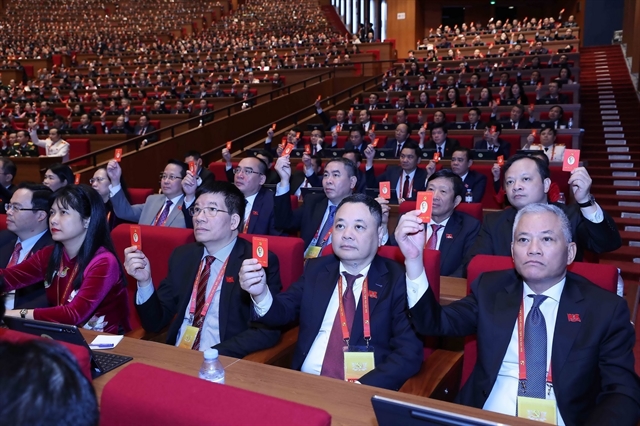
| Delegates attend the opening session of the 13th National Party Congress. VNA/VNS Photos |
The 13th tenure of the Party is widely viewed as a period in which the challenges were more numerous, greater in scale and more intense than the opportunities. The COVID-19 pandemic erupted and spread across the globe, the world economy experienced a severe downturn, supply chains were disrupted, trade and tariff tensions rose, and geopolitical conflicts produced unpredictable consequences. On top of these global shocks, Việt Nam also endured severe and unusual bouts of natural disasters, storms and floods. It was precisely in such extraordinary adversity that the achievements of the past five years further affirmed the mettle and leadership capacity of the Communist Party of Việt Nam.
Researcher Assaf Talgam of Israel remarked that the Party’s steadfast and flexible leadership has been central to Việt Nam’s ability to maintain a stable development trajectory in an unpredictable world. This view is echoed by Veeramalla Anjaiah, a senior researcher at the Centre for Southeast Asian Studies in Jakarta, who emphasised that the Party’s resolve, spirit of self-reliance and strong leadership have enabled Việt Nam to maintain political stability, achieve robust economic growth and deepen international integration.
The past five years offer clear evidence that the Party’s consistent leadership has been the pillar safeguarding stability and guiding Việt Nam forward amid a rapidly restructuring international order.
 |
| On the morning of February 1, 2021, the 13th National Congress of the Communist Party of Việt Nam held its closing session at the National Convention Centre in Hà Nội. The 13th Party Central Committee is introduced to the Congress. |
Reflecting on the 13th tenure, veteran diplomat Nguyễn Hữu Động, President of the Vietnamese Association in Mexico, likened the Party’s role to that of the helmsman steering the Vietnamese ship through stormy seas. He said the continuity of the Party’s line and its collective leadership serves as the compass keeping the national ship on its intended course. This mettle is demonstrated in the unwavering pursuit of long-term goals and the spirit of independence and autonomy in the face of challenges. Professor Furuta Motoo, President of the Việt Nam – Japan University, notes that political stability has been decisive in helping Việt Nam overcome crises, preserve peace and create favourable conditions for long-term strategies such as digital transformation and green development.
From this bedrock of political stability, Việt Nam’s economy has continued to grow and recover strongly after the pandemic, becoming a “bright spot”. Mourad Lamoudi, a Central Committee member in charge of external affairs of Algeria’s ruling National Liberation Front, described the country’s achievements across economic, social and cultural fields over the past five years as “excellent”, proving the soundness of the đổi mới (renewal) policy. Milos Kosy, President of the Czech–Việt Nam Friendship Association, likewise assessed the shift towards a socialist-oriented market economy as a practical and far-sighted choice by the Communist Party of Việt Nam.
Economic development in close connection with social progress and justice is another aspect highly regarded by international experts. Professor Reena Marwah, Secretary-General of the Association of Asian Scholars, cited Việt Nam as a standout example of rapid poverty reduction, expanded access to education and healthcare, and the early completion of many Millennium Development Goals. Professor Vũ Minh Khương of the Lee Kuan Yew School of Public Policy (Singapore) highlighted that ensuring social welfare even during difficult times such as the pandemic reflects the humane essence of the socialist development path. Patrik Köbele, Chairman of the German Communist Party, also noted the country’s human development indicators and its prioritisation of people’s quality of life.
 |
| Doctors at Đà Nẵng Lung Hospital congratulate COVID-19 patients as they are discharged following full recovery in August, 2020. |
In foreign affairs, the Party’s line of independence, self-reliance, multilateralisation and diversification has enabled Việt Nam to secure important and strategic achievements. Stefano Bonilauri, Director of Anteo Edizioni (Italy), observed Việt Nam’s shift from “participation” to “active contribution” in UN peacekeeping and humanitarian activities, a strategic milestone that enhances national image and demonstrates Việt Nam’s role as a responsible and proactive member of the international community.
Professor Shimizu Masaki of Osaka University commented that Việt Nam is moving from a “balancing” role to that of a “constructive partner” and “regional connector”. Journalist Gastón Fiorda of Argentina and researcher Veeramalla Anjaiah also noted that Việt Nam is increasingly seen as a stable, reliable and responsible partner, especially in global supply chains and trade cooperation, thanks to a flexible yet resolute foreign policy that places national interests first.
 |
| On October 14, 2025, in New York City, the 80th session of the UN General Assembly elected members to the UN Human Rights Council for the 2026–2028 term. Việt Nam was re-elected with 180 votes — the highest in the Asia–Pacific group. |
The expanding network of strategic and comprehensive strategic partnerships has significantly elevated Việt Nam’s position amid intensifying geopolitical competition. More importantly, as Thai scholar Kavi Chongkittavorn observed, sound diplomacy has enabled Việt Nam to rise confidently while reinforcing the nation’s defence and security.
Taking stock of the national landscape ahead of the 14th National Party Congress, it is evident that the path towards a new era of national rise and the aspiration to “stand shoulder to shoulder with the powers of the five continents” has been clearly charted.
 |
| Việt Nam is moving from a “balancing” role to that of a “constructive partner” and “regional connector”. |
The firm mettle of the Communist Party of Việt Nam has been demonstrated through its leadership line and wise decisions, enabling the nation to overcome challenges and achieve comprehensive and substantial progress during the 13th tenure, thereby laying a solid foundation for the next stage of development.
The light of intellect
With the path of development in this new era now defined, the Communist Party of Việt Nam is fulfilling its “pledge of honour before History and before the People” through strategic and transformative decisions that embody wisdom and contemporary vision.
Building on the gains made in economic and social development, strengthening national defence and security, and enhancing Việt Nam’s international standing during the 13th tenure, the Party and State are implementing a series of strategic breakthroughs.
The focus is on building and perfecting institutions, improving the effectiveness of state governance, unlocking internal strength, promoting growth while maintaining macroeconomic stability, renewing the growth model and restructuring the economy towards modernity, driven by science and technology, innovation and digital transformation.
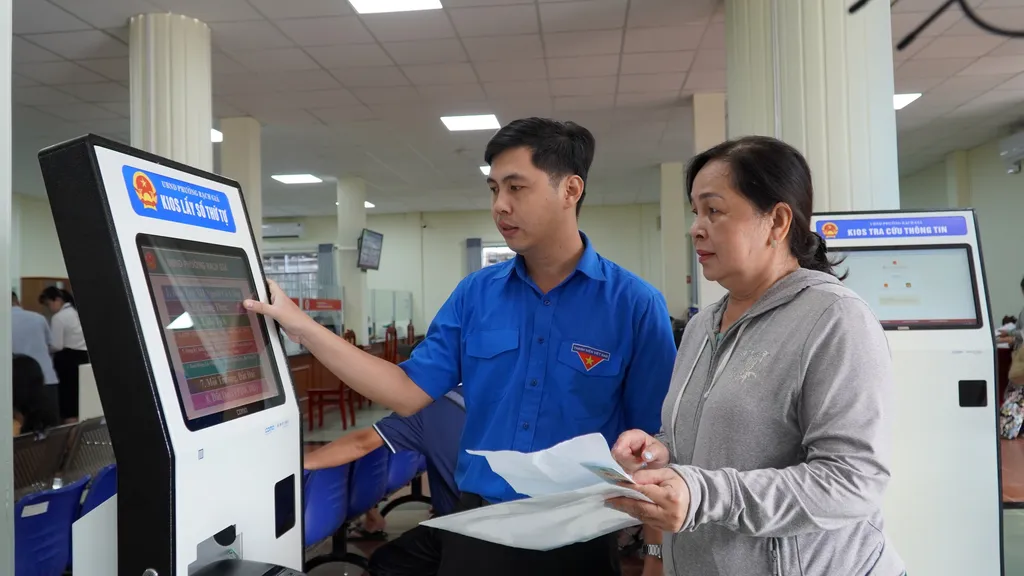 |
| Youth volunteers in Rạch Giá Ward, An Giang Province, assist residents in registering for administrative procedures on the digital system. |
In interviews with Vietnam News Agency (VNA) reporters, most foreign experts and scholars expressed strong impressions of Việt Nam’s bold reforms, particularly institutional reform, streamlining the administrative apparatus and the issuance of major foundational resolutions.
These are viewed as essential factors that allow the country to overcome old constraints and create strategic breakthroughs towards two major milestones: the Party’s centenary in 2030 and the nation’s centenary in 2045. As Giulio Chinappi, Asia Regional Director of Anteo Edizioni (Italy), noted, Việt Nam’s comprehensive reforms embody the principle that “people come first”, driving meaningful social progress rather than remaining at the level of slogans.
One of the most prominent highlights of the 13th tenure has been institutional reform combined with a sweeping reorganisation of the administrative apparatus, including the adoption of the two-tier local government model. This is considered a historic decision aligned with modern global governance trends and a “starting gun” for a new stage of Việt Nam’s development.
Latin American media described the rollout of the two-tier model and administrative boundary adjustments as a strong commitment by the Party and Government to optimise administrative efficiency and improve public service delivery, calling it a “historic turning point for the benefit of the people”.
 |
| Youth Union members in Ba Sơn Commune (Lạng Sơn Province) visit the home of Dương Múi Say, a Dao ethnic resident in Co Loi Hamlet, to help her register a level-1 electronic identification account via the VNeID application. |
Dr Cheng Hanping, Executive Dean of the Institute of Regional and National Studies and Director of the Việt Nam Studies Centre at Zhejiang University of Technology (China), viewed this as a major and historic reform, reflecting the Party’s resolve and capacity to shape the nation’s future and demonstrating that the “new era” envisioned by Party leaders will indeed be realised.
Experts affirmed that Việt Nam is entering “a new era of state governance” with a modern, dynamic and accessible administrative system. This is not merely structural reform but a fundamental shift in governance philosophy, moving from administrative command to genuine public service, with a government that “dares to think, dares to act and dares to take responsibility” in the digital and global integration age.
Kwon Sung Taek, President of the Korean–Vietnam Economic and Cultural Exchange Association, described this as an inevitable choice for Việt Nam’s prosperous future, a strategic overhaul to enhance administrative efficiency and national competitiveness. To him, it is akin to “turning the impossible into the possible”.
Professor Carl Thayer of the Australian Defence Force Academy assessed that the major restructuring and streamlining programme will create momentum for Việt Nam ahead of the 14th National Party Congress.
Alongside administrative streamlining, the Party and State continue to perfect the legal system, shifting from “law-making for management” to “law-making for development”. Numerous pivotal resolutions have been issued to promote economic growth alongside macro stability, renew the growth model and restructure the economy based on science and technology, innovation and digital transformation.
 |
| Professor Carl Thayer of the Australian Defence Force Academy (University of New South Wales) speaks to a VNA correspondent in Australia. |
Observers have praised the issuance of major resolutions even before the 14th Congress, rather than waiting until after its conclusion as in the past. This approach extends the policy implementation period and allows early resolution of bottlenecks, enabling the new apparatus to function smoothly from the start of the next tenure.
Miguel Mejía, General Secretary of the United Left Movement of the Dominican Republic, observed that the Party and Government have undertaken a strategic transition in politics and economics, opening the way for deeper integration in trade, diplomacy and culture. This has allowed Việt Nam not only to strengthen its regional standing but also to grow increasingly important on the global stage.
With the guiding principle of rapid but sustainable growth, without trading away social progress, the environment or the nation’s long-term future, the Party and State have issued resolute policies promoting the digital economy, green economy, circular economy, energy transition and climate adaptation.
 |
| In August 2025 in Hà Nội, Prime Minister Phạm Minh Chính chaired a working session with the Advisory Council for Private Economic Development (Board IV). |
National digital transformation has been identified as a key driver for economic restructuring and innovation in governance, production and consumption. Ludwig Graf Westarp, Vice President of the Germany–Việt Nam Association and lecturer at Dortmund University of Applied Sciences and Arts, assessed that these resolutions will provide a solid foundation for the country’s take-off. A transparent and consistent legal framework will build investor confidence and ensure fair competition, while scientific and technological innovation will enhance productivity and global competitiveness.
Throughout its journey of national rise, Việt Nam has always placed internal strength at the heart of development. In a New Year interview with VNA, General Secretary Tô Lâm emphasised the Party’s enduring philosophy and strategic vision: development for the people and by knowledge. R. Arun Kumar, a Central Committee member and head of external affairs of the Communist Party of India (Marxist), praised this vision, noting that prioritising science and technology as the key driver of productive forces and quality of life underscores Việt Nam’s people-centred development path.
The Party’s intellect, long-term strategic vision and creative thinking have become a “source of light” illuminating Việt Nam’s path into a new era, one measured not only by growth rates or economic figures but by the quality of development, by the happiness of the people and by the mettle and position of a nation that is self-reliant, confident and responsible. When sound policies align with social consensus and public trust, that collective strength becomes a firm foundation for Việt Nam to press forward as one, united under a common banner.
Shouldering a historic mission
The Communist Party of Việt Nam has defined its historic mission as leading the country into an era of development and prosperity, building a socialist Việt Nam that is wealthy, strong, democratic, just and civilised, standing shoulder to shoulder with the powers of the five continents.
 |
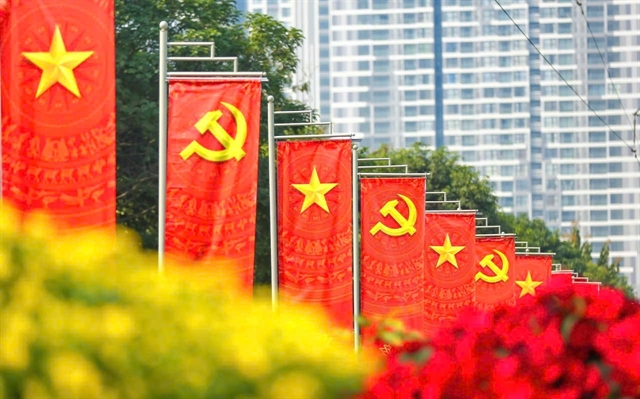
| Residents of Kinh Bắc Ward in Bắc Ninh Province hang national flags to welcome the 14th National Party Congress. |
This mission is embodied in the theme of the 14th National Party Congress: “Under the glorious flag of the Party, with unity and resolve, we strive to achieve the national development goals towards 2030, advancing with self-reliance and confidence in the era of national ascent, for peace, independence, democracy, prosperity, well-being and steady progress towards socialism.” It is the crystallisation of the nation’s mettle, intellect and aspiration.
With the achievements of the 13th tenure and the decisions now being implemented, the goal of transforming Việt Nam into a developed nation by 2045 is increasingly seen as attainable. The Party’s strength, forged through systematic leadership, unwavering goals and flexible methods, together with national unity and growing social participation, has become a powerful driving force for the Party to shoulder its historic responsibility in the new era.
“This is not the result of luck but the product of systematic leadership built on historical experience and adaptive capacity,” said UN electoral expert Nguyễn Hữu Động.
In a world marked by rapid, complex and unpredictable change, the Party’s ability to maintain strategic direction while adjusting leadership methods flexibly is viewed as a distinctive strength.
 |
| Banners and decorations celebrating the 14th National Party Congress are displayed across central parks in Huế City. |
From a comparative historical perspective, Assaf Talgam of the Communist Party of Israel noted that few political organisations have been able to sustain continuous leadership while adapting effectively to the demands of modern governance as the Communist Party of Việt Nam has done.
The Party’s spirit of self-renewal and self-correction has been a source of internal momentum behind its decisive actions in recent years. Its willingness to confront shortcomings and treat Party building and rectification as a regular task has helped strengthen public trust and lay the groundwork for long-term development.
In the documents of the 14th Congress, the theory of renewal has been explicitly affirmed as part of the Party’s ideological foundation. Dr Phạm Thị Thanh Loan, an active member of the Vietnamese community in China, described this as an important milestone in the Party’s ongoing effort to enhance its leadership capacity. It embodies both continuity with Marxism–Leninism and Hồ Chí Minh Thought and the Party’s ability to innovate creatively in a new historical context.
Ngụy Vi, Head of the Vietnamese Service at China Central Television, assessed that the renewal policy has become a guiding principle across politics, the economy, society, diplomacy and security. The reaffirmation of reform reflects the Party’s capacity to synthesise practical experience and refine its leadership thinking in the current context.
Alongside the Party’s leadership, the strength of great national unity continues to be recognised as a critical resource anchoring the country’s development. The close bond between the Party and the people is essential to maintaining political stability and reinforcing social trust.
Patrik Köbele of the German Communist Party stressed that the Party’s leadership is expressed not only through decisions but also through its deep connection with the people, the foundation of its leadership strength. In turn, the alignment between strategic direction and practical action is seen as key to strengthening public confidence.
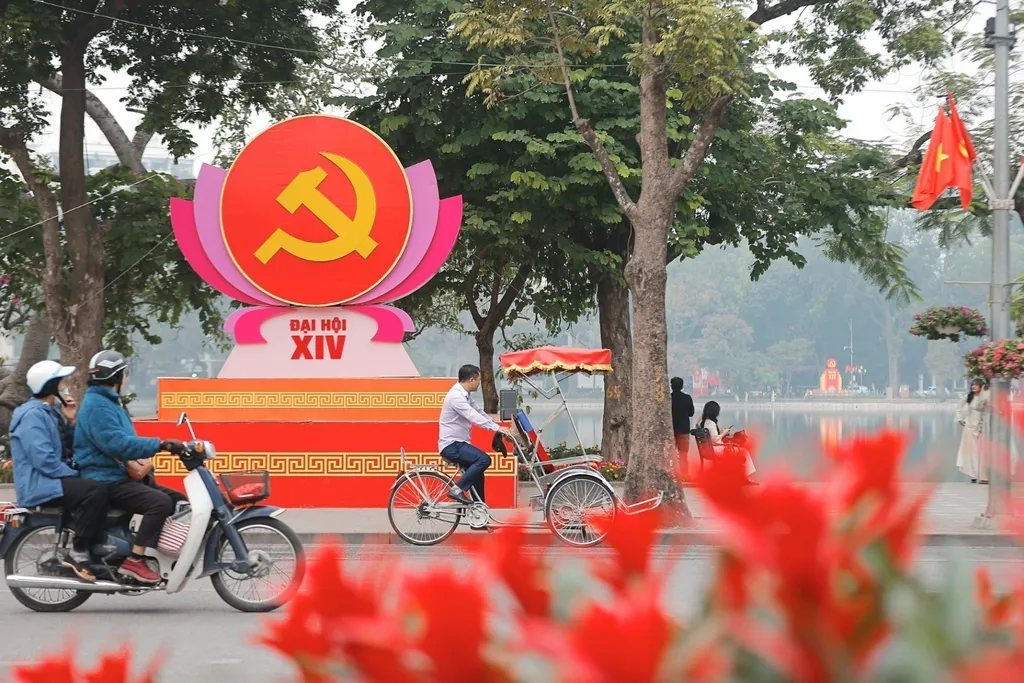 |
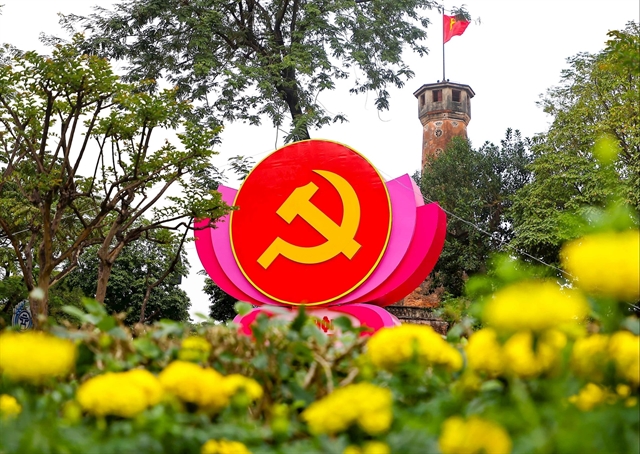
| Around Hoàn Kiếm Lake, the emblem of the 14th National Party Congress, featuring the red flag and hammer-and-sickle symbol, is placed in prominent positions, accompanied by Party and national flags and decorative flowers, creating visually striking highlights rich in political significance. |
Professor Furuta Motoo noted that a defining characteristic of the Communist Party of Việt Nam is its responsiveness to the people’s aspirations, will and sentiments, encapsulated in the principle “the people are the root”. As long as this tradition is maintained, he said, the Party will continue to play a pivotal role in national political life.
In an increasingly interconnected world, the overseas Vietnamese community has also become an important contributor to national unity. Phan Kiên Cường, Deputy Director of the Việt Nam Economic and Trade Development Consultancy Centre in the Czech Republic, noted that creating channels for overseas Vietnamese to comment on major documents, resolutions and policies is a vivid expression of national unity in the new context. Overseas Vietnamese are not only emotionally connected to the homeland but increasingly committed to meaningful, responsible and sustained contributions. This is a “critically important resource” that, if effectively harnessed, will significantly support national development in the next phase.
Lawyer Đặng Chiến Thắng, currently living and working in the United States, said that the homeland remains a spiritual anchor for all Vietnamese, who are eager to contribute to the motherland’s progress. As barriers are gradually removed, the trust and connection of overseas Vietnamese with the country grow stronger.
From the perspective of young Vietnamese intellectuals studying and working abroad, Hoàng Đình Thiết of Beijing Foreign Studies University expressed hope that with trust, unity and determination, the 14th Congress will open a new and promising chapter for the country. He hopes that the Congress will continue to inspire a strong national aspiration for a prosperous and happy Việt Nam, motivating every Vietnamese, at home and overseas, to recognise their role and responsibility.
 |
| Residents of Ô Chợ Dừa Ward decorate their neighbourhood with flags to welcome the 14th National Party Congress. |
The journey towards the two “century goals” will be long and demands perseverance, but also flexibility and creativity in every step. On this journey, the pledge to History and to the People will be judged by concrete actions, by the participation of society and by trust built through real-world results.
The 14th National Party Congress will be a pivotal moment in defining the vision and selecting the strategy for the next stage, ensuring that the Vietnamese ship, under the Party’s leadership and the unity of the people both at home and abroad, continues to move confidently towards the goals of 2030 and 2045, in a sustainable and successful manner. VNS
Politics & Law
 Politics & Law
 Politics & Law
 Politics & Law
 Politics & Law
 Politics & Law
 Politics & Law
 Politics & Law
 Politics & Law
 Politics & Law
 Politics & Law
 Politics & Law
 Politics & Law
 Politics & Law
 Politics & Law