 Politics & Law
Lotte, Phát Đạt combine strengths in Thu Thiem project
1.
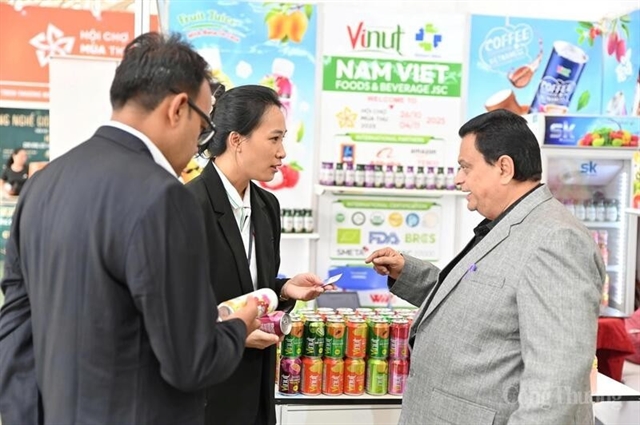 |
| The first Golden Autumn Fair held in October 2025 witnessed the signing of more than 100 cooperation agreements and memorandums of understanding between Vietnamese businesses and international partners in diverse sectors. VNA/VNS Photo |
HÀ NỘI — Prime Minister Phạm Minh Chính has confirmed that renewing economic diplomacy is no longer a matter of choice but an objective requirement of reality, an urgent necessity, a strategic option and one of the top priorities in helping realise the nation’s aspiration for strong and prosperous development.
He made the statement in an article titled ‘Economic diplomacy makes a vigorous transformation for the nation’s strong and prosperous development’.
The article says that amid the upbeat atmosphere nationwide as the country moves toward the 14th National Congress of the Communist Party of Việt Nam, under the leadership of the Party and the Government, ministries, sectors and localities are actively preparing to implement orientations, tasks and solutions across multiple fields.
In this process, economic diplomacy holds special significance, helping to “lead the way and open paths,” attract resources, create opportunities and open up new development space to drive the country’s rapid and sustainable development in the new era.
Since the beginning of the current term five years ago, the global context has been marked by greater instability and uncertainty, with more adverse factors than in the previous five-year period.
Difficulties have intertwined with opportunities and favourable conditions, but challenges have outweighed the latter.
However, with strong determination, great efforts and resolute action by the entire Party, people and armed forces, Việt Nam had achieved numerous commendable and historically significant achievements across all fields, the PM said, adding that the economy had increasingly demonstrated greater resilience to external shocks.
In 2025, GDP growth reached 8.02 per cent, placing Việt Nam among the group of high-growth economies in the region and the world.
The size of the economy in 2025 reached approximately US$514 billion, with GDP per capita estimated at $5,026, bringing Việt Nam into the category of upper middle-income countries.
Việt Nam ranked among the world’s top 15 developing countries in attracting foreign direct investment and among the top 20 countries globally in terms of trade scale.
He praised foreign affairs and international integration for standing out as bright spots amid a world marked by geopolitical uncertainty, with economic diplomacy delivering many impressive results.
Technology diplomacy had been strengthened, creating breakthroughs in science and technology development, innovation, digital transformation and the building of an independent and self-reliant economy closely linked with deep, substantive and effective international integration.
Việt Nam’s prestige and international standing continued to rise in the global economy and geopolitics.
To date, Việt Nam has signed and participated in 17 free trade agreements (FTAs), established diplomatic relations with 194 countries, including all members of the United Nations, and set up comprehensive partnership or higher frameworks with 42 countries, including 17 G20 members. It has done all of this while maintaining comprehensive strategic partnerships with all five permanent members of the United Nations Security Council.
Việt Nam has taken on many important multilateral responsibilities, such as being re-elected to the United Nations Human Rights Council for the 2026–28 term, hosting the ASEAN Future Forum, the fourth Partnering for Green Growth and the Global Goals 2030 (P4G) Summit and the signing ceremony of the UN Convention against Cybercrime, among others.
The Government leader spoke highly of the diplomatic sector and especially economic diplomacy for having made highly important and effective contributions to those achievements.
Economic diplomacy was praised for deepening economic cooperation, enhancing the convergence of interests with partners, attracting external resources for national development and playing a pioneering role in promoting international economic integration and connectivity, especially by advancing and elevating Việt Nam’s participation and contributions in multilateral economic cooperation mechanisms.
Chính said the draft documents of the 14th National Party Congress emphasised the need to “promote comprehensive diplomacy in service of development, with a focus on economic diplomacy and technology diplomacy.”
In the next few years, economic diplomacy will shoulder three major responsibilities, according to the PM.
First, it must help shape a strategic space for the country to enter a new era of strong, civilised and prosperous development.
Second, it should enhance its role as a key driving force in attracting resources, removing bottlenecks and addressing major challenges to create breakthroughs in national growth and development, especially in promoting science and technology, innovation, digital transformation and the green transition.
Third, it must contribute to building an independent and self-reliant economy while actively advancing international integration.
Guided by the principle that “resources stem from thinking and vision; momentum stems from renewal and innovation; strength stems from the people and businesses,” economic diplomacy and technology diplomacy policies need to take into account three important priorities over the next few years.
The first is to steadfastly uphold the path of national independence and socialism, remain firm in an independent and self-reliant foreign policy of multilateralisation and diversification, actively integrate into the international community and be a friend, a reliable partner and a responsible member of the international community.
Meanwhile, the second priority is to be firm yet flexible, resolutely safeguarding national interests while remaining agile in implementation to achieve objectives.
The third is to maintain a firm and in-depth grasp of developments and provide timely, flexible, appropriate and effective policy advice and responses.
As the country enters a new stage of development, external affairs and especially economic diplomacy should focus on thoroughly grasping and effectively implementing the Resolution of the 14th National Party Congress, as well as resolutions of the Party, the National Assembly and the Government, especially Politburo Resolution 59 on international integration in the new context.
Priority should be given to strengthening cooperation in the economy, trade and investment as well as in science and technology, digital transformation, green transition, energy transition, education and training, health care, culture, labour, tourism, environmental protection and climate change response.
Efforts should be stepped up to promote technology transfer in key sectors of the economy, such as nuclear energy, high-speed rail and semiconductors, with the goal of completing the construction of a semiconductor chip manufacturing plant by the end of 2027.
A comprehensive set of solutions should be implemented to diversify markets, products and supply chains, with a focus on tapping and making full use of potential markets, intensifying the promotion and branding of Vietnamese products overseas and expediting negotiations and the signing of FTAs with countries and regions in the Middle East, Central Asia, Africa and Latin America.
The PM also urged priority support for localities and the business community, especially small and medium-sized enterprises, in economic integration and international cooperation and links.
Chính asked that the foreign affairs sector, along with ministries, sectors and localities, continue close coordination in advising and proposing to relevant authorities mechanisms, policies and solutions to create breakthroughs in external relations, particularly by promoting economic diplomacy and technology diplomacy, contributing to the successful achievement of double-digit growth targets in 2026 and beyond.
He called for resolute action and unremitting efforts to create breakthroughs in science and technology, innovation and the green transition in the digital era.
These are the key driving forces and the “golden key” enabling Việt Nam to catch up with, keep pace with and move ahead of others, achieve rapid and sustainable development, and successfully realise the two centenary strategic goals, striving to become a developed, high-income country by 2045, the article says. VNS
Politics & Law
 Politics & Law
 Politics & Law
 Politics & Law
 Politics & Law
 Politics & Law
 Politics & Law
 Politics & Law
 Politics & Law
 Politics & Law
 Politics & Law
 Politics & Law
 Politics & Law
 Politics & Law
 Politics & Law