 Opinion

Lotte, Phát Đạt combine strengths in Thu Thiem project
1.
 |
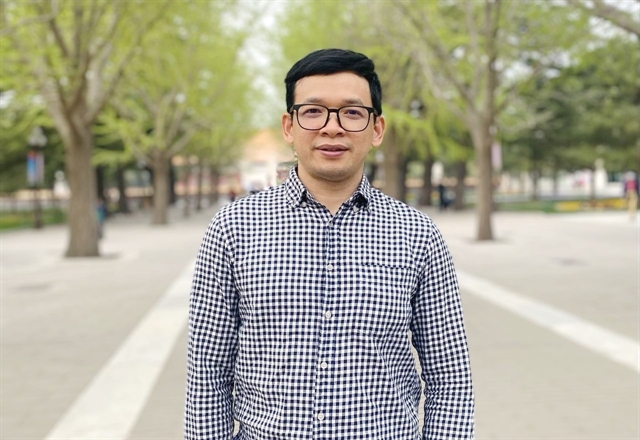
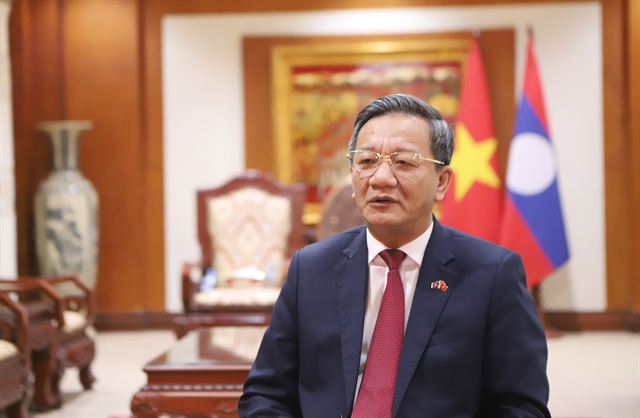
| Vũ Hùng Cường, Director of the Institute of Social Science Information under the Vietnam Academy of Social Sciences. VNA/VNS Photo |
Politburo Resolution No 79-NQ/TW on the development of the state economy reaffirms the state sector as a particularly important component of the socialist-oriented market economy. It plays a leading role in guiding, steering and regulating economic activities, contributing to macroeconomic stability, promoting growth and safeguarding major economic balances. Vietnam News Agency spoke with Vũ Hùng Cường, Director of the Institute of Social Science Information under the Vietnam Academy of Social Sciences, about the newly issued resolution.
Resolution 79 underscores the leading role of the state economy. In the context of digital and green transformation, what requirements does this place on State-owned enterprises (SOEs)?
Resolution 79 clearly emphasises a consistent guiding viewpoint: the state economy must play a pioneering role in shaping, leading and opening pathways for the country’s industrialisation and modernisation. In my view, the state economy should not only perform its macroeconomic stabilisation and regulatory functions but also directly participate in restructuring the economy and defining a new growth model for the next development phase.
With its leading position, SOEs will continue to be entrusted with key sectors and industries that are foundational to economic stability and security. The pressing requirement now is to enhance the efficiency of state capital management and utilisation, as well as to effectively mobilise and deploy the resources entrusted to them.
Amid rapid digital and green transformation, SOEs must clearly demonstrate their pioneering role in applying technology, innovating governance models and reorganising production. This is essential if SOEs are to truly act as a leading force, generating spillover effects and driving momentum across the entire economy.
At the same time, thanks to their advantages in scale, technological capacity, production networks, supply chains and established markets, SOEs are well positioned and have the responsibility to lead other economic sectors, particularly domestic private enterprises. This leadership role should be realised through stronger linkages, market creation and the expansion of participation opportunities for private firms in domestic production networks and supply chains.
Emphasising this role helps clarify and concretise the leading position of the state economy under new development conditions. Through this process, the domestic private sector can gain deeper access to value chains, improve specialisation at each production stage and supply chain segment, address internal constraints and better fulfil its role as a key driver of economic growth.
Resolution 79 places strong emphasis on improving institutions, state capital management mechanisms and the competitiveness of SOEs. What are the most significant bottlenecks at present?
Several regulations related to the exercise of ownership rights and the autonomy and accountability of boards of directors remain problematic. These shortcomings have resulted in overly complex governance structures in SOEs, which are not fully aligned with market principles and still fall short of international standards.
A prominent issue is the unclear separation between the role of the State as owner and that of authorised representatives exercising ownership rights in State-owned groups and corporations. At the same time, oversight and inspection by State management agencies remain limited in some cases while, conversely, there is still fairly deep intervention in specific production and business activities. In practice, this can directly undermine business autonomy and reduce flexibility in management and decision-making.
In addition, the scope and extent of SOE autonomy have not been clearly defined, leading to overlapping management responsibilities among ministries, sectors and local authorities. Taken together, these factors create institutional bottlenecks that hinder the release and effective use of resources held by state-owned groups and corporations, thereby reducing the overall efficiency of the SOE sector within the market economy.
Against this backdrop, shifting from a pre-approval approach to a post-supervision model and from a mindset of control to one of modern governance is an inevitable requirement.
Personally, I see this as a major transformation in governance thinking aligned with international standards. It helps create a more enabling operating environment for economic actors, reduces entry barriers and mobilises additional resources for development.
However, for modern governance mechanisms to function effectively, institutions must continue to be refined in a transparent, clear, predictable and stable manner. At the same time, the effectiveness of governance tools and the capacity of implementing personnel from the central to the local level must be strengthened to mitigate risks.
In your view, what needs to be done to ensure Resolution 79 is implemented effectively and swiftly?
The draft Political Report to be submitted to the 14th National Party Congress candidly points to a long-standing limitation across multiple terms: while policies and guidelines have been sound, implementation has remained a weak link. This reality has significantly affected outcomes compared with stated objectives and must be taken seriously in the rollout of new resolutions.
This assessment is particularly relevant as the country has just transitioned to a two-tier local government model. Changes in organisational structure require time for grassroots authorities to be consolidated, stabilised and adapted to higher development demands, as well as to the need for more effective and efficient local state management.
For Resolution 79 to translate quickly into practice, implementation must focus on removing barriers ranging from awareness to institutional frameworks. A key issue is the incomplete understanding of the state economy’s leading role in relation to other economic sectors. This is compounded by overlaps in specialised legal documents and shortcomings in decentralisation and delegation of authority between central and local levels.
Achieving broad consensus across the political system on the role of the state economy will help foster a consistent approach to drafting and enforcing legal frameworks.
On that basis, it is essential to ensure equal access to critical development resources such as land, capital and public investment, while persistently advancing equitisation and state capital divestment in joint-stock enterprises. These are crucial measures to improve the efficiency of state capital use and create greater development space for other economic sectors within the economy. — VNS
Opinion
 Opinion
.jpg) Opinion
Opinion
 Opinion
 Opinion
 Opinion
 Opinion
 Opinion
 Opinion
 Opinion
 Opinion
 Opinion
 Opinion
 Opinion
 Opinion