.jpg) Opinion
Opinion

NA debates sweeping reforms to land, housing and real estate laws
1.
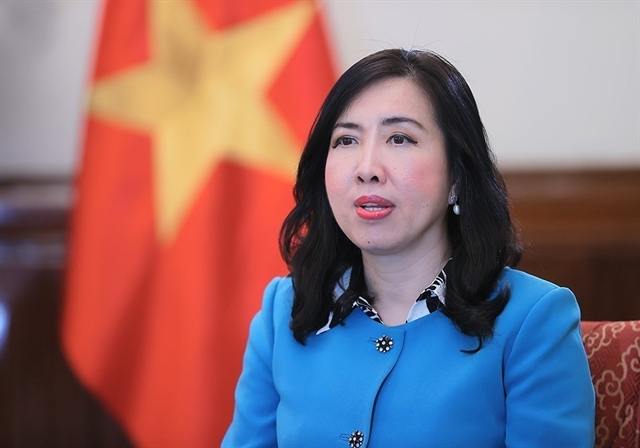 |
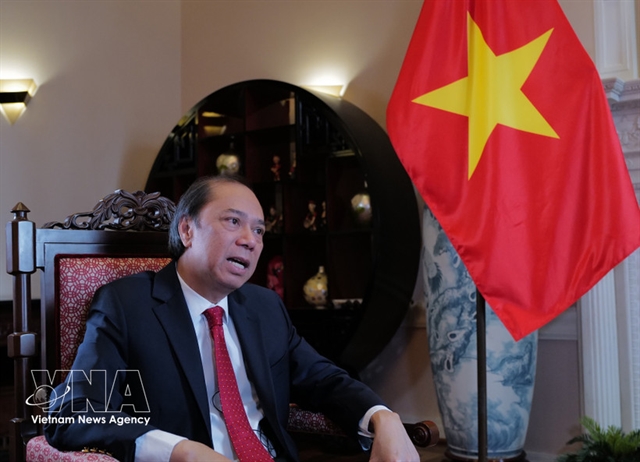
| Deputy Minister of Foreign Affairs Lê Thị Thu Hằng. — VNA/VNS Photo An Đăng |
Deputy Minister of Foreign Affairs Lê Thị Thu Hằng has spoken to the local media about recent achievements in Việt Nam’s external communications work as well as new thinking and approaches aimed at creating fresh momentum for the work in the time ahead.
The year 2025 saw a sustained series of external communications campaigns spanning all 12 months, portraying a dynamic, friendly and resilient Việt Nam to friends across the world. Which achievements over the past year have left you most impressed and proud?
The year 2025 was indeed a vibrant one, marked by major historic milestones and an intensive schedule of external engagements. Against that backdrop, external communications recorded many positive results, contributing to the promotion and enhancement of Việt Nam’s international image while proactively safeguarding the Party’s ideological foundation and national interests in an increasingly complex, multidimensional information environment.
First, communications surrounding visits by key Vietnamese leaders abroad, high-level visits to Việt Nam by foreign leaders, major multilateral events hosted by Việt Nam and other landmark national occasions were rolled out in a professional and dynamic manner, generating a significant spillover effect and attracting wide coverage from international media.
Notable and highly successful campaigns included the 14th National Congress of the Communist Party of Việt Nam; the 50th anniversary of the Liberation of the South and National Reunification; the 80th anniversary of the August Revolution and National Day (September 2); and the opening ceremony for the signing of the United Nations Convention against Cybercrime, known as the Hanoi Convention. The events left a deep impression of a peaceful, developing and internationally integrated Việt Nam, highlighting the nation’s patriotism and pride as well as its steadily rising standing and prestige on the global stage.
Second, efforts to optimise new communications tools, particularly social media, have broadened outreach, amplified impact and strengthened positive perceptions of Việt Nam among domestic and international audiences alike. The Ministry of Foreign Affairs’ digital transformation and development of its social media ecosystem recorded breakthrough growth.
As of early 2026, the ministry’s official Facebook page, Viet Nam MOFA, had increased its follower base by 500 per cent compared with 2024. Seventy out of 98 Vietnamese missions abroad now maintain accounts on platforms such as Facebook and X. Key units engaged in external communications, including the State Committee for Overseas Vietnamese, the National Boundary Commission, the Diplomatic Academy of Việt Nam and The World & Viet Nam newspaper, have been highly active online, contributing significantly to the overall success of external communications in 2025.
At the same time, foreign-service media outlets have introduced innovative formats, enriching Việt Nam’s external communications ecosystem. The international television channel Việt Nam Today was launched, while Nhân Dân Newspaper and the Vietnam News Agency have rolled out digital products incorporating QR codes and artificial intelligence applications, meeting professional demands, audience preferences and the spirit of a new era driven by science, technology and innovation.
Third, cooperation with foreign correspondents remained a major highlight in 2025. At a time when global media organisations face mounting financial pressures and fierce competition, forcing many to scale back bureaus and staff, Việt Nam continues to attract investment from international outlets. In 2025 alone, three foreign media organisations opened permanent bureaus in Hà Nội.
This presents valuable opportunities for Việt Nam to leverage international media channels to disseminate information abroad. Vietnamese missions overseas have also strengthened engagement with local journalists and members of the overseas Vietnamese press corps, creating an additional and influential communications channel reaching host-country publics and international opinion. The presence of foreign and overseas Vietnamese correspondents at major events throughout the year reflects the concerted efforts of the ministry and relevant agencies.
What has most encouraged us is the positive and objective coverage by foreign media and overseas Vietnamese outlets, portraying a peaceful, stable, friendly and cooperative Việt Nam, a bright spot for development in the region and globally, advancing steadily into a new era of national growth. Most heartening of all are the messages of congratulations we receive from Vietnamese and international journalists after each campaign, before moving on to the next.
Drawing on the spirit of the 14th National Party Congress, strategic autonomy, self-reliance and confidence, advancing firmly in the era of national rise, Việt Nam’s foreign affairs now face a pressing need for bold renewal in both mindset and action. What changes are required in both form and substance to help realise the diplomatic mission and advance a comprehensive foreign policy strategy at a higher level?
Party General Secretary Tô Lâm, during a working session with the ministry, underscored that Vietnamese diplomacy will continue to help shape peace, expand development space, elevate the nation’s standing and contribute to achieving the Party’s two centenary goals, building a strong, prosperous, enduring and sustainable Việt Nam.
In that spirit, all pillars of diplomacy, political, economic, cultural and external communications, must transform and rise to new heights. External communications must build on past achievements while embracing new thinking and new methods to remove bottlenecks and generate breakthroughs. The first imperative is a shift in mindset. External communications must be embedded in strategic thinking and closely aligned with the country’s overarching foreign policy objectives. This requires a proactive, long-term approach with coherent and sustained messaging that reflects a stable, developing, deeply integrated and responsible Việt Nam.
Communications thinking must also evolve from event-based coverage to a message-driven strategy and from merely responding to audience demand to actively shaping public opinion. External communications must remain closely aligned with other pillars of foreign affairs, paving the way and creating a favourable information environment for diplomatic activities, continuously promoting a positive national image while promptly countering negative or distorted information.
As 2025 marks a decade since the ministry began deploying external communications via social media, it is clear that the information landscape has changed profoundly with the emergence of artificial intelligence and big data. In an increasingly saturated and competitive media environment, innovation is essential. However, innovation does not mean chasing numbers or competing superficially, but rather improving the quality of journalism and external communications products.
In an age when social media users favour concise content, external media and communications agencies must identify clear keywords and core messages within each product, ensuring that messages are memorable and recognisable. The challenge lies in balancing creativity, brevity and appeal with accuracy, depth and substance, satisfying audience preferences while preserving the integrity and quality of official information.
Finally, resources for external communications, particularly human capital and coordination mechanisms, must receive greater investment. Practitioners require modern journalistic and communications skills, along with professional resilience, to operate effectively in a highly competitive global media environment. Close cooperation among diplomatic agencies, media organisations, local authorities and overseas missions will create synergistic strength in implementing comprehensive diplomacy and fulfilling its vital and regular mission.
In your view, which core messages must foreign service media consistently follow so as not to fall out of step? What message would you like to send to those directly engaged in external communications as they tell Việt Nam’s story in the new era?
Looking ahead, Việt Nam will remain steadfast in its foreign policy of independence, self-reliance, peace, friendship, cooperation and development; diversification and multilateralisation of relations; and being a trusted partner and responsible member of the international community. To sustain and build upon the achievements of external communications, foreign service media must implement synchronised, focused communications campaigns anchored in clear and consistent core messages while remaining creative in presentation and effectively harnessing the nation’s soft power.
First, consistently project the image of a Việt Nam firmly committed to independence, self-reliance and confidence as it strides into a new era of development and deeper integration by fully reflecting major policies alongside tangible socio-economic and diplomatic achievements.
Second, tell compelling human stories, stories of ordinary yet resilient Vietnamese people, thereby promoting core values of creativity, solidarity, humanity and aspiration.
Third, clearly articulate Việt Nam’s role, contributions and responsibilities in addressing regional and global issues, from development cooperation and peacekeeping to non-traditional security challenges, thereby elevating the country’s standing and garnering international support.
Fourth, ensure the accuracy, consistency and timeliness of official information while innovating in format to suit the digital media environment, enabling messages to combine depth with accessibility for diverse audiences.
Party General Secretary Tô Lâm has stressed that communications and media work across press and digital platforms must undergo comprehensive renewal and maintain a proactive, leading stance. External communications must internalise the directive to produce influential content.
On that basis, I call on media practitioners to remain proactive and creative in information delivery, fully aware that each piece of content not only represents journalistic activity but also reflects the image and voice of Việt Nam. Each reporter is a storyteller of the nation. For its part, the Ministry of Foreign Affairs will continue to accompany and support Vietnamese journalists in telling the ongoing story of a peaceful, developing and internationally integrated Việt Nam. — VNS
Opinion
 Opinion
 Opinion
.jpg) Opinion
Opinion
 Opinion
 Opinion
 Opinion
 Opinion
 Opinion
 Opinion
 Opinion
 Opinion
 Opinion
 Opinion
 Opinion