 Opinion

Miss Universe Hong Kong Winner Jen Zhou — On the Road to Puerto Rico
1.
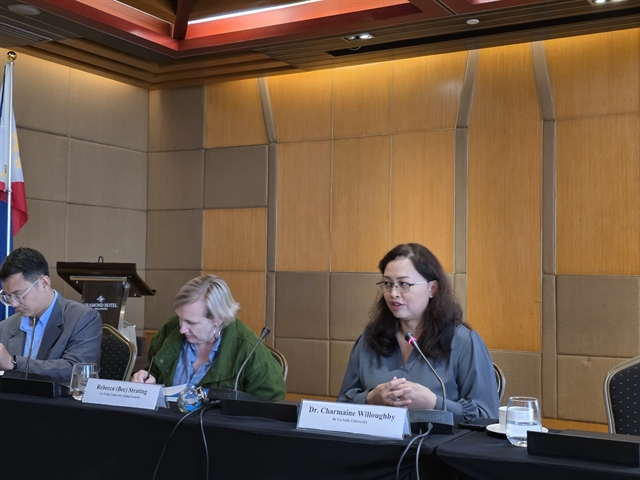 |
| Charmaine Willoughby, Professor and Chair of the Department of International Studies at De La Salle University in Manila. — VNS Photo Trọng Kiên |
MANILA — Negotiations on a long-awaited Code of Conduct (COC) in the East Sea (internationally known as the South China Sea) are expected to conclude this year with great push from the Philippines as the current ASEAN Chair, yet regional experts increasingly warn that expectations of a meaningful agreement may far exceed political reality.
After nearly three decades of talks between ASEAN member states and China for an effective legal framework governing maritime issues in the South China Sea, analysts say the most likely outcome may not be a comprehensive, legally binding framework – but rather a symbolic document designed to preserve diplomatic credibility.
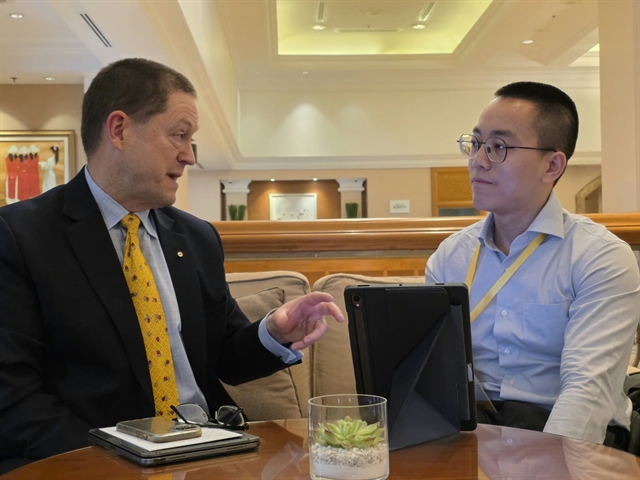
According to Charmaine Willoughby, Professor and Chair of the Department of International Studies at De La Salle University, political pressure surrounding the negotiations could produce an agreement whose contents remain vague.
She noted that Manila has invested considerable diplomatic capital in promoting progress on the COC, raising expectations that some form of outcome must emerge.
Rather than a fully negotiated regime governing behaviour in disputed waters, she suggested ASEAN and China could settle for a signed framework document while postponing contentious details far into the future.
Such an arrangement would allow leaders to claim success without resolving the most difficult issues –sovereignty disputes, enforcement mechanisms, or legal obligations.
Failure to produce any document at all, she warned, risks political backlash domestically and regionally for the ASEAN chair.
Assoc. Prof. Robert Medillo, at the National Defense College of the Philippines, argued that ASEAN diplomacy often excels at producing statements and communiqués, but less so at delivering enforceable outcomes.
He suggested future announcements may simply reiterate commitments to “accelerate” negotiations yet again – a diplomatic cycle that allows all sides to maintain momentum without fundamentally changing realities at sea.
If negotiations stall or produce only a weak political declaration, experts suggest regional states may increasingly pursue alternative arrangements outside the ASEAN–China framework.
Willoughby argued that maritime cooperation need not depend solely on territorial dispute settlement. Environmental protection, coastal community resilience and non-traditional security cooperation offer areas where collaboration remains possible even without resolving sovereignty claims.
"ASEAN actually provides a lot of these platforms. If we're all just obsessed over the COC, that's great, but there are plenty of other things that we can do and we can work on, we just need to be imaginative about using the ASEAN framework and the ASEAN umbrella to achieve a lot of these goals," the researcher noted.
She also pointed to the rise of “minilateral” cooperation – smaller groupings of like-minded states working together through defence, academic or media networks.
Medillo cited practical examples already emerging among Southeast Asian countries, suggesting claimant states could implement shared rules among themselves even without China’s participation, signalling responsible regional governance to the broader international community.
Rather than pursuing an ambitious grand agreement, Jim Gomez, the Associated Press Chief Correspondent in the Philippines with specialisation in maritime reporting, proposed a more realistic interim objective: preventing accidents that could trigger conflict.
Recent close encounters between aircraft and vessels in contested waters illustrate how easily miscalculation could escalate into crisis.
He suggested ASEAN and China could instead negotiate limited operational rules – minimum distances between ships and aircraft, communication procedures, and restrictions on dangerous manoeuvres such as laser use or aggressive interception.
Such technical arrangements would avoid sovereignty disputes while directly addressing the most urgent risk: unintended military escalation.
Sources, he noted, indicate that some policymakers are already exploring this possibility as a smaller, safety-focused regional agreement.
In a post-COC or weak-COC environment, security dynamics may increasingly shift towards deterrence.
Medillo pointed to expanding defence cooperation involving the Philippines, the United States and partners such as Japan and Australia, including joint task forces and forward deployments designed to discourage escalation.
These arrangements reflect what analysts describe as “deterrence 2.0” – positioning multinational forces in strategic areas to raise the potential costs of aggressive actions.
Such developments suggest that, in the absence of effective regional rules, stability may rely more heavily on military balancing than diplomatic consensus. — VNS
Opinion
 Opinion
.jpeg) Opinion
Opinion
 Opinion
 Opinion
 Opinion
 Opinion
 Opinion
 Opinion
.jpg) Opinion
Opinion
.jfif) Opinion
Opinion
 Opinion
 Opinion
 Opinion
 Opinion