 Opinion
Manchester United, AC Milan and Inter Milan to play friendlies in Việt Nam in 2027
1.
Mohammad Mirali Mohammadi, Charge d’Affaires ad interim of the Embassy of the Islamic Republic of Iran, wrote to Việt Nam News on the occasion of the 47th Anniversary of the Victory of the Islamic Revolution in Iran on February 11.
The 47th anniversary of the Islamic Revolution of Iran offers a meaningful opportunity to reflect on the converging historical paths of Iran and Việt Nam.
Though separated geographically, these two ancient civilisations, situated at the western and eastern gateways of Asia, share strikingly similar historical experiences.
Both nations endured prolonged struggles for independence, resisted foreign domination and pursued sovereign development.
These shared trajectories have laid the foundation for a durable relationship rooted in mutual respect, one that continues to evolve amid contemporary regional and global transformations.
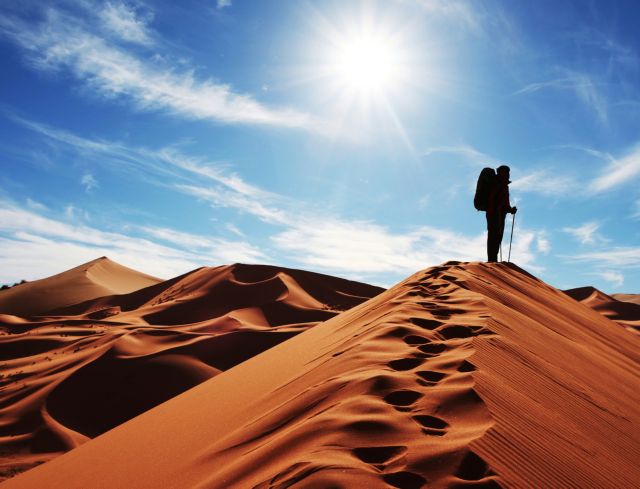 |
| Lut Desert, or Dasht-e Lut, located in southeastern Iran, is a UNESCO World Heritage Site known for its extreme temperatures, stunning landscapes, and unique geological formations. Photos Courtesy of the embassy |
The Islamic Revolution of 1979, led by Imam Khomeini, marked a decisive break from a foreign-installed monarchy and initiated a profound transformation of Iran’s political order and foreign policy.
With its triumph on February 11, 1979, Iran embraced popular governance, national independence and self-determination.
For many Iranians, Việt Nam’s determined struggle for independence served as a powerful source of inspiration.
Việt Nam’s resistance against colonialism and foreign intervention stood as a beacon of resilience, encouraging Iranians to pursue freedom and legitimacy in their own political system.
In this sense, the revolution unfolded within an international atmosphere already shaped by Việt Nam’s victories, reflecting shared aspirations for sovereignty, dignity and national identity.
The revolution brought about a fundamental reorientation of Iran’s foreign policy.
Freed from external dictates, post-revolutionary Iran sought to redefine its international role by ending proxy engagements, expanding relations with independent nations and positioning itself as a responsible actor in the global system.
Cooperation based on mutual respect, opposition to domination and promotion of peace became central principles.
Iran also emphasised efforts to counter transnational challenges, such as terrorism and narcotics trafficking.
Like Việt Nam, Iran’s pursuit of independence carried heavy costs.
Việt Nam endured decades of war and sacrifice, while Iran faced an imposed eight-year war, terrorist campaigns, destabilising propaganda and unilateral sanctions.
Despite these pressures, many of which persist today, Iran has continued to frame resistance and resilience as central elements of its national identity.
This parallel underscores the shared struggles of both nations in defending sovereignty against external pressures.
More than four decades after the revolution, Iran represents a distinctive case of state-building under sustained external pressure.
Despite recurring security threats, sanctions and regional tensions, the Islamic Republic has pursued a development trajectory grounded in independence, self-reliance and scientific advancement.
This continuity has enabled Iran to maintain internal stability and emerge as an increasingly active participant in a multi-polar international system.
Domestically, Iran has made notable progress in science and technology.
Advances in medical sciences, nanotechnology, aerospace and peaceful nuclear research have positioned the country among the leading scientific hubs.
Iran’s health care system provides advanced treatments, while indigenous technological capabilities support achievements in satellite launches, defence manufacturing and industrial production.
These developments reflect a model of domestic capacity-building central to Iran’s development strategy.
Iran is widely regarded as a major regional power in West Asia.
With one of the largest armed forces in the region, indigenous missile technology, domestically produced submarines and an expanding space programme, Iran has focused on deterrence and strategic autonomy.
These capabilities, while often viewed through a security lens, also reflect broader investments in education, engineering and industrial infrastructure.
Parallel to defence and scientific progress, Iran has expanded its industrial base.
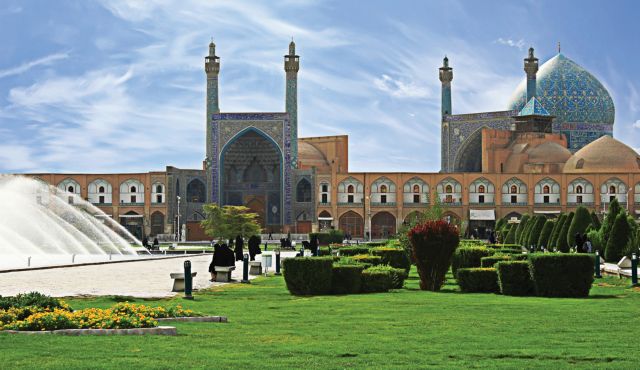 |
| Imam Square, also known as Naqsh-e Jahan Square, is an architectural masterpiece reflecting the grandeur of the Safavid dynasty. Situated in the heart of Isfahan, it is recognised as a UNESCO World Heritage Site. |
Steel production has risen from negligible levels before 1979 to more than 31 million tonnes annually, placing Iran among the world’s top producers.
Similar growth is evident in cement, ceramics, petrochemicals, automotive components and non-oil exports, which now amount to tens of billions of dollars each year.
Collectively, these indicators highlight Iran’s transition toward a diversified economy.
Against this backdrop, relations between Iran and Việt Nam occupy a notable position.
In 2026, the two countries mark more than five decades of uninterrupted diplomatic relations.
The durability of these ties is rooted in shared historical experiences and convergent political principles.
Both nations emerged from prolonged struggles for independence, shaping political cultures that emphasise self-determination, social justice and opposition to domination.
These shared experiences have translated into similar foreign policy outlooks, including support for multilateralism, rejection of unilateral coercive measures and respect for international law and sovereignty.
Cultural relations form another important pillar of this partnership.
Iran and Việt Nam are heirs to ancient civilisations with rich artistic, literary and social traditions.
In recent years, cultural diplomacy has expanded through film festivals, exhibitions, university exchanges and artistic performances.
Tourism, supported by growing air connectivity, also offers significant potential to strengthen people-to-people ties.
While political and cultural relations are robust, economic ties remain modest, with bilateral trade standing at approximately VNĐ3.7 trillion (US$142.5 million) annually.
Yet both economies are well positioned to cooperate in strategic sectors such as energy, agriculture, food security, petrochemicals, fisheries, technology and tourism.
Recent trade delegations, exhibitions and business forums signal growing recognition of these opportunities.
Looking ahead, planned high-level visits, new cooperation agreements and the convening of the Joint Economic Commission could provide the institutional momentum needed to elevate economic cooperation to a more strategic level.
In an era of geopolitical uncertainty and the gradual reconfiguration of global power, partnerships grounded in mutual respect, shared historical experience and pragmatic cooperation carry particular significance.
The Iran-Việt Nam relationship demonstrates how two nations from West Asia and Southeast Asia can build enduring ties that transcend geography.
Strengthening this partnership will not only serve the national interests of Tehran and Hà Nội, but also contribute to broader regional and global efforts aimed at peace, resilience and sustainable development. VNS
Opinion
 Opinion
 Opinion
 Opinion
 Opinion
 Opinion
 Opinion
 Opinion
 Opinion
 Opinion
 Opinion
 Opinion
 Opinion
 Opinion
 Opinion