 Opinion

Military aircraft transports more samples of war martyrs’ remains to Hà Nội for DNA identification
1.
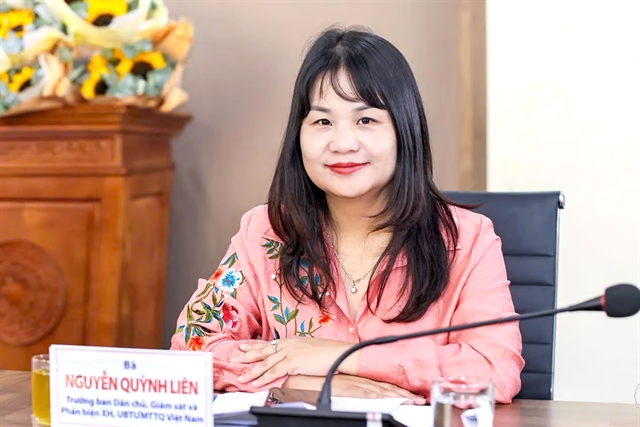 |
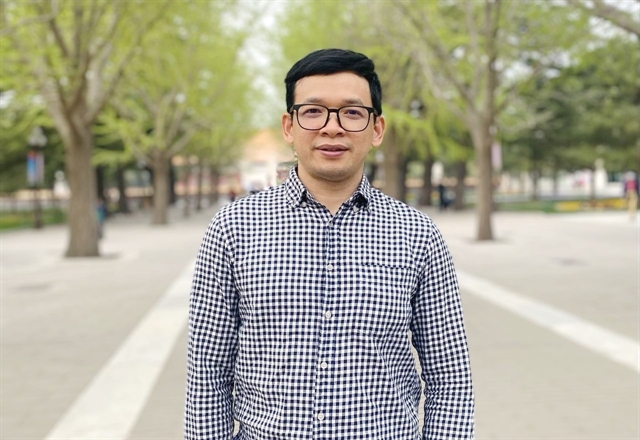
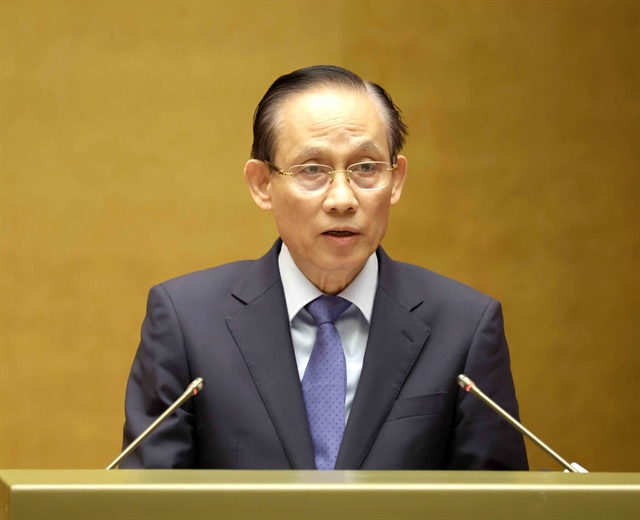
| Nguyễn Quỳnh Liên, Head of the Department of Democracy, Supervision and Social Criticism under the Central Committee of the Việt Nam Fatherland Front. — Photo daidoanket.vn |
The election of deputies to the 16th National Assembly and People’s Councils for the 2026–2031 term will take place shortly after the successful 14th National Congress of the Communist Party of Việt Nam, marking an important step in translating the Congress’s orientations into practice. Against this backdrop, the Việt Nam Fatherland Front is playing a central role in consultations, supervision and efforts to ensure democracy and transparency.
Nguyễn Quỳnh Liên, Head of the Department of Democracy, Supervision and Social Criticism under the Central Committee of the Việt Nam Fatherland Front, spoke with the media about the political and social significance of the upcoming vote.
The election of deputies to the 16th National Assembly and People’s Councils for the 2026–2031 term will take place shortly after the successful 14th National Congress of the Communist Party of Việt Nam. How do you assess the political and social significance of this election?
At present, the entire political system is actively and urgently preparing for the polling day on March 15, reflecting the principle of putting the people at the centre and the spirit of a State of the people, by the people, and for the people.
The documents adopted at the 14th National Party Congress consistently emphasise this approach. The election therefore represents the most vivid expression of citizens’ democratic rights, enabling voters to choose their most outstanding representatives to serve in the National Assembly, the highest State power body, and in the People’s Councils at all levels.
Once elected, these representatives will participate in deciding major national issues and in institutionalising the Party’s policies and orientations adopted at the 14th Congress.
Given the importance of this election, what role does the Việt Nam Fatherland Front play in the process?
The Việt Nam Fatherland Front has eight core responsibilities in the election, among which consultations to introduce candidates for National Assembly and People’s Council positions are central.
Under regulations, Fatherland Front committees at all levels organise three rounds of consultations. The first was held from December 1 to 10, 2025. The second concluded on February 2 and 3 to compile preliminary candidate lists. The third round is scheduled for February 11, when the final list of candidates will be announced.
In addition, the Front plays a key role in public communication, helping citizens fully understand their rights and responsibilities under the Constitution and the Law on Elections and encouraging participation from the early stages through to polling day.
Throughout the process, we strengthen supervision over State agencies and electoral bodies at both central and local levels. We also create mechanisms for people to directly monitor election activities, including the public posting of voter lists and candidate information at residential meetings.
Compared with previous elections, what are the main new features this time, particularly in candidate nomination and consultations?
The most notable change is that the election is being held earlier, on March 15. This is intended to quickly translate the outcomes of the 14th Party Congress into practice, establish the State apparatus and guide the country into a new development era.
Another important factor is the recent reorganisation of administrative units and the implementation of the two-tier local government model. This places greater pressure on provincial and commune-level authorities, requiring the election to be conducted in a systematic, transparent and democratic manner, with people firmly at the centre.
All procedures, from consultations and candidate nominations by agencies, organisations and residential communities to encouraging self-nomination and publicly posting voter lists, are being carried out openly.
Digital transformation is also a key highlight. Voter lists are compiled through coordination between election bodies, People’s Committees and police at provincial and commune levels, using the national population database to avoid duplication or omission. This ensures that all eligible citizens can exercise their voting rights.
What are your expectations regarding public participation and the quality of deputies in the new term?
We hope that from now until the election day, citizens will actively fulfil their role as the country’s owners by supporting election organisations and participating in reviewing voter lists to ensure all eligible voters are included.
We expect March 15 to become a true nationwide festival, with people enthusiastically casting their ballots to choose capable representatives for State power bodies. Ideally, we hope for a turnout of 100 per cent of eligible voters.
With strong public participation and trust, we believe the election will select deputies who possess moral integrity, competence, dedication and close ties with the people, and are committed to serving the nation and contributing to Việt Nam’s continued development. — VNS
Opinion
.jpg) Opinion
Opinion
 Opinion
 Opinion
 Opinion
 Opinion
 Opinion
 Opinion
 Opinion
 Opinion
 Opinion
 Opinion
 Opinion
 Opinion
 Opinion