 Opinion

"Thai Night Busan 2026" Makes a Grand Return, Connecting Thai Content with Global Partners to Create Business Opportunities and Strengthen Industry Collaboration
1.
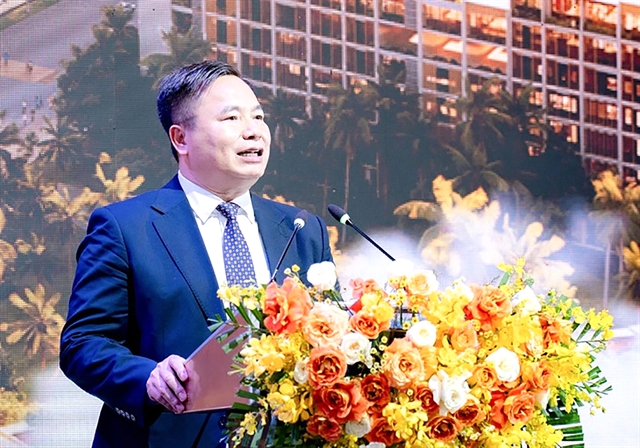 |
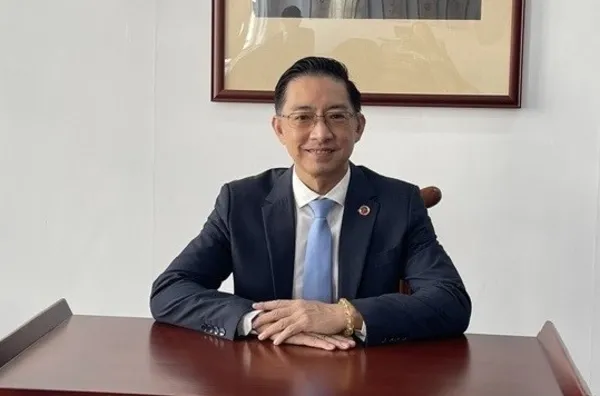
| Nguyễn Anh Tuấn, director of the Institute of Tourism Economics. — Photo ite-vita.vn |
Nguyễn Anh Tuấn, director of the Institute of Tourism Economics, spoke to the Vietnam Plus online newspaper about strategies to elevate the country’s tourism brand and attract more visitors to the luxury travel segment in the future.
With Việt Nam recording visitor growth of around 22 per cent in 2025, do you think the country’s tourism infrastructure and workforce have kept pace with this increase?
In recent years, Việt Nam has emerged as a highly attractive destination, so the strong growth in visitor numbers in 2025 is a very positive sign. It sends a powerful signal for the tourism sector as it continues its post-COVID-19 recovery and development.
With last year’s record visitor numbers, I believe that human resources, infrastructure and the overall tourism environment have improved rapidly and are broadly able to meet current demand. However, going forward the sector needs to become more professional. The workforce must continuously upgrade its skills, while service quality, product quality and destination standards all need to improve further to strengthen Việt Nam’s competitive position. In particular, infrastructure must keep modernising to enhance the country’s appeal to visitors.
Many experts have suggested that it is time for Việt Nam to change its tourism slogan and branding. What is your view on how promotion and marketing can be made more effective?
In my view, a logo or slogan is only one element of a promotional campaign at a particular stage. If a slogan proves effective, it can be used for a long period, as was the case with “Amazing Thailand”. However, at this point, Việt Nam’s tourism sector should consider launching a new promotional campaign to reaffirm its position.
Thanks to recent achievements, especially the series of awards Việt Nam has received, our global standing has clearly been recognised. Our tourism products and services have been honoured and are now well known internationally. Therefore, any new promotional campaign aimed at reinforcing our brand image must also be different in scale and ambition.
The tourism sector should focus on building a comprehensive, high-level promotional strategy that matches new development requirements and elevates the country’s image accordingly.
 |
| Foreign tourists immerse themselves in the atmosphere of welcoming the New Year 2026 in the Old Quarter around Hoàn Kiếm ( Returned Sword) Lake, Hà Nội. — VNA/VNS Photo Hoàng Hiếu |
Which types of tourism products should be prioritised to enhance Việt Nam’s destination brand?
Tourism products must be market-driven and aligned with evolving consumer preferences. After COVID-19, travel demand has changed significantly, with tourists increasingly seeking unspoilt nature, authentic cultural experiences, wellness retreats and health-oriented travel.
If we want to attract higher-spending visitors and boost revenue, we need products that meet the expectations of luxury. This means focusing on high-end resorts and entertainment, island tourism and premium leisure experiences. Destinations with pristine natural environments and clean air, combined with well-invested eco-resorts, can significantly increase tourism revenue and overall efficiency.
You get what you pay for. When Việt Nam elevates itself as a high-end destination, with five- and six-star resorts, world-class services and destinations offering a diverse range of quality products, we will be in a position to choose our visitors, rather than simply welcoming mass tourism.
When promotional efforts are targeted at the right high-end market segments, positive word of mouth will follow naturally.
 |
| Tourists take a cyclo tour of Hội An Ancient Town in the central coastal city of Đà Nẵng. — VNA/VNS Photo Thanh Tùng |
There is a view that Việt Nam focuses too much on visitor numbers and growth rates, while actual tourism revenue remains modest. What should be done to attract higher-quality, higher-spending visitors?
At present, all regions of Việt Nam are developing tourism and all have tourism potential, but their capacity and level of development vary. Established tourism hubs naturally offer higher service quality and are therefore better placed to attract high-spending visitors. In contrast, emerging destinations, especially in remote areas developing community-based tourism with limited facilities, need to attract a broader mix of visitors to improve overall efficiency.
Across the sector as a whole, Việt Nam’s tourism revenue remains low compared to other countries. This is largely because the proportion of high-end visitors is still well below that of regional competitors such as Thailand, Singapore and Malaysia, resulting in limited revenue.
If Việt Nam is to achieve its ambition of becoming one of the world’s top 30 most competitive tourism destinations by 2030, it will require concerted efforts from the entire sector and from local authorities. This means improving service quality and destination standards, diversifying products and, crucially, developing more high-end offerings to attract luxury travellers and increase revenue.
Key destinations and localities need well-structured strategies to build civilised, friendly and professional tourism environments, with synchronised infrastructure and service quality. Only then can Việt Nam project an image as a truly new, vibrant, captivating and attractive destination.
If the tourism sector has chosen to prioritise depth and quality over sheer volume, it must significantly strengthen market research and adopt focused, targeted promotion for specific high-end markets.
Promotional campaigns must be professional and tailored to different luxury traveller segments. This includes selecting the right partners, such as major tour operators specialising in luxury travel, or promoting Việt Nam at niche events like cruise-focused trade fairs.
Promotional resources must go hand in hand with a genuinely professional promotion team to avoid waste. Effective marketing requires people who truly understand the market, marketing techniques and, above all, tourism promotion practices from senior management to overseas market representatives. It should not simply involve sending generic delegations to trade fairs to distribute brochures and leaflets before returning home.
Clearly, tourism promotion requires deep, well-planned investment and calls for strong reform within the sector. We do not need to look far, for example, countries such as Thailand offer valuable lessons that Việt Nam can learn from. — VNS
Opinion
.jpg) Opinion
Opinion
 Opinion
 Opinion
 Opinion
 Opinion
 Opinion
 Opinion
 Opinion
 Opinion
 Opinion
 Opinion
 Opinion
 Opinion
 Opinion