 Opinion
Support for businesses must be measurable: deputy PM
1.
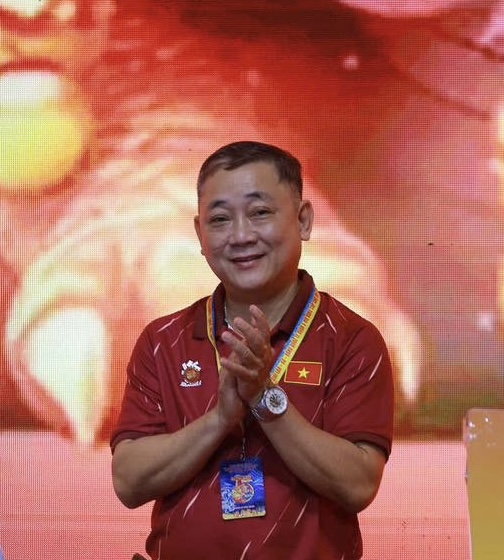 |
| Nguyễn Ngọc Tú, deputy president of the HCM City Lion and Dragon Dance Federation. — VNS Photo Thu Hằng |
One year after being recognised as a national intangible cultural heritage, the art of Lân Sư Rồng (Lion and Dragon Dance) practised by the ethnic Hoa (Chinese-Vietnamese) in HCM City is entering a new phase — evolving from community ritual into professional sport, tourism attraction and a living symbol of the city’s expanding cultural identity.
Việt Nam News and Law reporter Thu Hằng sits down with Nguyễn Ngọc Tú, deputy president of the HCM City Lion and Dragon Dance Federation, to discuss how the expanded metropolis is working to preserve this heritage while transforming it into a tourism product and premier competitive sport.
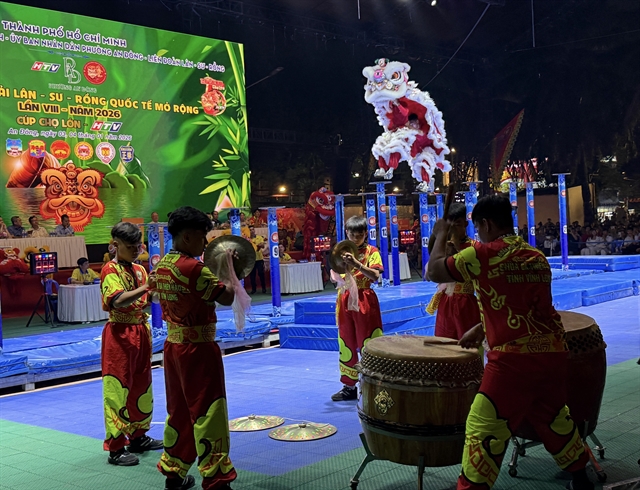 |
| Lion and dragon dance troupes compete in 'Lân lên Mai Hoa Thung' (High-Pole Lion Dance) specialty act at the qualifying round held from January 3. — VNS Photo Thu Hằng |
How does your federation see the growth of kylin, lion and dragon dance in HCM City following its merger with Bình Dương and Bà Rịa Vũng Tàu provinces?
The art of kylin, lion and dragon dance reached a historic milestone one year ago when it was recognised as a national intangible cultural heritage. This recognition has since become a vital catalyst for the preservation and development of the art form, creating both momentum and responsibility.
In late 2020 the first founding congress of the HCM City Kylin, Lion and Dragon Dance Federation for the 2020–2025 term was held, outlining orientations for the development of the movement, alongside plans for activities and performances at major festivals such as New Year, Lunar New Year and the Lantern Festival.
The establishment of the federation has created favourable conditions for the development of kylin, lion and dragon dance, contributing to the promotion of its artistic and cultural values, performance techniques and the more professional organisation of activities by troupes.
Kylin, lion and dragon dance activities also serve as a meaningful form of cultural exchange, connecting countries across Southeast Asia and the wider Asian region. In recent years, the city has therefore created favourable conditions for the federation to participate in regional competitions, helping to affirm its position and role.
Following the administrative merger with Bình Dương and Bà Rịa Vũng Tàu provinces since last July, the city’s lion and dragon dance community has expanded significantly, with the number of troupes increasing from 80 to around 120.
For the next term, from 2026 to 2031, the federation will continue to develop a widespread lion and dragon dance performance movement across all segments of society, with particular attention given to young people and students. This will help create a solid foundation for talent development and the training of individuals who can contribute to the city’s sporting achievements.
The federation will continue to research and develop training programmes suitable for different age groups, coordinate with schools to organise training courses, support athletes in participating in national and international competitions and maintain the organisation of annual competitions.
It will also bring the city’s lion and dragon dance tournaments to the Bình Dương and Vũng Tàu areas, allowing local residents to enjoy high-level performances and top-tier competitions.
What have city authorities done to preserve this intangible cultural heritage and integrate it more deeply into tourism programmes?
Each intangible cultural heritage carries unique values and has the potential to become a cultural tourism resource if it is properly preserved and promoted. The federation has identified lion and dragon dance as one of the city’s key tourism products.
The recognition of lion and dragon dance as an intangible cultural heritage ensures that city authorities have appropriate policies and plans to preserve this art form and integrate it more deeply into tourism and community education programmes.
The tourism product Về Chợ Lớn Xem Múa Lân (Come to Chợ Lớn to Watch the Lion Dance) was launched in 2022 to promote the art of lion and dragon dance and attract tourists.
In addition, performance programmes featuring lion and dragon dance combined with martial arts have been incorporated into city tours for both domestic and international visitors.
The federation will coordinate with the city’s Tourism Promotion Centre and Department of Culture and Sports to develop more tourism products linked to lion and dragon dance in the Bình Dương and Vũng Tàu areas, with the aim of promoting preservation while attracting more domestic and international tourists.
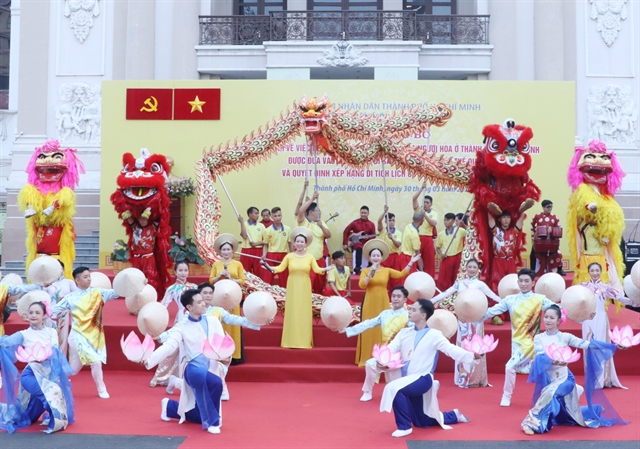 |
| The HCM City administration hosts a ceremony to announce the designation of the art of Lân Sư Rồng (Lion and Dragon Dance) practised by the ethnic Hoa (Chinese-Vietnamese) community in HCM City as a national intangible cultural heritage in March last year. — VNA/VNS Photo |
Since lion and dragon dance is recognised as both a traditional performing art and a professional sporting discipline, can you tell us about the 2026 International Lion and Dragon Dance Competition – Chợ Lớn Cup?
The 2026 International Lion and Dragon Dance Competition – Chợ Lớn Cup, organised by the administration of An Đông Ward, the HCM City Lion and Dragon Dance Federation and HCM City Television, will take place from January 30 to February 1.
As the most established tournament in Việt Nam, it has attracted nearly 50 domestic and international troupes. For the first time three leading international troupes from China, Malaysia and Singapore will compete in the final round.
Modern technology and international-standard scoring systems are being applied at the competition to ensure fairness and transparency.
From the qualifying rounds on January 3 and 4, 17 teams were selected to compete in the "Lân lên Mai Hoa Thung" (High-Pole Lion Dance) specialty act and 10 were selected for the “Múa Rồng Truyền Thống” (Traditional Dragon Dance) specialty act at the final round.
The event will be broadcast live on HTV Sports, bringing the art of lion and dragon dance to audiences nationwide. Through impressive performances and the dedication of the athletes, the competition contributes to spreading the beauty of lion and dragon dance while showcasing the image of HCM City as a vibrant, prosperous and modern city.
At the same time, the competition provides opportunities for troupes to improve their skills, learn new techniques, bring traditional culture closer to the public and create a joyful atmosphere for the Lunar New Year.
It is reported that recruiting and training young people remains the biggest challenge for lion and dragon dance troupes. How will the federation address this and develop elite athletes for the sport?
For centuries the father-to-son tradition has been the backbone of lion and dragon dance. However, in the current context, it is vital to integrate this discipline into the school system.
The federation aims to introduce lion and dragon dance into the school curriculum as a physical education subject, similar to football or badminton.
If incorporated into school programmes, students will have the opportunity to access training at appropriate levels through well-structured lesson plans, and talented students can be selected for future training teams.
In addition, the federation will focus on supporting the development of the movement in the city’s suburban areas, which provide a rich source of potential athletes, while continuing research into training programmes suitable for different age groups.
This approach is expected to help both preserve the traditional art form and develop high-level competitive performance in the long term. — VNS
Opinion
 Opinion
 Opinion
 Opinion
 Opinion
 Opinion
 Opinion
 Opinion
 Opinion
 Opinion
 Opinion
 Opinion
 Opinion
.jpg) Opinion
Opinion
 Opinion
.jpg)