 |
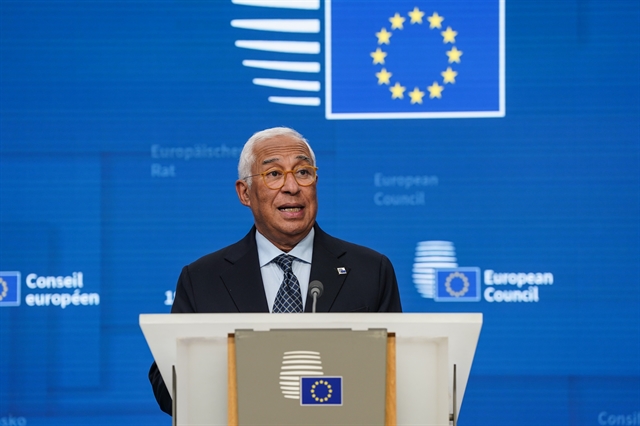
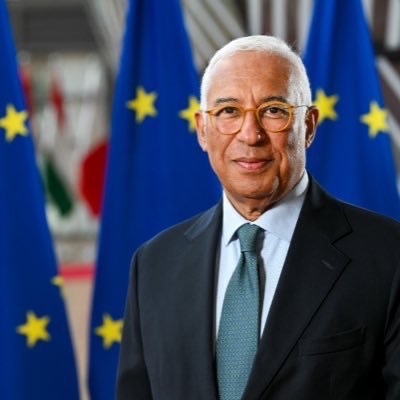
| António Costa, President of the European Council. — Photo courtesy of the EU Delegation to Việt Nam |
My visit to Việt Nam comes at a moment of global uncertainty. Trust between nations can no longer be taken for granted. In an increasingly multipolar world, multilateral cooperation must be grounded in reliable and predictable partnerships.
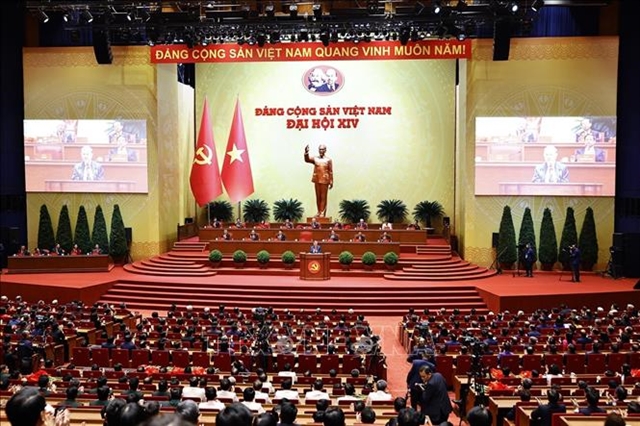
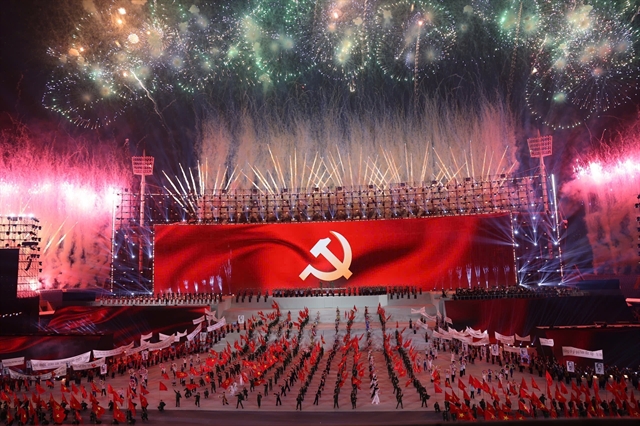
My visit also coincides with a moment of great consequence for the future of Việt Nam, as the recent 14th National Party Congress has set the direction for Việt Nam’s next chapter.
Việt Nam is an important partner for the EU in the Indo-Pacific. Since we first established diplomatic relations back in 1990, with a joint humanitarian programme, our relationship has grown into one of the EU’s most dynamic and wide-ranging partnerships in Asia: across trade, sustainable development, innovation, governance, security, and people-to-people ties.
Few examples illustrate this better than the EU–Việt Nam Free Trade Agreement. Since entering into force in 2020, the EVFTA has proven what rules-based, long-term cooperation can deliver. Five years on, it has helped increase our bilateral trade by around 40 per cent.
When we examine the depth and breadth of our cooperation today, the conclusion is clear: the EU–Việt Nam relationship has outgrown its current framework. That is why I believe the time has come to elevate our ties to a Comprehensive Strategic Partnership.
Such an upgrade would reflect the reality of what our partnership has already become. It would provide a stronger platform to deepen cooperation in areas that matter most: green energy, advanced technologies, skills, and security. It would also send a powerful signal in an unsettled world—that the EU and Việt Nam are choosing long-term cooperation over short-term hedging.
For the EU, it would affirm that we view Việt Nam not only as a fast-growing economy, but as a strategic partner with an important role in regional stability and global connectivity.
A Comprehensive Strategic Partnership between us should have three core drivers.
First, green transition and energy security. Việt Nam’s development ambitions and climate objectives require a reliable path toward cleaner, more resilient energy systems. Through Team Europe initiatives and our Global Gateway strategy, the EU is already supporting reforms, technical assistance, and quality investment. Because the energy transition is not only about climate policy; it is also about competitiveness, security, and good jobs.
Second, innovation and skills. Việt Nam’s ambition to move up the value chain naturally aligns with Europe’s strengths in advanced manufacturing, research, education, and technology. We should deepen our cooperation in science, digital transformation, and connectivity, while investing in the skills that make innovation possible. Emerging sectors, like semiconductors, offer real opportunities for shared resilience and growth.
Third, peace and security in an increasingly complex environment. Our cooperation here is already tangible. The 2019 Framework Participation Agreement – the first of its kind between the EU and an ASEAN country – allows Việt Nam to participate in EU-led missions and operations. At a time of rising maritime risks, cyber threats, and regional tensions, strengthening this cooperation serves our shared interest in stability, security, and respect for international law.
All of this rests on a deeper foundation: our shared commitment to multilateralism.
In a world marked by geopolitical rivalry, coercive trade practices, and challenges to sovereignty and international law, multilateralism is not an abstract ideal. It is a practical necessity.
That is why our partnership matters beyond our own regions. When the EU and Việt Nam work together, we strengthen the credibility of international rules. We demonstrate that reliable partners can still choose dialogue over division, and common solutions over unilateralism.
Europe is ready to take the next step with Việt Nam and its new leadership, toward a Comprehensive Strategic Partnership that matches the scale of our shared aspirations. — VNS
.jpg) Opinion
Opinion