 Opinion
Beleaguered PNJ unveils restructuring, capital raising plans
1.
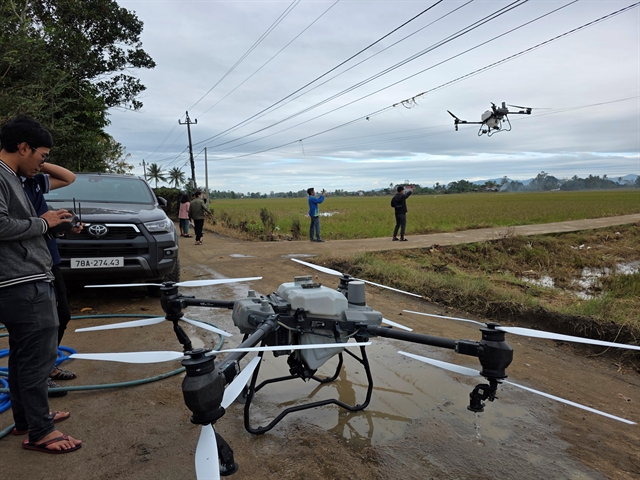 |
| Drones have been widely used in agriculture in Việt Nam. VNA/VNS Photo Trần Ngọc Bình |
Nguyễn Xuân Huy, an aviation engineer, talks to Việt Nam News about the potential of the low-altitude economy in Việt Nam in the coming years and how the country can leverage existing technologies to accelerate its development in this field.
What is the current situation of UAV (Unmanned Aerial Vehicle) development in Việt Nam?
The development of UAVs in Việt Nam remains limited but not nonexistent. A small number of companies are active in the sector, and some have even said that they have exported products to the United States. However, the key constraint lies in localisation. Domestic capability is still confined mainly to basic assembly or structural components, while core technologies, control systems and critical electronic modules continue to depend heavily on imports.
Globally, this field has developed very strongly, with many companies supplying ready-made control boards, communication interfaces, and electronic modules. We usually purchase these components. In some cases, they are open-source platforms, which allow us to modify and rewrite the software as needed, like being given a blank sheet of paper and writing whatever we want on it. Otherwise, the systems are imported and used as complete packages.
As for agricultural UAVs in Việt Nam, there were previously some companies that intended to produce them, but the results were not effective. The products were not good enough, so they did not succeed.
This is also why Chinese UAVs are extremely strong. At present in Việt Nam, DJI accounts for about 80 to 90 per cent of the market. Some other companies have also entered the market, but DJI has almost completely dominated it, starting from models like the T10 and T20, then the T30, T40, T50, and now introducing the T70 to the Vietnamese market. Their products are very user-friendly and genuinely intelligent. I have personally used the T40 and T50 and found that they are almost flawless.
That said, because they are designed as commercial products, some components, such as cables and connectors are quite fragile. When they break, users must buy replacements from the manufacturer, as these parts follow proprietary standards rather than industrial standards, and they are very expensive. This is why I say that in agricultural drones, the level of localisation in Việt Nam is effectively zero.
Meanwhile, the market itself is growing extremely fast. If you look at what is actually happening in the Mekong Delta today, this is not theory but reality. Rice farmers no longer need to step into the fields. They can manage dozens of hectares without going out themselves. Land preparation is done through hired services, sowing is done by drones, and spraying pesticides and fertilisers is done entirely by drones. After more than three months, when the rice ripens, harvesting services take over, collect the rice and sell it. Farmers do not need to go down to the fields.
That is the current reality. In my view, agricultural drones are a very strong and promising market, especially within the low-altitude economy. The problem is that we depend entirely on foreign equipment. However, we could develop this sector by building on existing designs. Việt Nam is very strong in software. We can focus on writing and rewriting software while importing hardware. This could create a new market and a distinctive advantage for agriculture, and even allow us to export to certain agricultural markets.
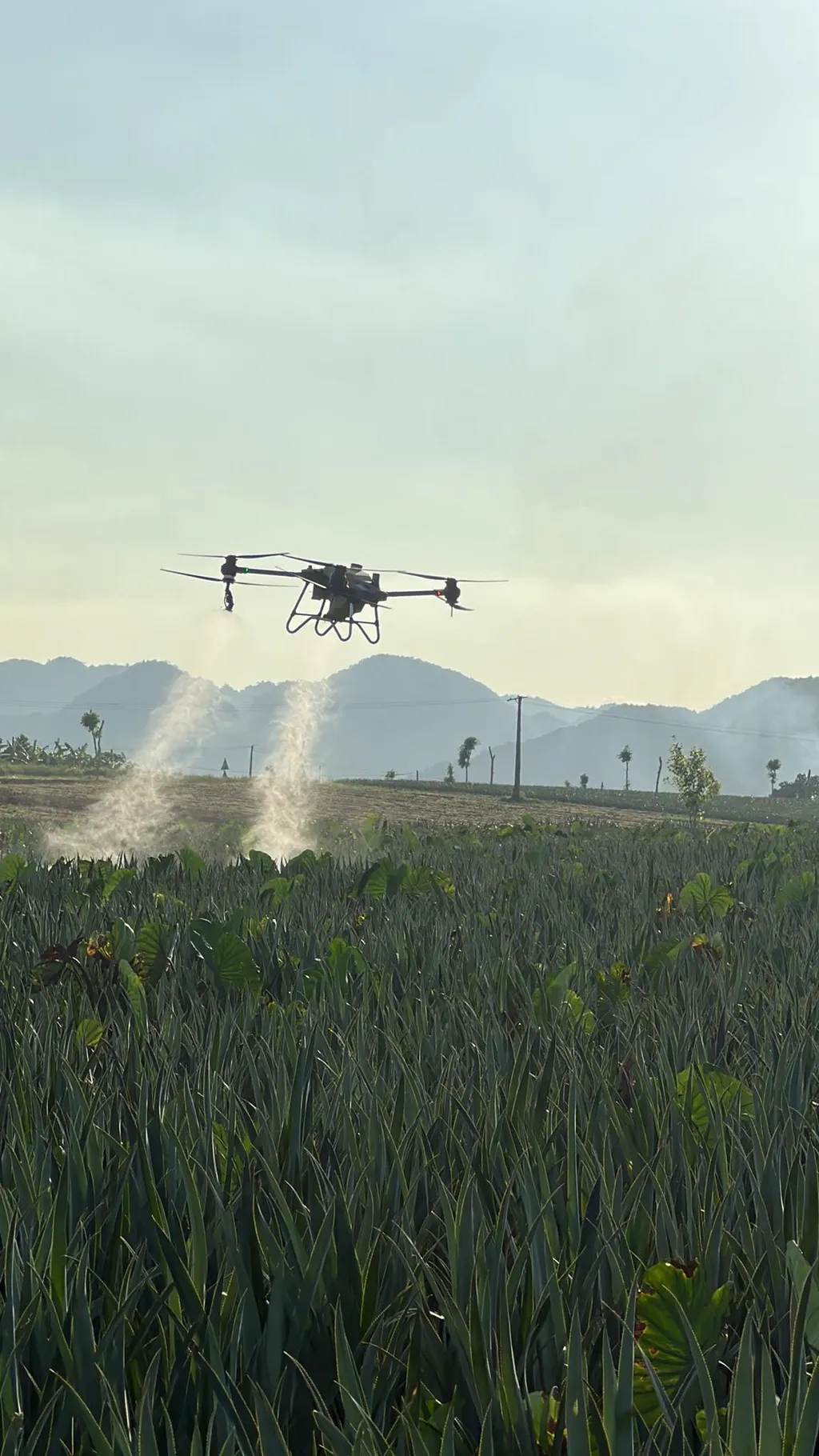 |
| Drones have been widely used in agriculture in Việt Nam. VNA/VNS Photo |
If Việt Nam starts developing this sector seriously, what would be the main challenges?
The biggest challenge is whether we are willing to compete directly with foreign products, even in our own domestic market. China has already taken a large share, and users are accustomed to these products because they are genuinely convenient.
The key difficulty is not a lack of supporting technologies or deep technical capacity. This is not only true for UAVs but for many manufacturing sectors in Viet Nam. Once Chinese products flood the market, it becomes very difficult to produce something that is both high quality and cheaper.
In essence, UAVs are not limited to the aviation sector. There are now many training programmes. People with backgrounds in mechanical engineering, electrical and electronic engineering, automation, mechatronics, or even IT can research and develop UAVs. The airframe design is only a small part. Modern UAVs rely much more on control systems, automation, and technological solutions to solve functional problems. They depend heavily on expertise in automatic control rather than on traditional aviation specialisation.
Does the current legal framework support UAV development? Are there gaps?
With the issuance of Decree 288, Việt Nam now has a clearer regulatory framework for unmanned aerial vehicles. Previously, UAVs were managed mainly under the Law on People’s Air Defence, where they were treated primarily as security-sensitive objects. This approach made access and deployment difficult, even for aviation professionals.
Although the Party and Government have identified the low-altitude economy as a potential growth driver, the regulatory system has not yet fully shifted from a control-oriented mindset to a development-oriented one. Procedures remain relatively complex, which slows down commercial expansion.
Security and national defence considerations must remain paramount. This is standard practice globally when new airspace layers are opened. The real issue is not whether to regulate, but how to regulate in a way that is proportionate to risk.
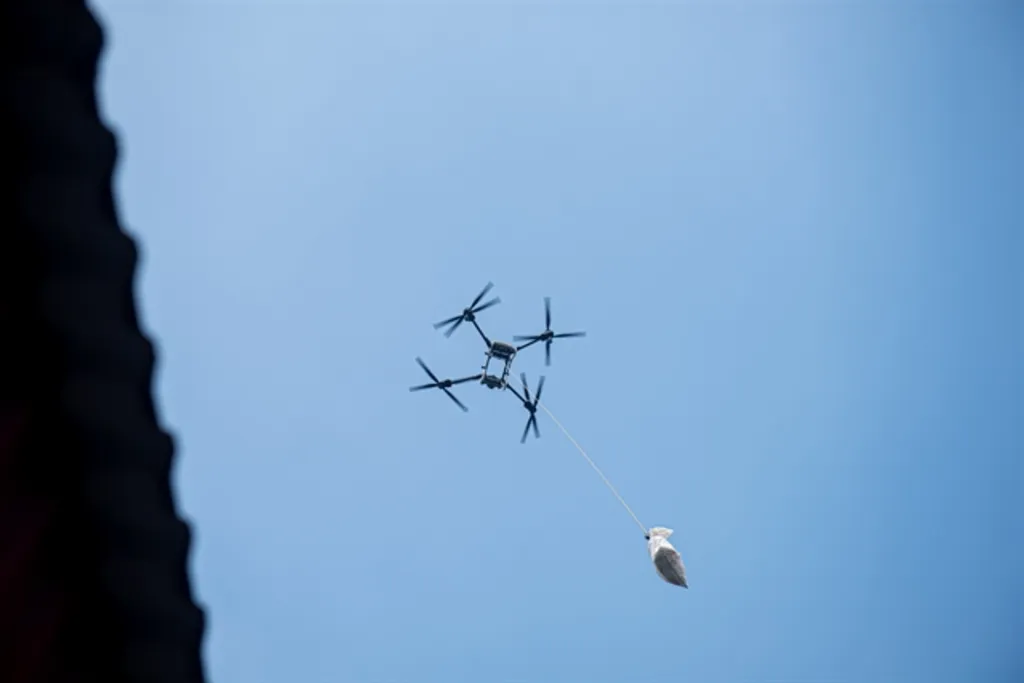 |
| Drones were used to deliver relief supplies during floods in Bắc Ninh Province in 2025. VNS Photo |
In practice, importing UAVs involves multiple layers of approval beyond customs clearance, including authorisation from relevant defence authorities and flight permits processed through security agencies. While this ensures oversight, it also increases administrative burden.
A more risk-based management model is needed. UAVs used for filming, recreation, agriculture or logistics should not be governed under a single rigid framework. For example, agricultural drones typically operate at very low altitudes, around five metres for rice farming and rarely above 30 metres. Their flight duration is short and their operational range limited, meaning the security risk is minimal.
Regulatory focus should therefore shift towards aircraft registration and operator licensing, rather than over-regulating equipment. Clear categorisation, operator accountability and digital tracking would provide stronger safety control while enabling economic activity.
Finally, if airspace below 1,000 metres is gradually opened, coordination becomes the central challenge. Without a unified, software-based traffic management system, increased drone density could lead to congestion and safety incidents. Legal reform alone is not sufficient. Digital infrastructure for real-time monitoring and control will be essential to support sustainable development of the low-altitude economy.
How long would it take to form such a low-altitude economy?
With sufficient investment and policy alignment, I believe it could take around five years to establish a functional low-altitude economic ecosystem.
The hardware itself is not the main barrier, as most components already exist globally. The real challenge lies in coordination. Each drone must have a unique identity and, during flight, continuously transmit its position, speed and altitude to a central system. At present, this information typically remains with the operator. To scale up operations, drones need to be connected to a unified control platform capable of managing flight paths, altitude separation and traffic flow in real time. Only with such a system in place can a true low-altitude logistics network emerge.
On the human resource side, Việt Nam has begun building capacity. There is already a university in Hà Nội offering training in unmanned aviation technology. Fundamentally, this field is rooted in automation, electronic control and software systems rather than traditional aviation manufacturing.
As for hardware components such as motors and batteries, I do not believe we should invest too heavily in trying to compete directly. These components are globally standardised and can be imported at scale. Even if we are technically capable of producing them, commercial viability is the decisive factor. Without market demand, such projects cannot be sustained.
That said, Việt Nam already has a number of companies producing and exporting drone-related technologies. Firms such as HTI and RtRs, along with innovative companies like Gremsy, XBlink and Mismart, have secured sizeable international contracts for UAV components and equipment. However, most of these enterprises are still operating on a relatively small scale. The challenge is not capability, but scale and ecosystem integration.
To move from isolated successes to a structured industry, coordinated national strategy and market expansion will be essential. VNS
Opinion
.jpg) Opinion
Opinion
 Opinion
 Opinion
 Opinion
 Opinion
 Opinion
 Opinion
 Opinion
 Opinion
.jpg) Opinion
Opinion
.jfif) Opinion
Opinion
 Opinion
 Opinion
 Opinion