|
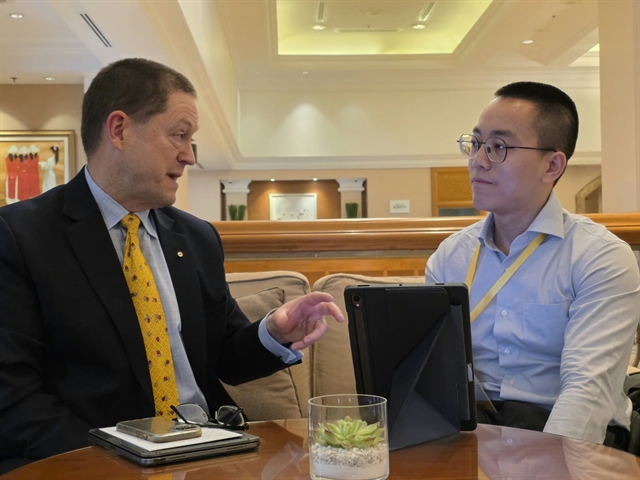
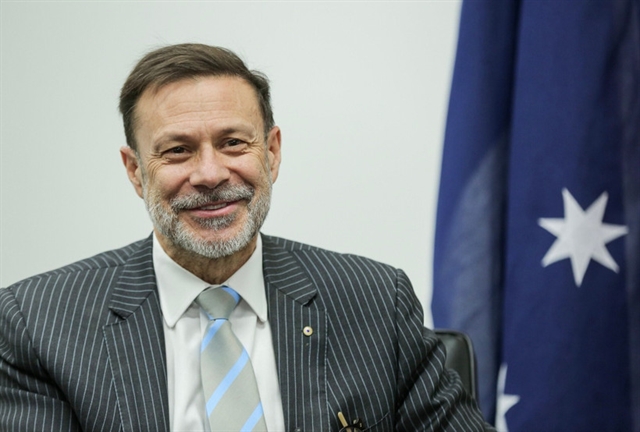
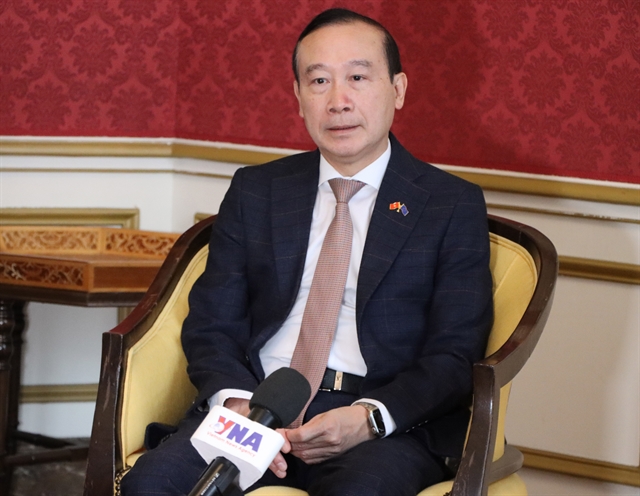
| EU Ambassador to Việt Nam Julien Guerrier. — Photo from the embassy |
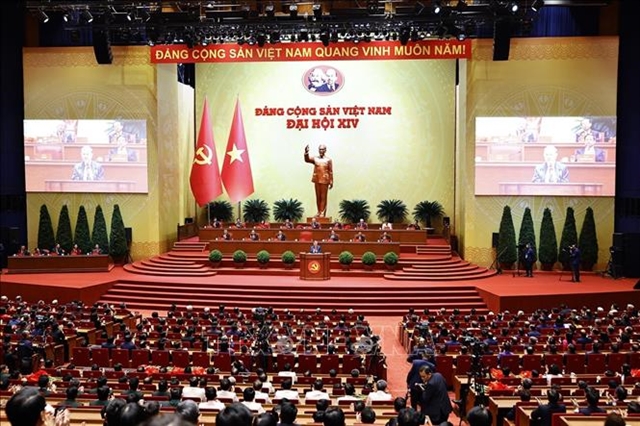
HÀ NỘI — The European Union sees Việt Nam as a key partner in a more uncertain global environment and is preparing to deepen cooperation across trade, technology, security and infrastructure following the country’s 14th National Congress of the Communist Party of Việt Nam.
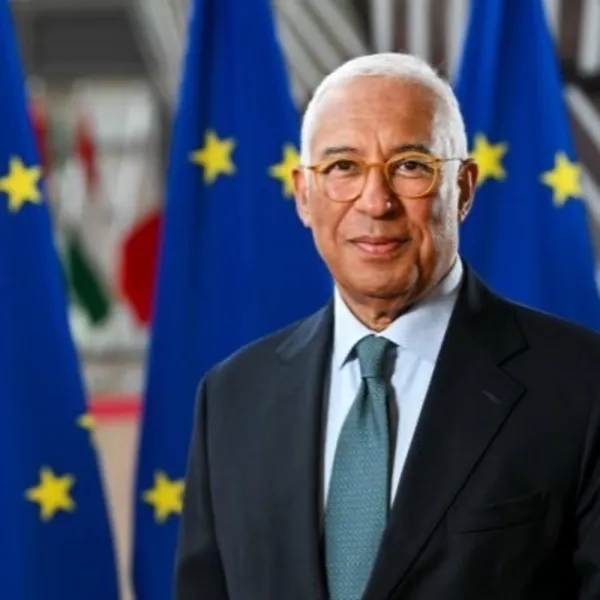
That was the message from EU Ambassador to Việt Nam Julien Guerrier, speaking ahead of a visit by European Council President António Costa on January 29.
Speaking to the press, the ambassador said the timing of Costa’s visit - just days after the conclusion of the Party Congress - sent a strong political signal from both sides.
It reflects the EU’s desire to strengthen partnerships with countries that support open trade, international law and multilateralism and Việt Nam's willingness to place relations with the EU high on its post-Congress diplomatic agenda.
The visit comes at a particular time, when Việt Nam is entering a new political cycle with clear development priorities, while the EU is seeking to reinforce ties with trusted partners amid growing geopolitical tensions.
The ambassador said the EU is confident it can continue close cooperation with Việt Nam's leadership following the Party Congress, noting that General Secretary Tô Lâm is a partner the EU already knows well.
That confidence underpins the timing of Costa’s visit and the push to take EU–Việt Nam relations 'to the next level' – a partnership shaped by Việt Nam's post-Congress priorities and the EU’s search for reliable partners in a changing world.
Sci-tech cooperation
One of the main areas of convergence following the 14th National Party Congress is science, technology, innovation and digital transformation, which Việt Nam has identified as key drivers of growth over the next five years.
The EU ambassador said these fields would be central to the EU-Việt Nam relationship as the two sides move towards upgrading ties to a Comprehensive Strategic Partnership.
Cooperation at EU level will be reinforced through research and innovation programmes, particularly Horizon Europe, the EU’s flagship research framework.
Việt Nam already participates in Horizon Europe projects, but the EU wants to expand this engagement further in alignment with Việt Nam's current orientations.
In the coming weeks, the two sides plan to sign a letter of intent on science and technology cooperation, setting out priority areas and concrete follow-up actions. These include greater exchanges of researchers and increased participation by Vietnamese scientists in EU-funded research schemes, according to Julien.
Semiconductors were highlighted as a specific area where Việt Nam's ambitions matches EU support. Việt Nam has set a target of training around 50,000 semiconductor engineers by 2050 as it seeks to position itself more firmly in the global supply chain.
The diplomat said the EU is already backing skills development through a vocational and educational training programme signed with Việt Nam's Ministry of Education and Training on December 31. Funded with up to €50 million from the EU budget, together with contributions from France and Germany, the programme aims to train young engineers and skilled workers in Việt Nam.
While semiconductors are a focus, the programme also covers broader new technologies linked to the digital and green transitions. Alongside training, the EU wants to increase investment in high-technology sectors in Việt Nam, including semiconductors.
Critical raw minerals – with its increasing importance in the global agenda for its use in semiconductor – is also an area that the EU is interested in cooperating with Việt Nam.
The ambassador said critical raw materials are essential inputs for European industry, and the EU’s "primary interest is to ensure secure and reliable sources of supply."
Việt Nam, he noted, has abundant reserves of certain materials, such as rare earths and tungsten. In this context, Europe can contribute technology across the entire upstream segment of the sector, including geological mapping, exploration, extraction, and development.
However, Ambassador Julien said that the difference to other partners in the approach to this much-coveted resources is that EU will help Việt Nam establish a complete domestic value chain in its own home turf.
“It's not an operation to come and take the raw materials and then process them back in Europe, but to help Việt Nam develop an independent full value chain in the country,” he told Việt Nam News, adding that such cooperation would also allow the EU to diversify its sources of supply for critical raw materials.
Trade, the EVFTA and economic integration
Economic cooperation remains a cornerstone of EU-Việt Nam ties. The EU-Việt Nam Free Trade Agreement (EVFTA) has delivered a more than 40 per cent increase in bilateral trade since it entered into force, but the ambassador said there is scope to go further.
Tariff reductions under the agreement will continue until 2030, providing a built-in boost to trade. Beyond that, the EU and Việt Nam are working to address remaining barriers. Following a visit by the EU trade commissioner last September, the two sides agreed to establish a high-level task force to tackle non-tariff barriers and administrative obstacles.
The task force will also serve as a forum to discuss how to deepen trade and investment links further, with the aim of creating more opportunities for Vietnamese companies in the EU market and European firms in Việt Nam, according to the diplomat.
Infrastructure and Global Gateway
Infrastructure development, another priority set out after the Party Congress, is an area where the EU sees significant scope for cooperation. Through its Global Gateway initiative, the EU has already invested in Việt Nam's energy infrastructure, particularly renewable energy, and plans to accelerate this support as Việt Nam focuses on energy security and independence.
The ambassador said the EU also wants to expand cooperation in green transport. This year, Brussels plans to launch a transport facility specifically for Việt Nam under Global Gateway, covering ports, airports, high-speed rail and metro systems. European commissioners and business representatives are expected to visit Việt Nam in March to identify concrete investment opportunities.
Hà Nội's Metro Line 3 (Nhổn–Hà Nội Station), supported by the EU, the European Investment Bank and several member states, were cited as examples of how European technology and finance can contribute to Việt Nam's infrastructure development.
Peace, security and Việt Nam's international role
Peace and security featured prominently in the ambassador’s remarks, reflecting both regional concerns and the Party Congress’s emphasis on international integration alongside defence and security.
The East Sea (internationally known as the South China Sea) was described as particularly important for the EU, with around 40 per cent of EU imports and 25 per cent of exports passing through the waterway. Ensuring peace, stability and freedom of navigation there is therefore a direct European interest.
Beyond its immediate neighbourhood, the ambassador said Việt Nam has reached a level of development and international standing that allows it to play a broader role in world affairs. With good relations across a wide range of partners, Việt Nam can use its diplomatic capital to call for peace in regions affected by conflict – an approach the EU says it is ready to support.
Fisheries and maritime cooperation
On illegal, unreported and unregulated (IUU) fishing, the ambassador acknowledged what he described as “remarkable progress” by Việt Nam, including the installation of tracking devices on fishing vessels over 15 metres and the alignment of legislation with international standards.
Implementation remains the most challenging stage, but he pointed to weekly meetings chaired by the Prime Minister with coastal provinces to monitor progress. Reports submitted by Vietnamese authorities are currently being analysed in Brussels, with the hope that this could pave the way for an inspection visit in the coming months.
Maritime cooperation more broadly includes coordination on maritime security, legal issues related to the law of the sea, and areas such as fisheries management and marine conservation. — VNS
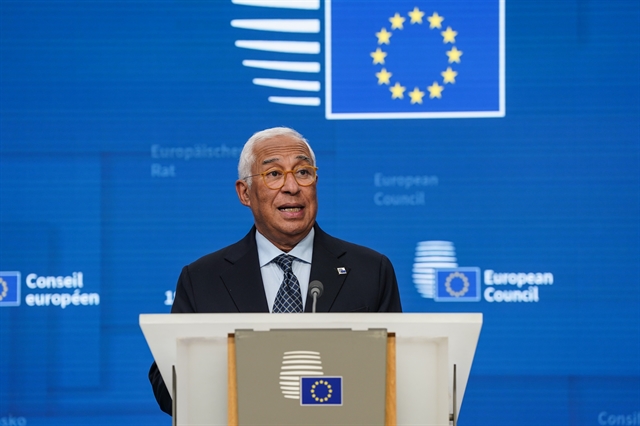
Per the draft agenda, the EC president's visit – which comes on the back of the 35th anniversary of Việt Nam–EU diplomatic relations – will include talks with State President Lương Cường, as well as meetings with Party General Secretary Tô Lâm, Prime Minister Phạm Minh Chính and National Assembly Chairman Trần Thanh Mẫn.
Costa is also set to visit Hà Nội's Metro Line 3 (Nhổn–Hà Nội Station), funded in large part by the European Investment Bank.
Ahead of the visit, Costa noted the EU's commitment to "strengthening and deepening its ties with Việt Nam, building on shared values and mutual goals.
 Opinion
.jpg)

.jpeg)