 Opinion
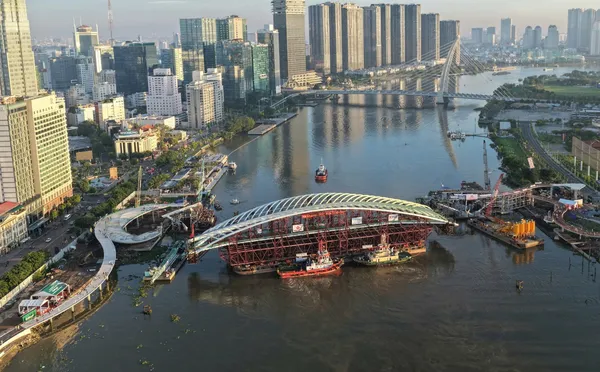
Final section joins Saigon River pedestrian bridge
1.

|
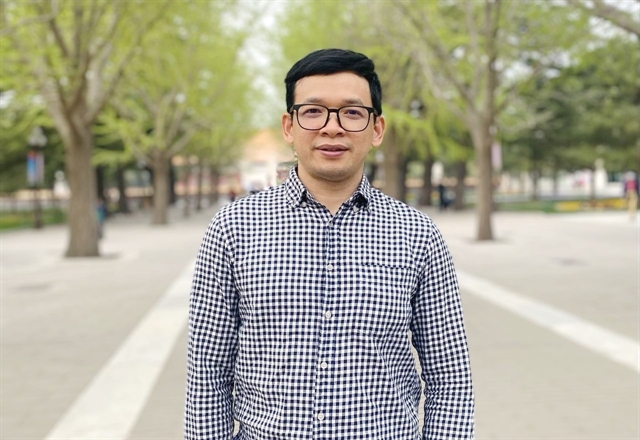
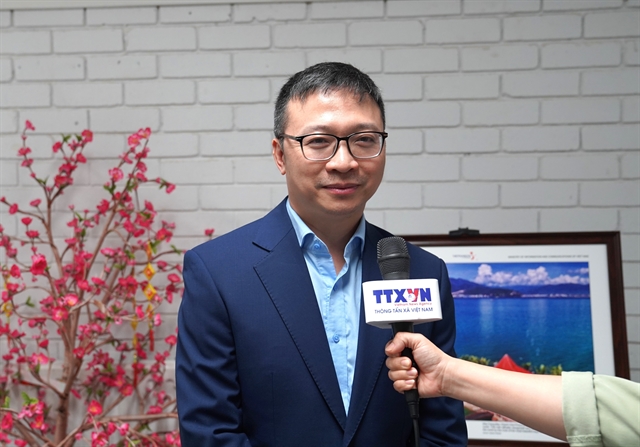
| Collins Chong Yew Keat (left), an analyst on foreign, security and strategic affairs at University of Malaya (UM), answers questions from the Vietnam News Agency correspondent in Kuala Lumpur, Malaysia.— VNA/VNS Photo Thành Trung |
HÀ NỘI — The 14th National Congress of the Communist Party of Việt Nam (CPV) is not merely a domestic political event, but one that carries profound significance in comprehensively repositioning Việt Nam on the global geopolitical and economic map, said a Malaysian scholar.
Collins Chong Yew Keat, an analyst on foreign, security and strategic affairs at University of Malaya (UM), held that amid a world undergoing rapid transformation marked by complex and unpredictable changes, Việt Nam has emerged as a model of stability and flexible adaptability.
Commenting on Việt Nam’s stature in the new phase, he noted that Việt Nam is now regarded as one of the most disciplined and credible balancers within ASEAN, particularly at a time when the bloc is witnessing divergent approaches toward major powers.
The consistency in policy orientation, combined with strategic restraint and strong institutional cohesion, has enabled Việt Nam to forge a distinct and influential diplomatic identity on the international stage.
The Malaysian expert emphasised that the foundation of this solid position lies in a strategy that allows Việt Nam to expand its strategic space without becoming dependent on any single centre of power.
Over the years, Việt Nam has deepened relations with all major poles while firmly maintaining autonomy in key decision-making.
The upgrading of relations with the United States, along with other mid-sized and major partners, serves as clear evidence of Việt Nam's capacity to engage deeply in global processes while preserving the necessary strategic balance.
From a regional perspective, Collins affirmed that Việt Nam plays a critical role in mitigating the disruptive impacts of great-power competition on ASEAN, while contributing to strategic stability by embedding itself deeply within global production networks and supply chains.
He further stressed that in regional issues regarding the East Sea (internationally known as the South China Sea), Mekong subregional cooperation, and Myanmar, Việt Nam’s position following the 14th National Party Congress is expected to continue demonstrating selective proactiveness and close alignment with multilateral institutions.
In the East Sea, Việt Nam has consistently been among ASEAN’s most steadfast members in upholding international law, sovereignty, and regional stability based on the 1982 United Nations Convention on the Law of the Sea (UNCLOS), without escalating tensions.
Regarding Mekong cooperation, Việt Nam is shifting toward a system-level coordinating role, linking water security, food security, and climate change adaptation.
This reflects a more integrated and comprehensive security mindset among Việt Nam’s leadership in the new term, moving beyond narrow military-centric approaches.
Even on the Myanmar issue, Việt Nam’s cautious and pragmatic approach - prioritising ASEAN unity - demonstrates a strategic vision aimed at safeguarding the bloc’s collective leverage.
Economically, Việt Nam’s role following the 14th National Congress is expected to serve as an “anchor” for the region’s next development phase under the ASEAN Vision 2045.
Collins pointed out that neighbouring countries such as Malaysia view Việt Nam not only as a fast-growing economy, but also as a stable force amid intense geopolitical competition.
Việt Nam is anticipated to become a connectivity-driven economy, helping ASEAN integrate more deeply into global trade flows and supply chains.
Notably, Việt Nam’s success in transitioning toward a development model based on productivity, human capital, and institutional strength, rather than merely headline growth figures, will have strong spillover effects on the overall credibility of the ASEAN Community.
One particularly notable aspect of Việt Nam’s future position is its role as a geopolitical hinge between the Asian mainland and Southeast Asia’s maritime space, directly connected to the East Sea and the Pacific Ocean.
With its unique geographic location, Việt Nam is seen as a gateway for connectivity corridors from Central and South Asia, via the Mekong subregion, to the region’s strategic maritime routes.
According to Collins, as global supply chains accelerate diversification and resilience-building, Việt Nam’s industrial corridors and logistics infrastructure are emerging as strategic nodes in cross-regional production networks.
In the longer term, as Arctic shipping routes gradually take shape, Việt Nam’s gateway position to the East Sea is likely to be further reinforced, transforming its seaports and industrial corridors into key transshipment hubs linking Europe and Central Asia with the Indo-Pacific.
Việt Nam’s strategic value following the 14th National Congress has far surpassed conventional indicators of production or GDP growth.
Collins assessed that Việt Nam’s core value lies in its potential to become a new “central connectivity node” in global trade and geopolitics.
The presence of a resilient, innovative, and responsible Việt Nam not only ensures national prosperity but also strengthens ASEAN’s legitimacy and relevance in an era of fragmentation and power reconfiguration.
This is the historic role Việt Nam is assuming - contributing to a peaceful, stable, and deeply connected region in the decades ahead.— VNA/VNS
Opinion
.jpg) Opinion
Opinion
 Opinion
 Opinion
 Opinion
 Opinion
 Opinion
.jpg) Opinion
Opinion
 Opinion
 Opinion
 Opinion
 Opinion
 Opinion
 Opinion
 Opinion