 Opinion
Liechtenstein Prime Minister concludes official visit to Việt Nam
1.
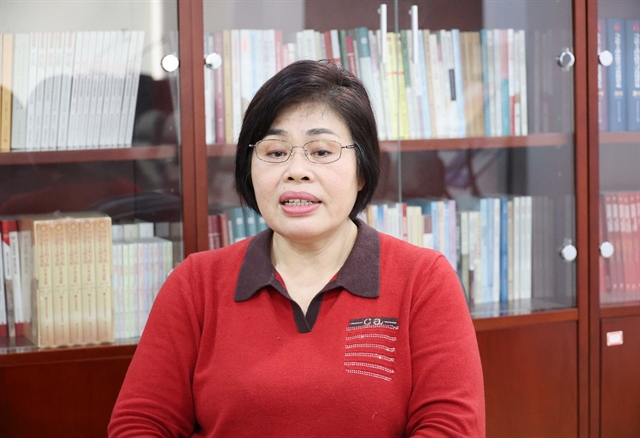 |
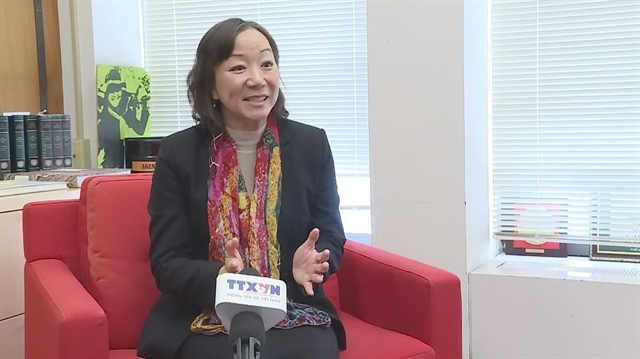
| Professor Phan Kim Nga, a senior researcher at the Chinese Academy of Social Sciences' Institute of Marxism Research. — VNA/VNS Photo Công Tuyên |
BEIJING — The current international situation is characterised by increasing multipolarity and intertwined risks and opportunities, creating special conditions for Việt Nam to meet development targets while also bringing significant challenges.
Professor Phan Kim Nga, a senior researcher at the Chinese Academy of Social Sciences' Institute of Marxism Research and a Việt Nam specialist, told a Vietnam News Agency reporter in Beijing about the opportunities and challenges along the path to achieving the economic development goals set by the 14th National Congress of the Communist Party of Việt Nam.
A report at the congress clearly outlined Việt Nam's breakthrough development goals for 2026-30: becoming a upper middle-income country with a modern industrial base by 2030 and a developed high-income country by 2045.
Nga said that Việt Nam's great achievements over 40 years of reform have transformed the country from a backward agricultural nation with a per capita GDP of around US$100 into an upper middle-income country, earning high praise from prestigious international organisations.
In 2025, Việt Nam's GDP was estimated at $510 billion, ranking 32nd globally, with per capita GDP of around $5,000. The quality of economic growth has also seen positive shifts, with total factor productivity contributing about 47 per cent to economic growth.
Last year, GDP growth exceeded 8 per cent, and this year's target is 10 per cent or higher. By 2030, per capita GDP is projected to reach about $8,500. Việt Nam aims to become a developed high-income country by 2045.
According to Nga, Việt Nam faces numerous opportunities in pursuing these goals.
First, the international situation offers opportunities for the country to achieve its development targets. Global industrial restructuring and enhanced regional cooperation have enabled Việt Nam to upgrade its industrial chains.
As a key link in ASEAN supply chains, Việt Nam is attracting mid- and high-end production capacity in areas like semiconductor packaging and testing and new energy batteries. The congress's draft report mentions building strategic industries, such as semiconductors and AI, as aligning with this trend.
Benefits also abound from several regional trade agreements. Full implementation of the Regional Comprehensive Economic Partnership (RCEP) and upgrading the ASEAN Free Trade Area open larger markets for key Vietnamese agricultural products like coffee, seafood, and textiles.
The draft report proposes "effectively implementing free trade agreements and joining new economic linkage initiatives," leveraging regional rules to reduce tariff barriers. For example, under RCEP, Việt Nam's agricultural export tariffs to China and Japan have dropped to 0 per cent.
Cooperation opportunities have also arisen from China's development. The report draft emphasises the need to "strengthen substantive cooperation with neighbouring countries."
Breaking ground this year on the standard-gauge China-Việt Nam cross-border railway project (the Lào Cai-Hà Nội-Hải Phòng section) will shorten transport times between northern Việt Nam's industrial zones and southwestern Chinese markets, contributing to the report's goal for a "breakthrough in multimodal transport infrastructure".
China's technologies in digital economy and green energy, including solar power plants and 5G tech cooperation, can also directly support Việt Nam's digital transformation and green economy development.
The global green transition and technological revolution provide an impetus for Việt Nam to overcome development bottlenecks. The congress's draft report views scientific and technological innovation and green transition as strategic breakthroughs, with current international trends offering a key support in industrial opportunities from expanding green energy demand.
Việt Nam has committed to "reducing greenhouse gas emissions by 8 per cent by 2030" and "achieving 6 per cent marine protected area coverage," per the report, while tapping international funding (like the Green Climate Fund and EU carbon border adjustment mechanism counterpart funds) to promote southern offshore wind bases and northern solar photovoltaic industrial zones.
More opportunities will come from the Fourth Industrial Revolution's diffusion of technology. Widespread adoption of technologies like AI and big data lowers catch-up barriers for developing countries. The report draft stresses the importance of building national data centres and promoting AI applications in production.
Currently, international tech firms like Microsoft and Samsung are establishing R&D centres in Việt Nam, boosting domestic technical workforce training. International sci-tech cooperation can also help Việt Nam overcome bottlenecks in semiconductors and quantum technology, aligning with the report's call to "master core strategic technologies."
Việt Nam's strengthened voice in multilateral mechanisms also creates a favourable external environment. The report proposes "enhancing Việt Nam's central role in ASEAN and Asia-Pacific issues," and current international changes facilitate this goal.
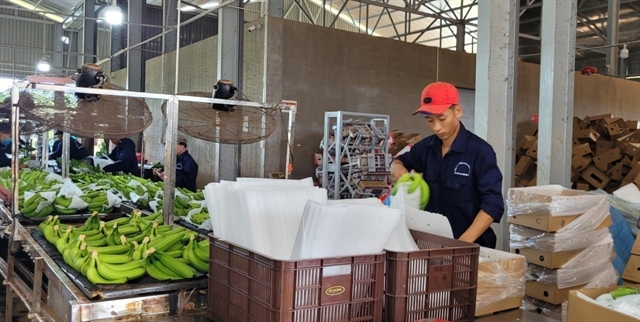 |
| A worker packs bananas for export to China. — VNA/VNS Photo Hoàng Nhị |
Collaboration opportunities primarily arise from Việt Nam's increasingly solid central role in ASEAN. With the US, EU, and others boosting investment in ASEAN, Việt Nam – as 2027 ASEAN Chair – can leverage ASEAN Community building to promote regional rule-making.
This not only amplifies Việt Nam's international voice, but also provides institutional assurance to build a domestic digital society, fitting the draft report's diplomatic orientation of "forming multilateral cooperation frameworks."
Additionally, cooperation potential emerges from the rise of developing countries. Global South nations have achieved stronger consensus on issues like climate change and debt restructuring. Việt Nam can use its 'non-alignment' tradition to connect with emerging markets for greater development rights.
For instance, it could promote common but differentiated responsibilities at UN climate conferences, securing international support for domestic climate adaptation projects and the report's goal of "building a climate-resilient society."
Alongside these opportunities, Nga notes that Việt Nam will face many challenges in achieving its goals, such as global economic volatility and weakening external demand, geopolitical risks, and security challenges threatening development stability and technology competition, along with the 'middle-income trap' hindering transformation. — VNS
Opinion
 Opinion
 Opinion
 Opinion
 Opinion
 Opinion
 Opinion
 Opinion
 Opinion
 Opinion
 Opinion
 Opinion
 Opinion
 Opinion
 Opinion