 Opinion
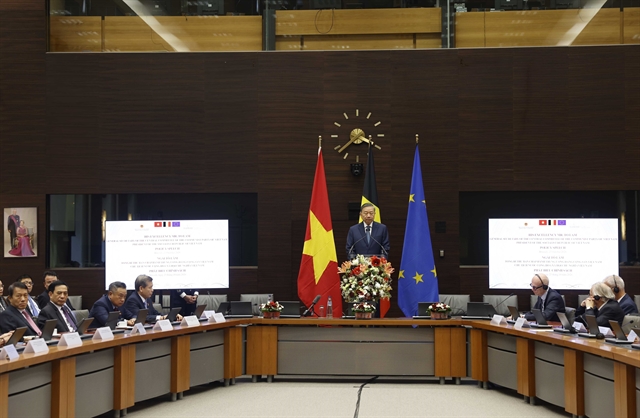
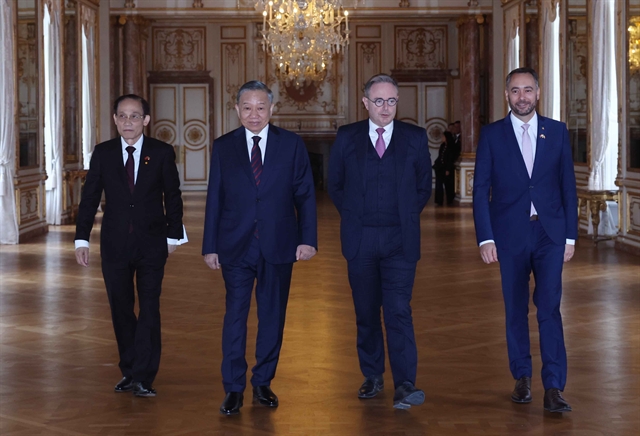
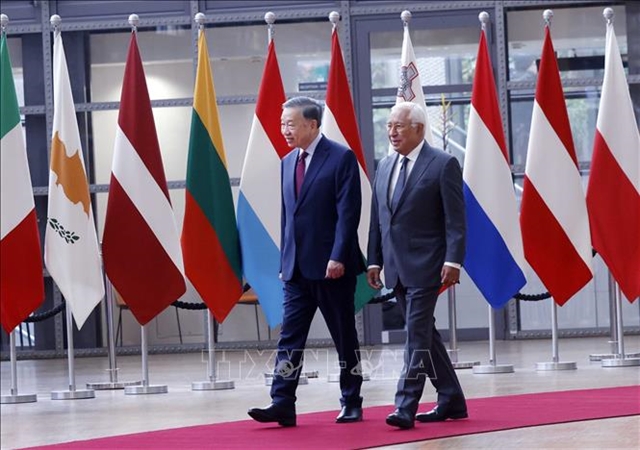
Top Vietnamese leader meets with Belgian Senate Speaker, House President
1.
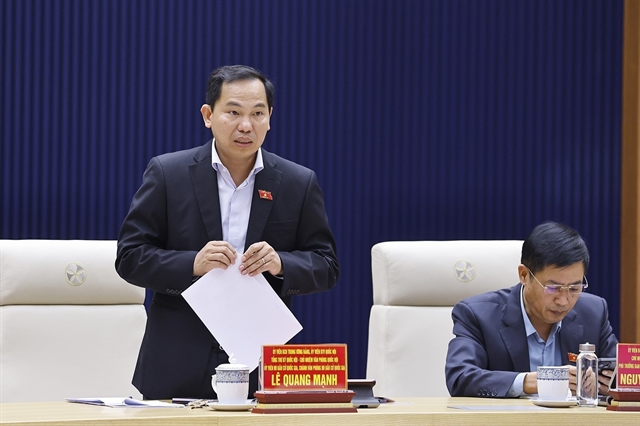 |
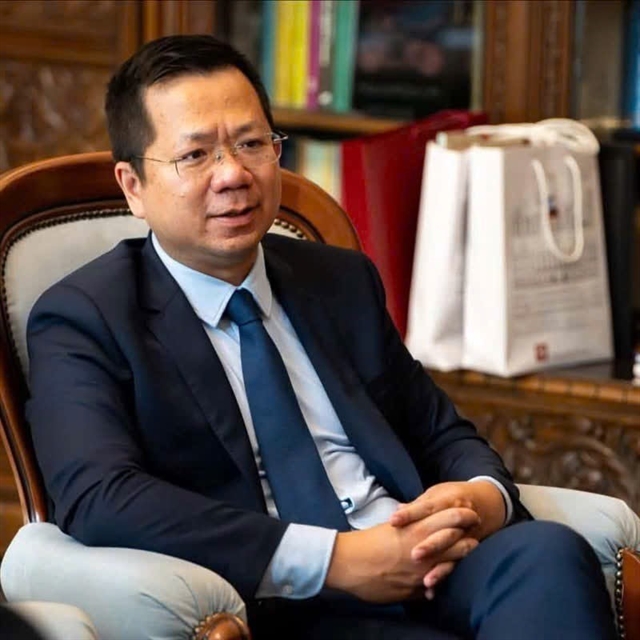
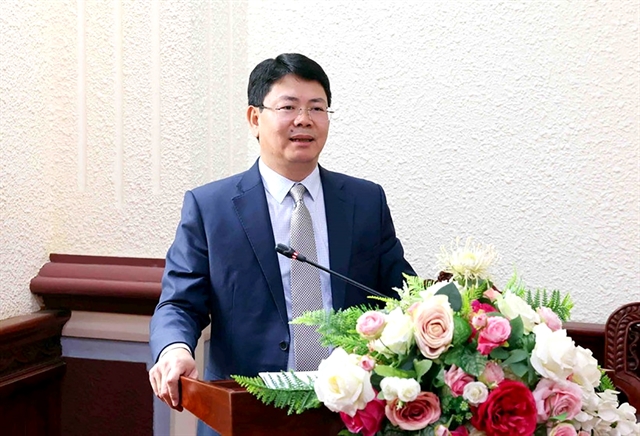
| Lê Quang Mạnh, NA General Secretary, Chairman of the NA Office, and Chief of the Office of the National Election Council. VNA/VNS Photo |
With only days remaining before Việt Nam’s nationwide election of deputies to the 16th National Assembly (NA) and People’s Councils at all levels for the 2026–2031 tenure, preparations have entered a decisive final phase.
In an interview with the press, Lê Quang Mạnh, NA General Secretary, Chairman of the NA Office and Chief of the Office of the National Election Council, emphasised that the period leading up to the election day on March 15 is critical to ensuring the success of the vote.
How do you assess the progress and quality of election preparations at both central and local levels so far?
Over the past period, preparations for the election have been carried out in a synchronised, thorough and methodical manner, strictly adhering to the legal framework and timeline. The entire process has been conducted under the unified leadership of central authorities, with close coordination across the political system.
At the central level, the National Election Council has issued all 27 legally required documents, establishing a complete legal foundation for the election process. In addition, it has adopted 14 resolutions and guideline documents, along with 34 official responses addressing procedural issues raised by localities. These documents cover key aspects such as candidate consultations, voter list compilation, voter meetings, security arrangements and the application of information technology. This has ensured nationwide consistency while minimising potential errors.
The council also advised the issuance of Conclusion No. 03-KL/TW by the Politburo and the Secretariat (of the Communist Party of Việt Nam), reaffirming the importance of strengthening Party leadership over the election, particularly in the context of significant organisational restructuring and administrative reforms. This provides an important basis for local Party committees and authorities to define responsibilities clearly and implement election tasks effectively.
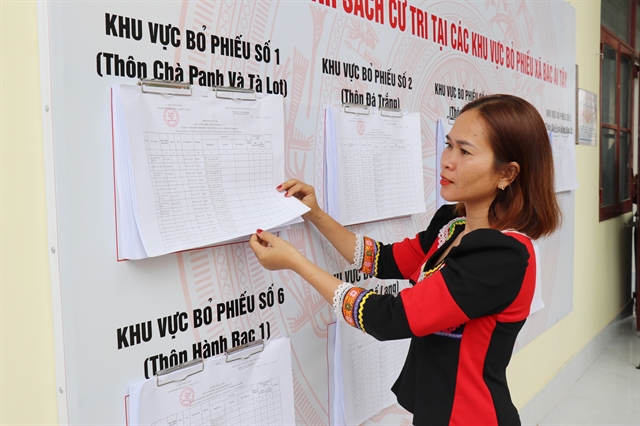 |
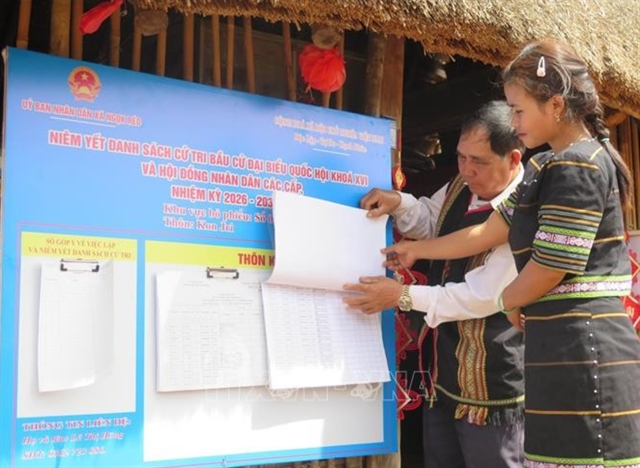
| A Raglai ethnic resident in Bác Ái Tây Commune, Khánh Hòa Province, reviews the publicly posted voter list at the commune People’s Committee headquarters. — VNA/VNS Photo Nguyễn Thành |
The official list of 864 candidates for the 16th NA was announced ahead of schedule, ensuring compliance with requirements on structure, composition and surplus ratios. The consultation, nomination and verification process was conducted rigorously, transparently and democratically, with multiple rounds of voter feedback collected at both places of residence and workplaces. This is a crucial step in ensuring the quality of deputies from the outset.
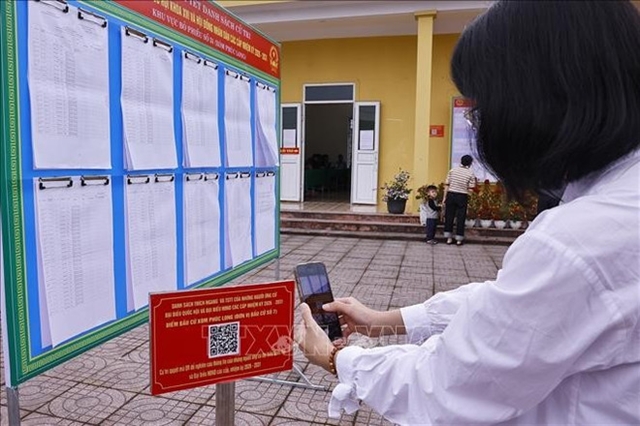
At the local level, election committees at provincial and commune levels were established on time. The voter list, comprising more than 73 million citizens, has been publicly posted at over 72,000 polling stations nationwide. The review process has been conducted in multiple stages, with cross-checking against the national population database to ensure accuracy.
Preparations at polling stations, including ballot boxes, polling rooms, security plans, fire prevention measures and contingency arrangements, have been carefully implemented. Election preparations have reached even the smallest residential areas, villages and hamlets.
Overall, the fundamental conditions for election day have been comprehensively prepared. However, the remaining period until March 15 is decisive, requiring continued supervision and careful review to ensure that every vote is cast safely, conveniently and in full compliance with the law.
What are the key new features of this election?
This election introduces several important innovations.
First, this is the first election held following the restructuring of administrative units and the implementation of a two-tier local government model nationwide. Administrative units now cover larger geographic areas and populations, requiring higher standards in determining representation structures and organising voter engagement. Candidates must reach a broader electorate, necessitating more careful and systematic preparation.
Second, digital transformation has been integrated throughout the election process. The connection and verification of voter lists using the national population database and digital platforms such as VNeID have significantly improved accuracy and reduced duplication and errors. However, technology serves only as a support tool. The decisive factor remains the responsibility and diligence of election personnel. Accordingly, training and professional guidance for grassroots election officials have been prioritised.
Third, the election timeline has been shortened compared with previous tenures. This does not reduce procedural rigour but requires more efficient coordination and streamlined workflows. Each stage is closely interconnected, and delays or inaccuracies at any step could affect the overall process.
Fourth, there is a policy to increase the number of full-time NA deputies, with 145 expected at the central level and 55 at the local level. This reflects a strategic effort to enhance the professionalism and effectiveness of the legislature. Full-time deputies can dedicate themselves entirely to legislative work, strengthening lawmaking, oversight and decision-making functions.
These reforms are aligned with broader efforts to improve governance, strengthen the rule-of-law State and enhance national institutional capacity in the new development phase.
What are the key priorities from now until election day?
The period leading up to March 15 is the final and decisive phase. The overarching priority is to maintain comprehensive leadership, avoid complacency and closely supervise every stage of the process.
There are four key priority areas.
First, ensuring the accuracy and completeness of voter data to fully safeguard citizens’ voting rights. Voter lists must continue to be reviewed and updated to reflect population changes. Special attention must be given to remote areas, islands and armed forces personnel to ensure their voting rights are fully protected.
Second, organising substantive voter meetings for election campaigning. Each NA candidate is required to attend at least 12 voter meetings. These forums allow voters to engage directly with candidates, understand their proposed programmes and exercise democratic oversight. This strengthens accountability and mutual understanding between candidates and voters.
Third, ensuring comprehensive security and safety. Local authorities must review and strengthen plans for public security, fire prevention, healthcare and communications. They must also monitor developments closely and promptly address misinformation to ensure a stable and transparent election environment.
Fourth, standardising voting and vote-counting procedures. Election day must be conducted strictly in accordance with legal requirements, from polling station openings and voter guidance to ballot sealing, counting and reporting. Election officials must be thoroughly trained to ensure procedural compliance. Results must be compiled and announced transparently and on schedule.
At the same time, election organisation must be aligned with socio-economic development and national defence and security objectives, ensuring that daily life and economic activities continue normally while fostering public confidence and participation.
What are your expectations for the election outcome?
Based on the progress achieved so far and the strong commitment of the entire political system, I am confident that the election will be conducted successfully.
I have particularly high expectations for the quality of deputies elected to the NA and People’s Councils. Ensuring appropriate representation structures, increasing the number of full-time deputies and maintaining rigorous nomination and vetting procedures will help build legislative bodies capable of effectively fulfilling their roles in lawmaking, oversight and decision-making.
The success of the election will not only be measured by voter turnout but also by the effectiveness of elected bodies in the coming term.
I believe this election will further strengthen public trust in the Party and the State. That trust is built through transparency, fairness and meaningful voter participation. When citizens clearly see that their democratic rights are respected and protected, that represents the most profound value of a democratic election. — VNS
Opinion
 Opinion
 Opinion
.jpg) Opinion
Opinion
 Opinion
 Opinion
 Opinion
 Opinion
 Opinion
 Opinion
 Opinion
 Opinion
 Opinion
 Opinion
 Opinion