 Opinion
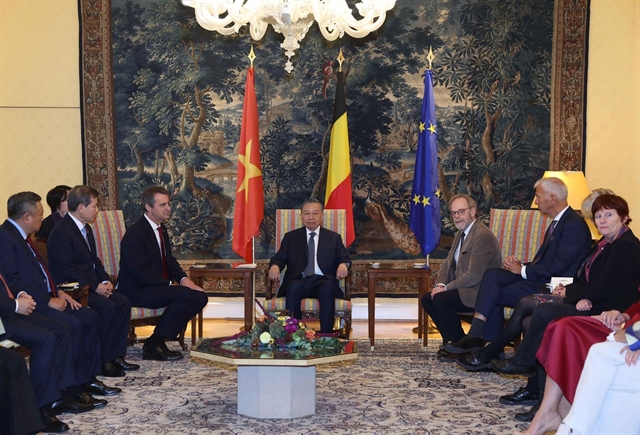
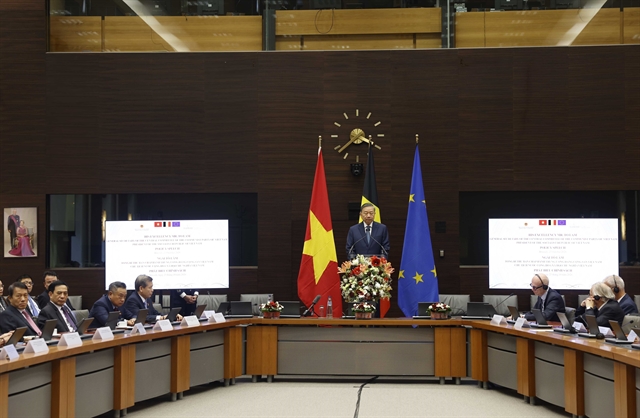
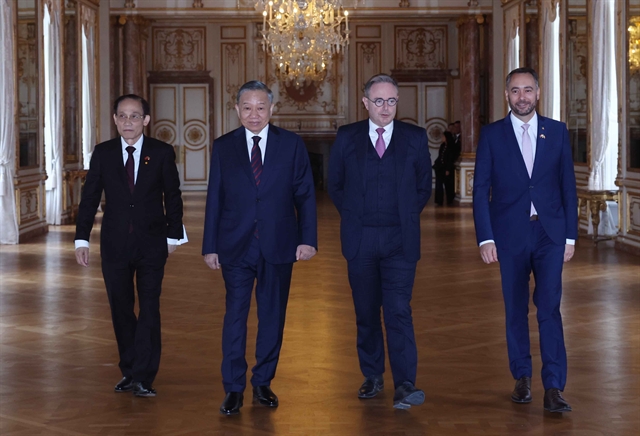
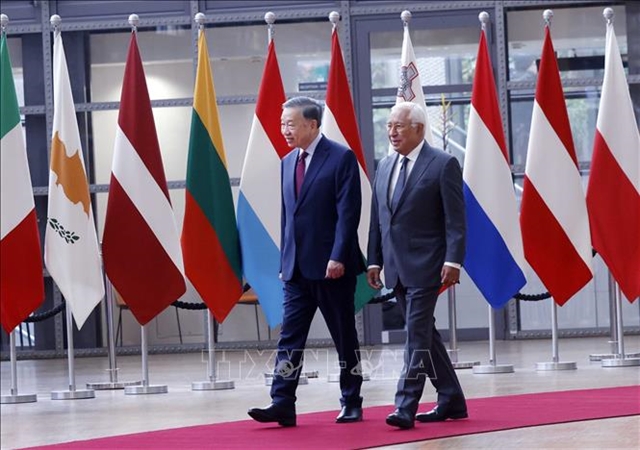
Top Vietnamese leader meets with Belgian Senate Speaker, House President
1.
 |
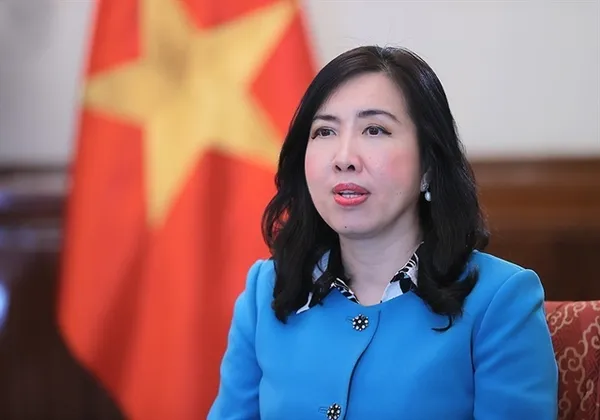
| Vice Chairwoman of the National Assembly’s Committee for Deputy Affairs and Permanent Deputy Head of the National Election Council’s Office, Tạ Thị Yên. Photo daibieunhandan.vn |
Ahead of the General Election Day to elect deputies for the 16th National Assembly (NA) and People’s Councils at all levels for the 2026-2031 term, local Party committees and authorities are stepping up communication efforts to encourage high voter turnout. In an interview with the Đại biểu Nhân dân (People’s Representatives) newspaper, Vice Chairwoman of the National Assembly’s Committee for Deputy Affairs and Permanent Deputy Head of the National Election Council’s Office, Tạ Thị Yên, emphasised that the goal is to elect the full number of representatives and ensure the required composition, with quality remaining the top priority.
The election is fast approaching. Could you please update us on the progress of preparations for this "national festival"?
The election of deputies to the 16th NA and People’s Councils at all levels for the 2026–2031 tenure will take place approximately two months earlier than in previous terms. Consequently, the timeline for various steps in the electoral process has been shortened. Specifically, the time between candidate registration and Election Day has been reduced from 70 to 42 days.
Milestones for consultative conferences, the announcement of candidate lists, and the resolution of complaints and denunciations have been adjusted accordingly to ensure synchronisation, regulatory compliance, and practical suitability.
According to reports from many localities, the preparation of election budgets, facilities, and the allocation of funds have been implemented promptly. Information and communication efforts have been carried out seriously, synchronously, and vividly, strictly following the leadership and guidance of both the Central and provincial levels. Work to ensure security and social order for the election is also being closely directed.
Furthermore, many localities have proactively developed contingency plans and scenarios, particularly regarding network systems and voter registration. This ensures that voter lists are managed scientifically and logically, preventing any passivity should issues arise and ensuring the electoral process remains on track.
The National Election Council (NEC) has issued a Resolution announcing 864 candidates for the 16th NA. What is your assessment of the composition and quality of the candidates for this term?
According to the Resolution of the NA Standing Committee, the composition and segments of nominees for the 16th NA have been adjusted compared to the previous term to align with recent organisational restructuring.
Specifically, the number of deputies from central agencies and full-time central deputies has increased by approximately 10, rising from 207 to 217 (accounting for 43.4 per cent). Consequently, there is a corresponding decrease in local representation, from 293 down to 283 (56.6 per cent).
Notably, the quotas for research institutes, universities, and academies, as well as for businesses, associations, and unions in the production and business sectors, have each been increased to 10 deputies (compared to 6–7 in the previous term). This structure also incorporates an appropriate proportion of young deputies and representatives from the intelligentsia, scientific community, artists, ethnic communities, and religious dignitaries.
These adjustments contribute to a more comprehensive and balanced reflection of all social strata, meeting the country's development requirements in the new era. The determination of the composition, segments, and allocation of candidates was carried out through a multi-stage, rigorous, and democratic consultative process.
Therefore, it can be affirmed that the selection of candidates for the 16th NA and People’s Councils at all levels for the 2026–2031 tenure was conducted with great stringency. This was built upon high consensus among agencies and organisations to ensure broad representation for people from all walks of life.
One of the highlights of the upcoming elections is the continued enhancement of Information Technology (IT) application in electoral organisation. Could you elaborate on this?
In this term, IT is being utilised more extensively across various stages, including managing voter lists, tracking implementation progress, and aggregating and reporting election results.
A prime example is the Ministry of Public Security’s guidance on leveraging the National Population Database and the national e-identification application (VNeID) to compile voter lists and print voter cards.
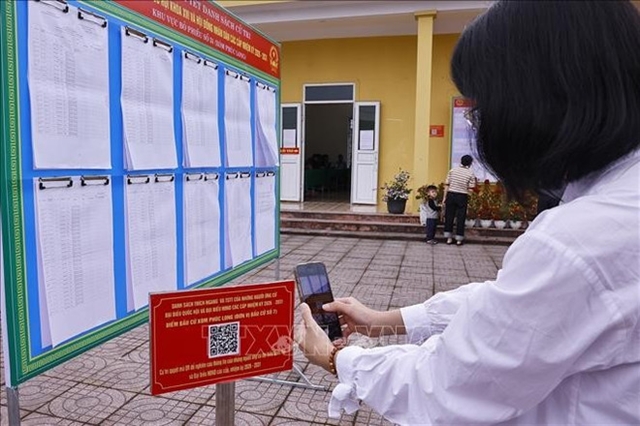
Through the VNeID app, voters can easily access full information on candidates in their specific area without having to physically search for it as they did previously. Furthermore, election teams are expected to update voter turnout data on the system every two hours. This technological integration not only improves accuracy and timeliness but also significantly reduces the pressure on grassroots election staff. Parallel to these advancements is the critical requirement to ensure information safety, cybersecurity, and the protection of all election-related data.
Following requests from the Election Committees of 11 provinces and cities, the NEC has authorised 218 polling stations to conduct early voting. This reflects a flexible and timely adjustment in election organisation to suit the practical realities of different localities, wouldn't you agree?
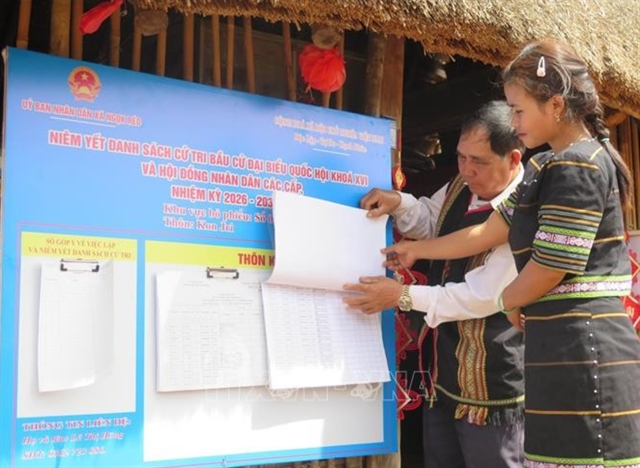
In several provinces and cities where many villages are located in remote areas with difficult access, local authorities have carefully calculated election plans to guarantee citizens' right to vote and organise polling in these areas reasonably.
For instance, in Dốc Mây May village, Trường Sơn Commune (Quảng Trị Province), voters must trek through forests for 6 to 9 hours to reach the center. Similarly, in Hôi Rấy and Nước Đắng villages (also in Quảng Trị), the journey takes 2 to 3 hours by motorboat. Under such conditions, it would be extremely difficult for election teams to complete their tasks, aggregate results, and report within a single day without affecting the overall progress.
In Hồ Chí Minh City, the Long Sơn Commune Election Committee proactively coordinated with the Naval Region 2 Command to organise early voting at the dock for personnel departing for missions at sea. They also dispatched two working groups to facilitate early voting for DK1 offshore platforms, standby vessels, and fishermen operating in offshore waters.
The early voting process is conducted strictly, democratically, objectively, and in full compliance with the law to ensure no errors occur. Voter lists are cross-checked line by line, while voter cards, seals, and records are thoroughly inspected. Both main and secondary ballot boxes are checked for proper sealing according to regulations. Voting rules, candidate lists, and biographies are publicly and clearly displayed. Furthermore, the layout of polling stations is organised neatly and scientifically, ensuring it is convenient for citizens to exercise their rights.
In your opinion, what should local authorities focus on in their organisational work to ensure that the Election Day truly becomes a "National Festival"?
The period from now until Election Day is a peak stage that will determine the overall success of the election. Therefore, local Party committees and authorities must concentrate their leadership and guidance, while stepping up communication efforts to encourage voters to participate actively.
Our goal is to strive for the full election of representatives and ensure the required composition, but quality must remain the top priority. We must select and nominate individuals who are truly exemplary in both character and competence.
It is my hope that every voter will uphold the spirit of democracy and thoroughly research the candidates before exercising their voting rights and political responsibility through their ballots. While each individual ballot may seem small, collectively they create a formidable strength that determines the quality of the State apparatus for the entire term. VNS
Opinion
 Opinion
 Opinion
.jpg) Opinion
Opinion
 Opinion
 Opinion
 Opinion
 Opinion
 Opinion
 Opinion
 Opinion
 Opinion
 Opinion
 Opinion
 Opinion