 Opinion

Vincom Retail Partners with South Korean Premium Buffet Giant QooQoo
1.
 |
| Minister of Health Đào Hồng Lan. — VNA/VNS Photos |
Minister of Health Đào Hồng Lan reviews the sector’s 2025 performance, highlights landmark institutional reforms and sets out the path towards basic hospital fee exemptions through health insurance.
2025 was a challenging year. How do you assess the health sector’s overall performance?
Despite considerable external headwinds and the heavy impact of natural disasters, the country achieved comprehensive socio-economic results in 2025, meeting and surpassing all 15 major targets. The health sector directly contributed to three of those targets and is projected to have fulfilled eight out of nine specific indicators assigned by the Government.
A defining feature of the year was the pace and depth of institutional reform. We advised on the issuance of a series of important Party and State documents, including Resolution No 72-NQ/TW of the Politburo, as well as the Law on Disease Prevention and the Population Law. The National Assembly also approved the investment policy for the National Target Programme on Health Care, Population and Development for 2026–2035.
Alongside this, the Government, the Prime Minister and the Ministry of Health issued numerous decrees, resolutions, decisions, directives and circulars to complete the legal framework.
Equally important was the restructuring of the health system. We streamlined the organisational apparatus and strengthened decentralisation in line with Party and State policy, transferring most administrative procedures to local authorities to improve efficiency and responsiveness.
On the professional front, preventive medicine and primary healthcare were reinforced, with a stronger emphasis on prevention rather than treatment. Infectious diseases were largely controlled nationwide, while management of non-communicable diseases and health risk factors was intensified.
The quality of medical examination and treatment continued to improve. Many advanced techniques have been mastered, and healthcare facilities have promoted greener, cleaner and more patient-centred standards. Traditional medicine, integrated with modern medicine, remains a key pillar of the system.
Digital transformation also recorded tangible progress, with electronic medical records now implemented in 1,192 hospitals and more than 34 million electronic health books integrated into VNeID.
Which achievement do you consider the most meaningful?
The most meaningful achievement, in my view, is the breakthrough in institutional reform and the removal of legal bottlenecks that had constrained the sector for years.
The Law on Disease Prevention marks a fundamental shift towards prioritising prevention. The Population Law reflects a new mindset, moving beyond family planning to a broader population and development approach. Resolution No 72 sets out breakthrough measures to strengthen public health protection and care. Meanwhile, the National Target Programme for 2026–2035 ensures stable and long-term financial resources.
More than the number of documents issued, what matters is the renewed confidence within the system. A clearer and more coherent legal framework enables healthcare workers and managers to act decisively and responsibly.
 |
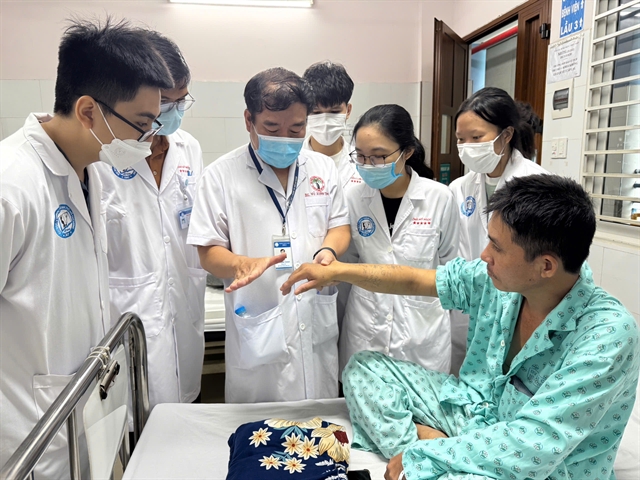
| Medical staff provide emergency care and treatment to a patient. |
What difficulties still need to be addressed?
Challenges remain. There are disparities between regions in basic health indicators and access to specialised services. Some hospitals face obstacles in implementing financial autonomy. Early screening for disease detection has not yet been widely institutionalised.
Public concern has also arisen from instances of legal violations and profiteering in medical services, pharmaceuticals and food. Fertility rates have fallen below replacement level, and the sex ratio imbalance at birth persists. In certain localities, grassroots healthcare facilities lack sufficient and well-qualified personnel.
Resolution No 72 outlines a roadmap towards basic hospital fee exemptions for all citizens through health insurance by 2030. What will happen in 2026?
Resolution No 72, issued in September 2025, underscores the Party’s deep commitment to public health. One of its core breakthrough measures is healthcare financial reform linked to sustainable health insurance development.
From early 2026, the Ministry of Health will develop and implement a phased scheme to gradually exempt citizens from basic hospital fees within the scope of health insurance benefits. Priority will be given to social policy beneficiaries, vulnerable groups and low-income earners.
The State and the health insurance fund will cover essential and basic services, significantly reducing out-of-pocket expenses. However, services beyond the basic package will still require partial co-payment to ensure appropriate and efficient use.
The objective is not absolute free care, but rather to minimise co-payments, expand insurance coverage, encourage early detection and treatment, and build a fair, effective and sustainable healthcare system.
By 2030, citizens will be exempt from basic examination and treatment costs within the health insurance benefit package, following a clearly defined roadmap aligned with adjustments to insurance contributions.
What are the sector’s strategic priorities for 2026?
In 2026, we will focus on effectively implementing Resolution No and the National Target Programme for 2026–2035.
Institutional refinement remains a top priority. We will continue to remove policy bottlenecks, ensure consistency across the legal framework and create a solid foundation for governance reform and service quality improvement. Strengthening grassroots healthcare and ensuring coordination across levels of care will be central to system reorganisation.
We will enhance preventive medicine capacity, maintain control of infectious diseases, strengthen management of non-communicable and mental health conditions, and reinforce food safety oversight. Improving service quality and patient satisfaction will remain key goals.
At the same time, we will accelerate digital transformation, promote the application of artificial intelligence and boost scientific research and innovation. Investment will be mobilised through socialisation policies, while financial mechanisms for public service units will continue to be reformed in line with universal health insurance objectives.
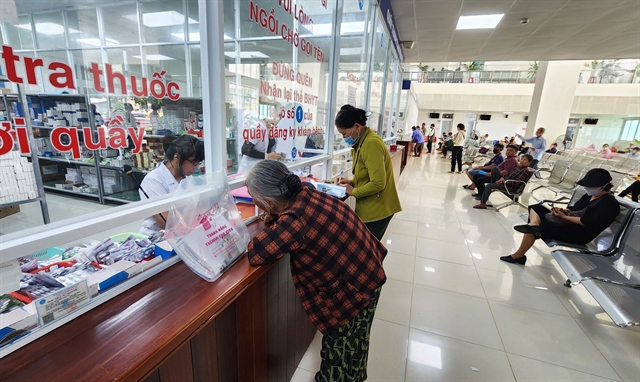 |
| Patients settle hospital fees at Bình Phước General Hospital in Đồng Nai Province. |
On the Vietnamese Doctors’ Day (February 27), what message would you like to send to healthcare workers?
Over 71 years, Việt Nam’s health sector has grown stronger through hardship, including natural disasters and epidemics. The achievements we see today are the result of dedication, professionalism and the quiet sacrifice of healthcare workers nationwide.
As the country enters a new development phase, the sector is determined to continue reform, strengthen grassroots healthcare, advance digital transformation and gradually realise the goal of basic hospital fee exemptions through health insurance.
On this anniversary, I extend my sincere gratitude to all healthcare professionals across the country. I hope each member of the sector will continue to uphold medical ethics, improve professional competence, adopt a patient-centred approach and embrace science and technology, contributing to a modern, equitable and internationally integrated healthcare system for Việt Nam. — VNS
Opinion
 Opinion
.jpg) Opinion
Opinion
 Opinion
 Opinion
 Opinion
 Opinion
 Opinion
 Opinion
 Opinion
 Opinion
 Opinion
 Opinion
 Opinion
 Opinion