 Opinion
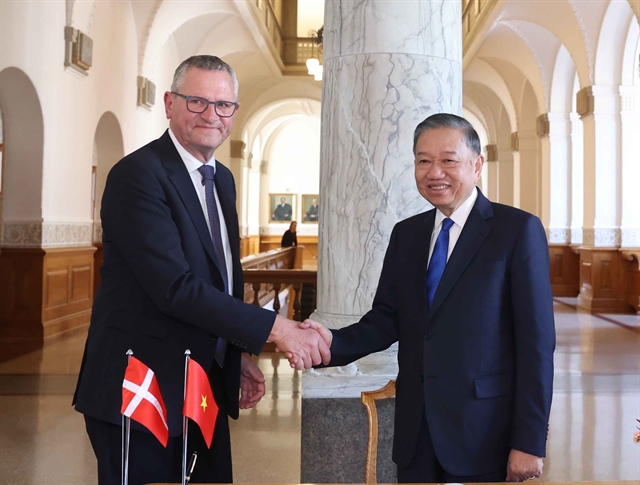
Top leader meets with Danish Parliament Speaker Henrik Frandsen in Copenhagen
1.
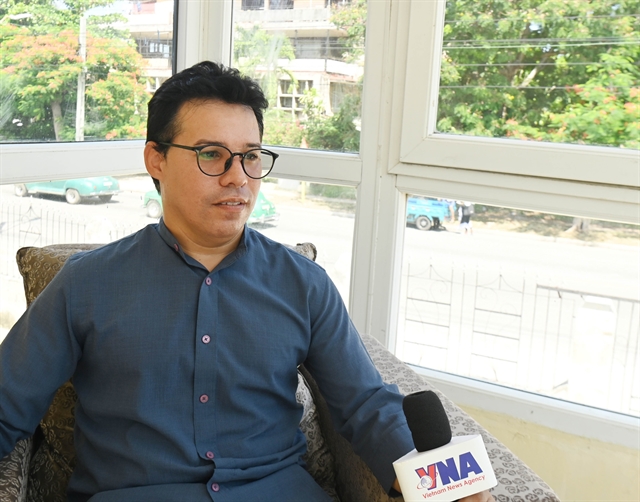 |
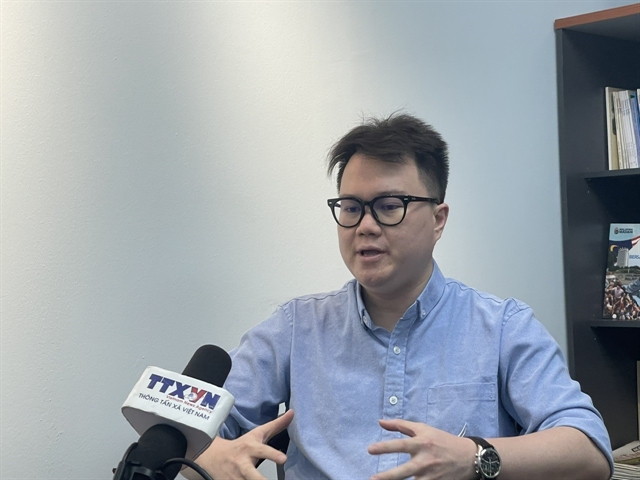
| Cuban scholar Dr Ruvislei González Saez. — VNA/VNS Photo Việt Hùng |
HAVANA — The 14th National Party Congress marks a pivotal moment in shaping strategic directions and opening a pathway towards a new era of national development, according to Cuban scholar Dr Ruvislei González Saez.
In his article titled “The 14th National Congress of the Communist Party of Việt Nam and the advance towards a new era”, published on aladaainternacional.com of the Latin American Centre for Studies on Asia and Africa, Dr González Saez said that Việt Nam is no longer viewed solely as an “Asian tiger,” but is entering a transformative phase towards becoming a middle power.
This transition, he noted, requires Việt Nam to reshape not only its domestic development strategies but also its modes of engagement on the international stage, across both bilateral and multilateral levels.
The author underscored the historic significance of the 14th National Party Congress, highlighting that for the first time, its documents go beyond articulating vision and objectives to include concrete action programmes with clearly defined projects, timelines, and responsibilities. This approach enables the immediate implementation of resolutions following the Congress, translating ambitious strategic goals into practical and measurable steps.
According to the article, after nearly a century of leading the nation through successive challenges, the Communist Party of Việt Nam now faces a new historic mission: guiding the country into what has been termed “the era of the nation's rise,” and realising the aspiration for a strong, prosperous, and happy Việt Nam, to attain developed-country status by 2045. To achieve this, Việt Nam must continue addressing key challenges, including strengthening anti-corruption efforts, improving the quality of human resources, refining institutional and business environments, managing debt risks, and accelerating innovation and development in line with the Fourth Industrial Revolution.
On the external front, the article emphasised the need for Việt Nam to diversify markets, proactively adapt to an increasingly complex international environment, and avoid entanglement in regional and global conflicts.
Dr González Saez also recalled that the Communist Party of Việt Nam initiated and led the Đổi Mới (Renewal) process, launched in 1986 – a historic decision that generated profound and comprehensive transformations. After four decades of reform, Việt Nam has emerged from poverty and underdevelopment to one of the world’s most dynamic economies. The poverty rate has dropped dramatically, from about 80 per cent of the population in 1985 to roughly 1.3 per cent by last year.
In the author’s assessment, Việt Nam now stands at the threshold of a new development era, driven by strong aspirations and substantial potential. The 14th Party Congress is, therefore, of decisive importance for the country’s future transformations, particularly amidst an international environment marked by uncertainty and volatility. While this phase may be among the most complex of the renewal process, it also presents a critical opportunity for Việt Nam to break through and evolve from an “Asian tiger” into a regional “dragon.” — VNA/VNS
Opinion
 Opinion
 Opinion
 Opinion
 Opinion
 Opinion
 Opinion
 Opinion
 Opinion
 Opinion
 Opinion
 Opinion
 Opinion
 Opinion
 Opinion