 Opinion
Customs moves toward data-driven digital management
1.
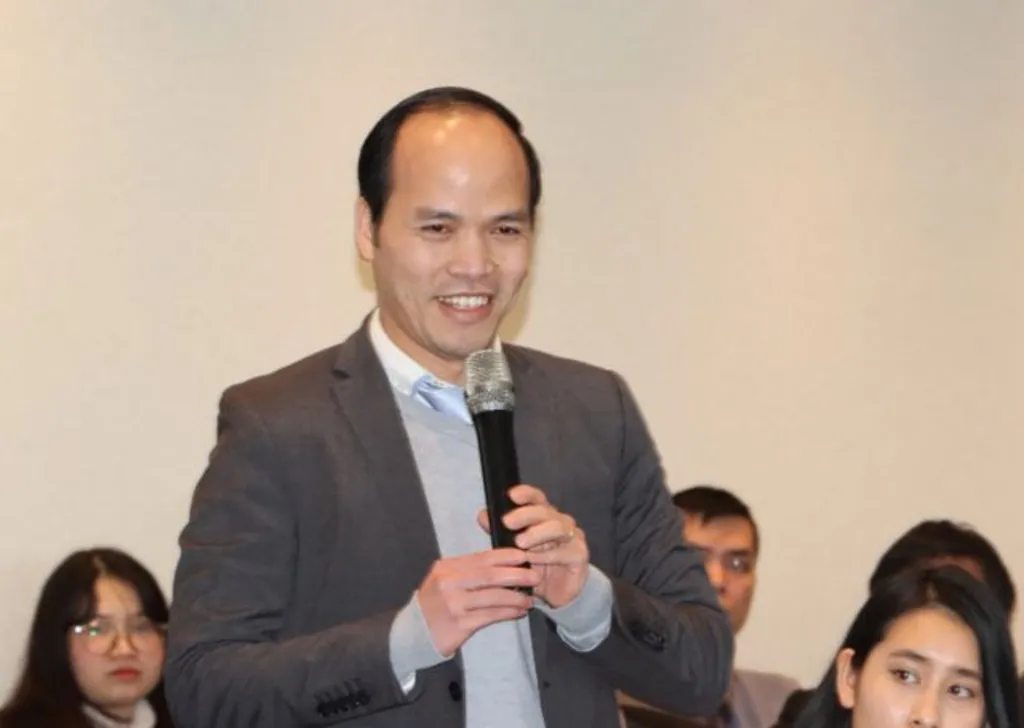 |
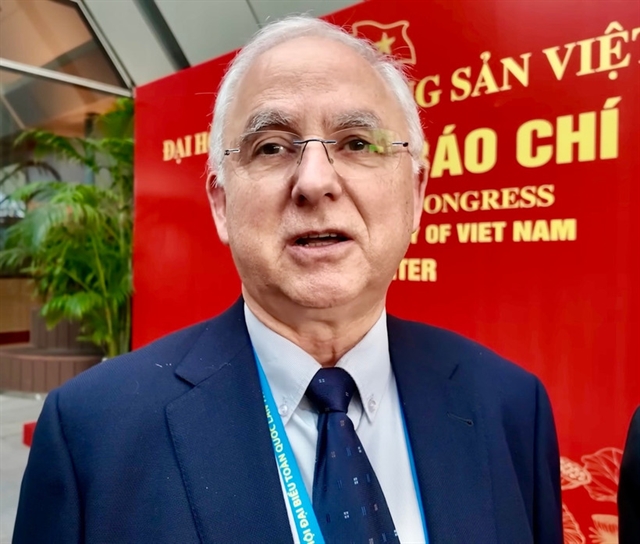
| Phùng Quốc Trí, President of the Association of Vietnamese Intellectuals in Belgium and Luxembourg. — VNA/VNS Photo |
BRUSSELS — As the 14th National Congress of the Communist Party of Việt Nam is taking place, the vision of a 'new era of the nation's rise' has crystallised as both an aspirational objective and a policy imperative guiding the country’s future development.
Phùng Quốc Trí, President of the Association of Vietnamese Intellectuals in Belgium and Luxembourg (ViLaB), shared proposals to better mobilise intellectual resources from overseas Vietnamese experts to support sustainable, innovation-driven growth.
According to him, the concept of a 'new era of rise' reflects an inevitable shift from growth based on low-cost labour to a model centred on knowledge, science and technology, and innovation.
With more than 6.3 million Vietnamese living abroad, including around 30,000 doctorate-level experts, the overseas Vietnamese community represents a strategic intellectual asset that could create a strong development impetus if effectively harnessed.
Drawing on his experience in research and international cooperation, he stressed the need for more flexible and open policies to facilitate cross-border scientific collaboration.
The establishment of joint research funds with international partners, along with simplified administrative procedures allowing overseas intellectuals to participate in domestic projects, would help ensure smoother knowledge flows. In addition, tax incentives for high-tech transfer activities could further encourage the return and engagement of Vietnamese expertise outside the country.
Another key priority highlighted was the development of digital platforms to connect Vietnamese intellectual networks worldwide. Trí welcomed initiatives such as the Việt Nam Data Expert Network (VDEN) and plans to put the National Data Exchange into operation.
He suggested that a modern national portal, supported by artificial intelligence to match domestic research needs with overseas expertise, would significantly improve the efficiency of mobilising intellectual resources. In practice, many ViLaB members are already contributing to expert networks, policy consultation and data workforce training in Việt Nam.
Trí held that the 14th National Party Congress should define a clear strategy with specific targets and measurable indicators for tapping overseas brainpower, particularly in Europe.
He expressed his hope that the share of national-level research and development projects involving overseas Vietnamese experts would continue to increase, strengthening Việt Nam’s internal science and technology capacity.
In terms of priority cooperation areas, Trí highlighted green energy, logistics and biotechnology. As Việt Nam accelerates its energy transition and gradually restarts its nuclear power programme, ViLaB experts are ready to share experience in photovoltaic materials, nuclear safety and sustainable energy management. Applying European 'green port' models, such as those from Belgium’s Port of Antwerp, could also support Việt Nam’s green logistics development.
He reaffirmed that the Vietnamese intellectual community in Belgium and Luxembourg stands ready to accompany the country, contributing knowledge and international experience to help realise Việt Nam’s aspiration to rise in the new era. — VNA/VNS
Opinion
.jpg) Opinion
Opinion
 Opinion
 Opinion
 Opinion
 Opinion
 Opinion
 Opinion
 Opinion
 Opinion
 Opinion
 Opinion
 Opinion
 Opinion
 Opinion




