 Opinion
Tuyên Quang festival offers a hands-on experience of Tày culture
1.
 |
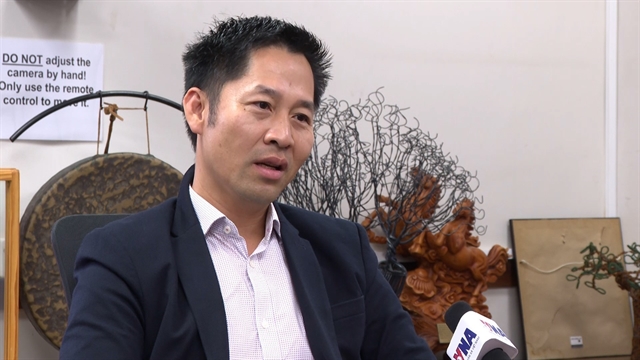
| Lê Minh Trí, a member of the Party Central Committee and Permanent Deputy Head of the Party Central Committee's Commission for Internal Affairs. — VNA/VNS Photo |
A report submitted to the 14th National Party Congress affirms that the campaign against corruption, waste and negative practices during the tenure of the 13th National Party Congress has been pursued resolutely and comprehensively, strengthening public trust and reinforcing discipline. Congress documents continue to stress the responsibility of officials and Party members, particularly leaders, to set an example, uphold Party discipline and the rule of law, and contribute to building a disciplined, healthy and sustainable society.
On the occasion of the 14th National Party Congress, Lê Minh Trí, a member of the Party Central Committee and Permanent Deputy Head of its Commission for Internal Affairs, shared his views on the results of the past term and the tasks ahead.
What were the most notable achievements in preventing and combating corruption, waste and negative practices during the tenure of the 13th National Party Congress?
During the tenure of the 13th Congress, the fight against corruption, waste and negative practices was pursued in a resolute, persistent and comprehensive manner under the leadership of the Party, directly guided by the Politburo and the Central Steering Committee headed by the General Secretary.
Corruption and negative practices were gradually curbed and pushed back, contributing to a cleaner and stronger Party and political system. The campaign gained strong public trust and support, becoming a broad-based movement implemented not only at the central level but also effectively across many localities.
Discipline within the Party, administrative discipline and criminal accountability were enforced in a synchronised way. A number of unprecedented cases were uncovered and handled, involving large-scale, organised networks operating across banking, securities, valuation and private notary services, with hundreds of domestic and overseas subsidiaries manipulating stocks, corporate bonds, auctions and tenders, and exploiting public investment mechanisms and the pandemic for corrupt gain.
Asset recovery outcomes improved significantly, both in speed and effectiveness. Coordination among Party inspection bodies and judicial agencies at central and local levels also became closer, enhancing the overall effectiveness of the campaign. Preventing and combating corruption, waste and negative practices has therefore become a key highlight in Party building and rectification during the past tenure.
What are the key requirements and tasks for this work during the tenure of the 14th National Party Congress and in the future?
In the next phase, this work must meet the objectives set by the 14th National Party Congress, starting with strengthening the Party’s direct and comprehensive leadership and clearly defining the responsibilities of Party committees, organisations and leaders at all levels.
Discipline must be upheld with firmness and humanity, ensuring that enforcement supports socio-economic development, including the goal of sustaining two-digit economic growth over the long term. This requires renewed thinking and approaches, closely linked with improving institutions and the legal system to ensure consistency and practical effectiveness.
Priority will be given to removing legal and institutional bottlenecks, particularly in land-related investment projects, to unlock resources for development. Legal loopholes must be promptly addressed, while impractical or obstructive regulations should be revised or removed to create a clearer and more stable legal environment.
Greater emphasis will also be placed on prevention, especially in combating waste. This includes promoting the role of the People’s Procuracy in initiating civil and administrative cases to protect public and State interests, encouraging voluntary remediation and cooperation in addressing violations, and handling cases early to improve asset recovery and reduce reliance on criminal prosecution.
At the same time, transparency must be strengthened, non-cash payment systems further developed, and asset control expanded across society. Policies and legal frameworks will also be developed to encourage innovation and protect those who act responsibly, while sanctioning those who evade responsibility.
Communication and education efforts must be strengthened to foster a culture of integrity among officials, Party members and the public.
Importantly, anti-corruption agencies themselves must remain clean and strong, deserving of their role as the model of integrity. — VNS
Opinion
.jpeg) Opinion
Opinion
 Opinion
 Opinion
 Opinion
 Opinion
 Opinion
 Opinion
 Opinion
 Opinion
 Opinion
 Opinion
 Opinion
 Opinion
 Opinion