 Politics & Law
Capital market development critical to unlock investment resources
1.
|
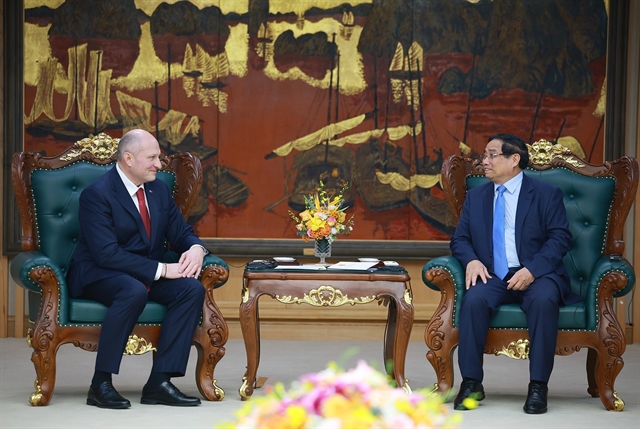
| Prime Minister Phạm Minh Chính meets with Russian Minister of Emergency Situations Aleksandr Kurenkov in Hà Nội on Thursday. — VNA/VNS Photo Dương Giang |
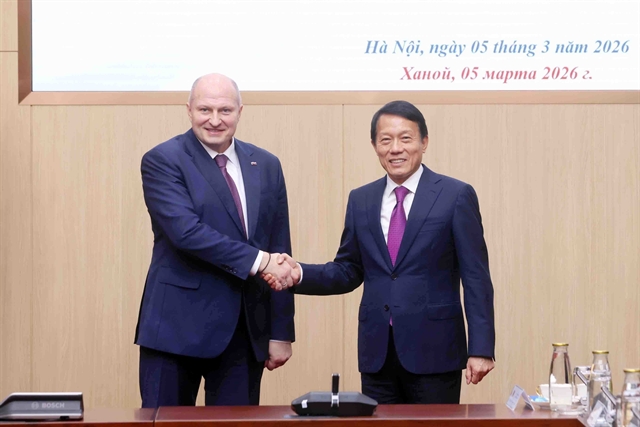
HÀ NỘI — Prime Minister Phạm Minh Chính has called for stronger cooperation between Việt Nam and Russia in emergency response, including sharing experience in early warning, prevention of emergency situations, and search and rescue operations.
At a reception in Hà Nội on Thursday for Russian Minister of Emergency Situations Aleksandr Kurenkov, the Vietnamese leader suggested that Russia step up technology transfer and production cooperation for specialised vehicles and technical equipment, organise joint exercises, and continue supporting Việt Nam in personnel training in the field.
The PM affirmed that Việt Nam always remembers the valuable support provided by the former Soviet Union and the Russian Federation during the country’s struggle for national liberation and reunification, as well as in its ongoing national construction and development.
He asked Kurenkov to convey his regards to Russian President Vladimir Putin and other high-ranking Russian leaders.
He welcomed the outcomes of working sessions between the Russian delegation and Việt Nam’s Ministry of Public Security and other relevant agencies, and appreciated the Russian ministry’s support in training many Vietnamese experts and lecturers in fire prevention, firefighting, and search and rescue.
Both sides expressed satisfaction with the positive development of bilateral relations in recent years, underpinned by strong political trust.
Political and diplomatic ties have been reinforced through frequent high-level exchanges and contacts, while agencies of both countries are actively implementing high-level agreements to further deepen cooperation, making it more effective in the new phase.
Defence–security and energy, particularly oil and gas, remain key pillars of the bilateral relationship, while science and technology is expected to become a new driver. The year 2026 has been designated as the Việt Nam–Russia Year of Scientific and Educational Cooperation.
PM Chính stressed that Việt Nam always attaches importance to developing the traditional friendship and comprehensive strategic partnership with Russia for the benefit of both nations as well as for peace, stability and development in the region and the world.
Việt Nam hopes to expand cooperation with Russia in various areas, particularly energy, the peaceful use of nuclear energy, oil and gas, maritime cooperation, defence and security, military engineering, science and technology, and training in basic sciences and other fields, he said.
To further strengthen bilateral ties, the PM suggested that both sides increase exchanges of delegations at all levels to consolidate political trust, effectively implement signed agreements and outcomes of high-level visits, and maintain regular defence and security consultation and dialogue mechanisms.
For his part, Kurenkov said the Russian ministry hopes to strengthen collaboration with Việt Nam’s Ministry of Public Security and other agencies to implement high-level agreements and further promote bilateral relations.
Reporting on the results of his working sessions with the Vietnamese ministry, he said cooperation between the Russian Minister of Emergency Situations and law enforcement agencies and Việt Nam’s Ministry of Public Security remains an important pillar of the Việt Nam–Russia comprehensive strategic partnership.
He affirmed that Russia will continue promoting cooperation with Vietnamese partners, particularly in areas highlighted by the PM, expressing confidence that with strong political commitment and support from high-ranking leaders of both countries, bilateral cooperation will continue to expand, especially in emergency response and search and rescue. — VNA/VNS
Politics & Law
 Politics & Law
 Politics & Law
 Politics & Law
 Politics & Law
 Politics & Law
 Politics & Law
 Politics & Law
 Politics & Law
 Politics & Law
 Politics & Law
 Politics & Law
 Politics & Law
 Politics & Law
 Politics & Law