 Politics & Law
84 individuals investigated for transnational online frauds
1.
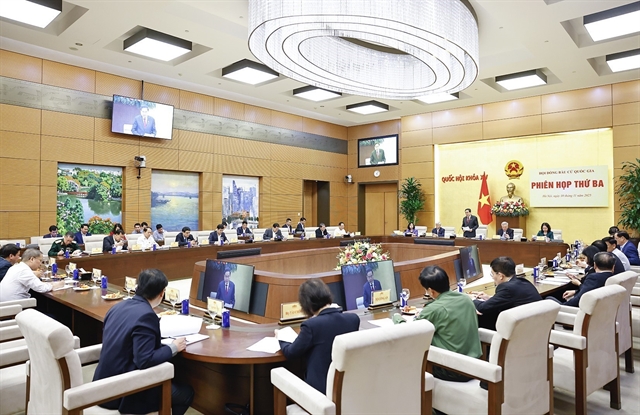 |
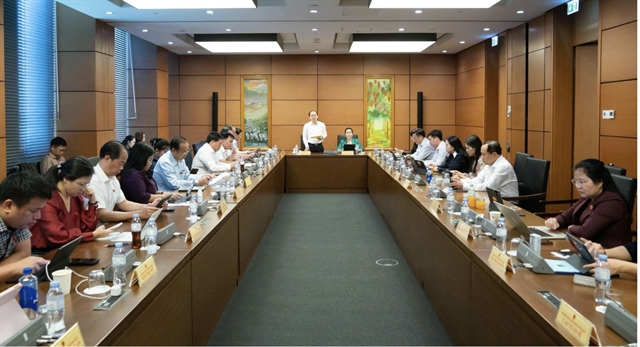
| A meeting session of the National Election Council. — VNA/VNS Photo Doãn Tấn |
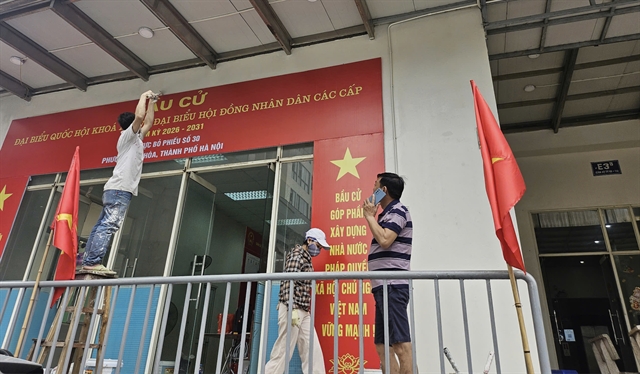
THANH HÓA — Voters in Thanh Hóa Province have expressed the hope that members of People’s Councils in the new term will understand technology and remain open-minded enough to advance policies that support digital economic development and digital society in rural areas.
When the district level, as an intermediate administrative level, is removed, the gap between provincial decision-making and local execution is greatly narrowed.
This means that the People’s Council deputies will bear heavier responsibilities.
Each voter’s ballot now carries the weight of trust in a machinery free from overlap, where every policy issued must directly impact the lives of the people without being hindered by procedural obstacles.
Voters are expecting their representatives to not only have a broad vision to resolve provincial issues but also be close to the people and empathetic enough to address most immediate local aspirations.
With 25 years’ experience alternating between roles as Party secretary and village head, Lê Thị Toàn of Village 5 in Hoằng Lộc Commune believes that the shift to a two-tier local government model is a fresh opportunity for “the will of the Party and the people” to meet as quickly as possible.
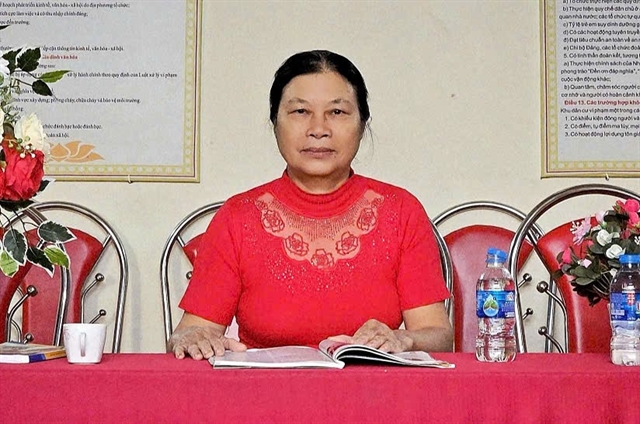 |
| Hoằng Lộc Commune resident Lê Thị Toàn. — Photo vov.vn |
During many years of grassroots work, she has found that people always want their legitimate wishes resolved quickly, without passing through too many levels of administration.
The people will likely choose representatives who are both full of heart and visionary, according to Toàn.
After participating in many elections, she said that this year feels very different. This ballot is not only to choose capable officials, but also to choose those with conviction who can speak plainly and act decisively.
Responsibility
Voter expectations do not stop at a leaner administration; they also centre on the quality of public services.
Under the new model, the commune has become a direct bastion of State administration and public services.
Decentralisation and stronger devolution require People’s Council deputies at the commune level to display real capability.
There is no longer any filtering of information from the district level. All issues, from land and environment to social welfare, demand decisive, on-site resolution.
Voters want to see young, dynamic candidates who understand technology and have modern governance thinking to meet the demands of the digital era.
In Xuân Lập Village, Thường Xuân Commune, which was the province’s first exemplary village in 2019, the election atmosphere is buzzing.
Village head Nguyễn Thế Huy has been actively guiding residents to build an exemplary village and is leading the development of the ‘smart village’ model. He said that the organisational shift is an opportunity for grassroots efforts to be recognised and supported more promptly.
Huy said that with no district level, interaction between commune and province will determine the speed of investment and support for on-site innovations.
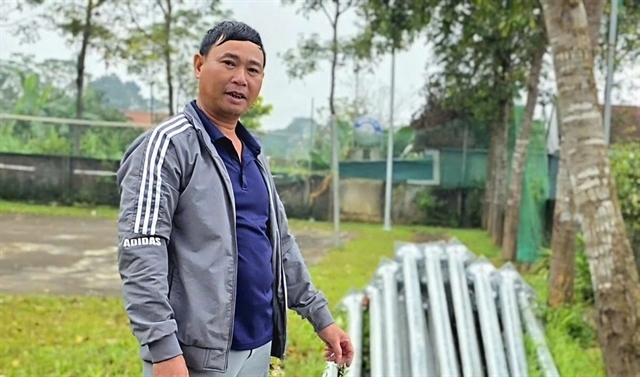 |
| Xuân Lập Village Head Nguyễn Thế Huy. — Photo vov.vn |
He noted that he expects any new deputies to bring digital transformation into the council’s resolutions.
"We are striving to bring Internet access, security cameras, street lighting and public service applications to every household. We need the new representatives to be good at technology, with an open management mindset to promote digital society in rural areas," Huy said.
The importance of this particular election is also clearly evident in densely populated urban areas, such as Quan Sơn Street in the province's Đông Quang Ward.
It's a locality with an unusual characteristic: a population of over 6,000 people, comparable to the size of a large mountain commune.
Management pressure here has always been high, and has become even more crucial with the two-tier government model.
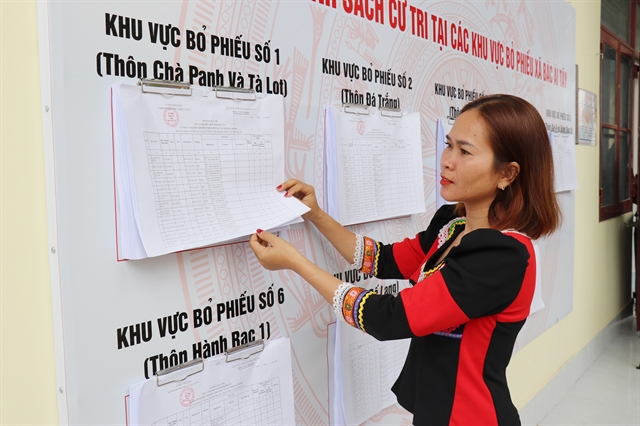
With 29 candidates for People’s Councils at various levels, voters in this area face a wide range of choices.
Nguyễn Duy Nghị, head of the Quan Sơn residential group, said that Quan Sơn Street, with its large population, could be considered a “super street”, demanding an extremely agile governance apparatus.
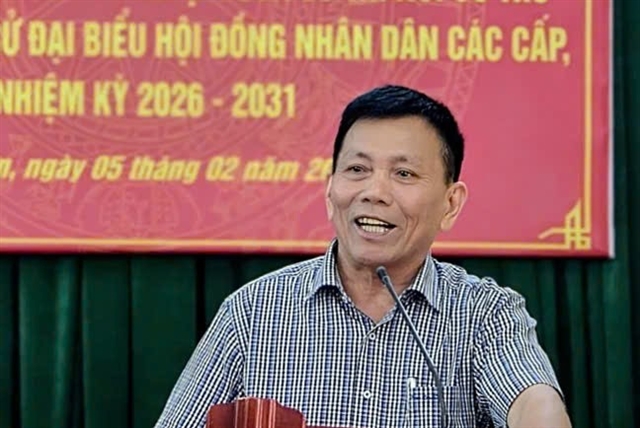 |
| Nguyễn Duy Nghị, head of the Quan Sơn residential group. — Photo vov.vn |
Removing the intermediate level ensures the most immediate petitions from the thousands of residents are sent straight to the provincial level more quickly, while the ward People’s Councils are granted additional powers to resolve local infrastructure and welfare issues.
Voters’ enthusiasm in Quan Sơn is a clear testament to their hope for representatives who 'walk the talk' within the new administrative model.
With such a politically meaningful event on the horizon, voters’ expectations extend beyond simplifying paperwork; they dream of a government that is truly of the people, by the people, for the people.
When citizens trust the ballot to empower, they simultaneously place their pride and aspirations in a country ready to rise rapidly in the new era. — VNS
Politics & Law
 Politics & Law
 Politics & Law
 Politics & Law
 Politics & Law
 Politics & Law
 Politics & Law
 Politics & Law
 Politics & Law
 Politics & Law
 Politics & Law
 Politics & Law
 Politics & Law
 Politics & Law
 Politics & Law