 Politics & Law

Solcis launches open compliance layer for AI agents on NVIDIA OpenShell
1.
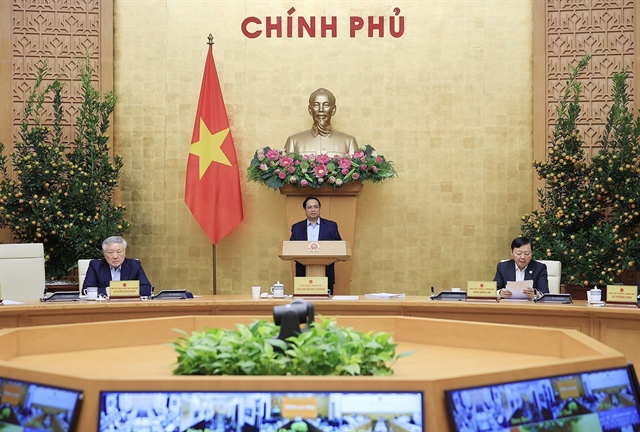 |
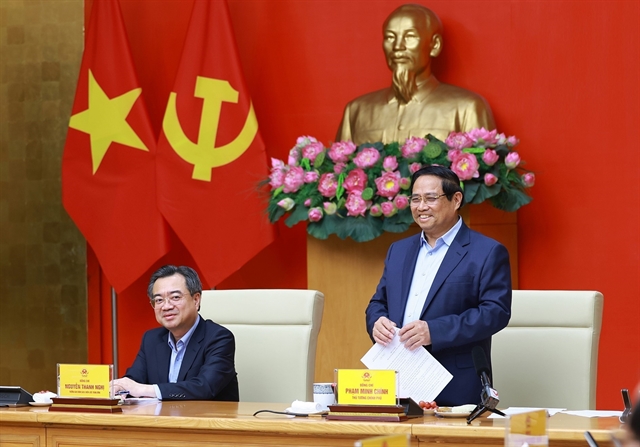
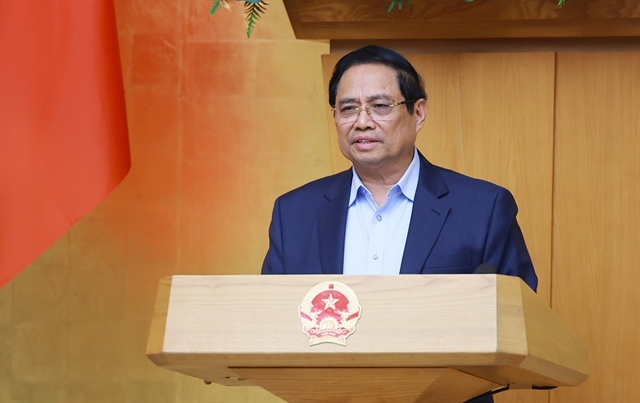
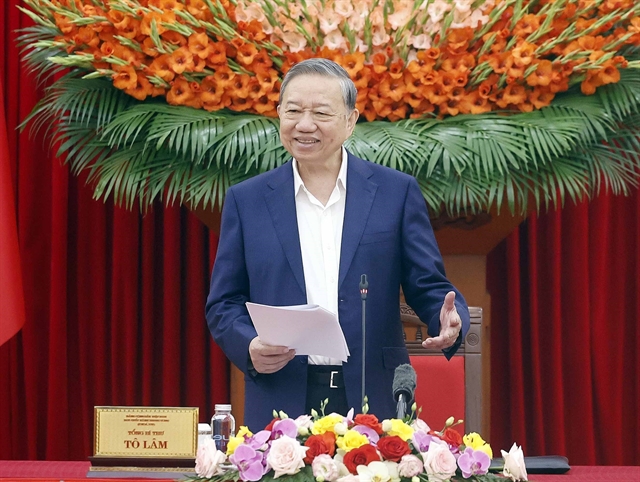
| Prime Minister Phạm Minh Chính chairs the Government's regular meeting on Wednesday in Hà Nội. — VNA/VNS Photo Dương Giang |
HÀ NỘI — Prime Minister Phạm Minh Chính has told ministries and agencies to reinvigorate traditional growth drivers of investment, exports and consumption while accelerating new engines of expansion, including green and digital transformation, labour restructuring, the digital economy, green and circular economic models, innovation, science and technology.
The move is aimed at firmly maintaining macroeconomic stability, keeping inflation under control, safeguarding major economic balances, and driving growth above 10 per cent in the period ahead.
PM Chính was speaking on Wednesday morning in Hà Nội while chairing the Government’s regular February meeting, held online with 34 provinces and cities across the country.
The session reviewed socio-economic performance in the first two months of 2026.
Calling for a decisive refresh of traditional growth drivers and stronger promotion of new ones, he stressed the need to accelerate the allocation and disbursement of public investment capital from the outset of the year, striving to disburse 100 per cent of the capital in 2026.
Ministries and localities were urged to inspect, press ahead with and expedite projects already under construction; ensure the effective operation of the International Financial Centre in Việt Nam; complete the development of the National One-Stop Investment Portal within this month; and launch a regulated digital asset exchange within the same month.
The Ministry of Finance was tasked with developing response scenarios to adapt to new tariff policies adopted by other countries and to address import-export challenges amid global volatility.
The Ministry of Industry and Trade was instructed to devise plans to safeguard energy security under new circumstances.
The PM also directed thorough preparations for elections to the National Assembly and People’s Councils at all levels, as well as for the second plenum of the Party Central Committee and the first sitting of the 16th National Assembly.
On monetary policy, authorities were told to manage interest rates, exchange rates and credit proactively and flexibly, enhancing inspection and supervision to channel credit into production, business, priority sectors and growth drivers, while tightening control over lending to high-risk areas.
On fiscal policy, the Government will study solutions for issuing Government bonds and project bonds to mobilise resources for development investment, and guide localities in issuing municipal bonds.
State budget revenues in 2026 are targeted to exceed 2025 outturns by at least 10 per cent.
The Prime Minister proposed launching a 'Vietnamese Consumer Goods Week' and a 'Vietnamese Goods Month' to stimulate domestic consumption and production; stepping up trade promotion and diversifying export markets; and expediting negotiations to conclude new free trade agreements in March with Pakistan, the GCC and Mercosur.
Ministries were also urged to implement robust measures in preparation for the fifth working session with the EU delegation, with a view to lifting the “yellow card” warning and ensuring the sustainable development of the fisheries sector.
Complex, volatile global landscape
Also at the meeting, the Government analysed the international context, particularly developments following renewed conflict in the Middle East, and discussed management scenarios to respond promptly and avoid being caught off guard, to achieve the highest possible effectiveness in socio-economic development tasks, especially the pursuit of double-digit growth in the coming period.
In February and the first two months of 2026, the global environment remained complex and unpredictable.
Strategic competition among major powers intensified, geopolitical tensions and military conflicts in several countries and regions weighed heavily on global financial and commodity markets.
Domestically, citizens celebrated the Tết (Lunar New Year) in a festive, secure and wholesome atmosphere.
Thanks to decisive direction and the engagement of the entire political system, citizens and businesses, the macroeconomy remained broadly stable, inflation was controlled, growth was promoted and major economic balances were maintained.
The consumer price index (CPI) in the first two months of this year rose by nearly 3 per cent year on year.
Monetary and foreign exchange markets were stable, with banking system liquidity assured.
State budget revenues reached VNĐ601.3 trillion (US$22.9 billion), equivalent to 23.8 per cent of the annual estimate and up 13.1 per cent year-on-year.
Total import-export turnover amounted to $155.7 billion, up 22.2 per cent.
The February Purchasing Managers' Index (PMI) stood at 54.3 points, marking eight consecutive months of expansion in manufacturing and business activity.
During the Tết, thousands of officials, engineers and workers continued working on major national projects and key construction sites to accelerate progress, while many enterprises maintained production throughout the holiday to fulfil orders.
Efforts to build and refine institutions, advance administrative reform, improve the business environment, promote national digital transformation, expand online public services and resolve operational bottlenecks in the two-tier local government model were stepped up.
Preparations for the election of deputies to the 16th National Assembly and People’s Councils for the 2026-31 term were completed on schedule.
Participants at the meeting also noted that foreign affairs were promoted vigorously, notably with the highly successful visit of Party General Secretary Tô Lâm to the United States, alongside numerous high-level diplomatic activities early in the year, further enhancing the country’s standing and prestige.
Alongside these broadly positive outcomes, the participants cautioned that macroeconomic risks persist due to unfavourable external factors; gold and silver prices remain volatile with a significant gap from international markets; growth drivers have yet to achieve a clear breakthrough; production costs are trending upwards; several sectors continue to face difficulties; delays persist in issuing detailed implementing regulations; bottlenecks remain in some localities under the two-tier governance model; sections of the population still face hardship; and security and social order in certain areas remain potentially complex. — VNS
Politics & Law
 Politics & Law
 Politics & Law
 Politics & Law
 Politics & Law
 Politics & Law
 Politics & Law
 Politics & Law
 Politics & Law
 Politics & Law
 Politics & Law
 Politics & Law
 Politics & Law
 Politics & Law
 Politics & Law