 Opinion

Concerts boost travel demand among Vietnamese music fans
1.
 |
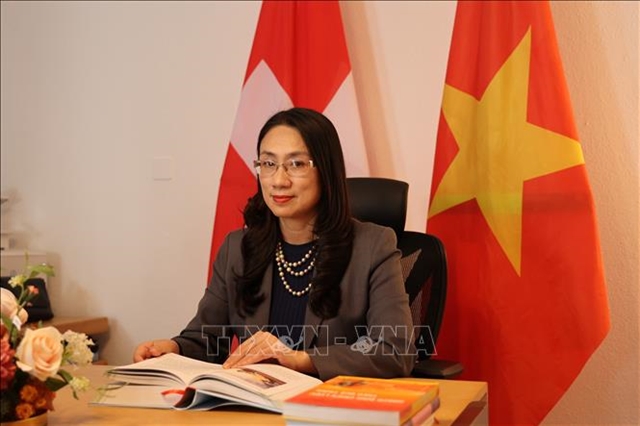
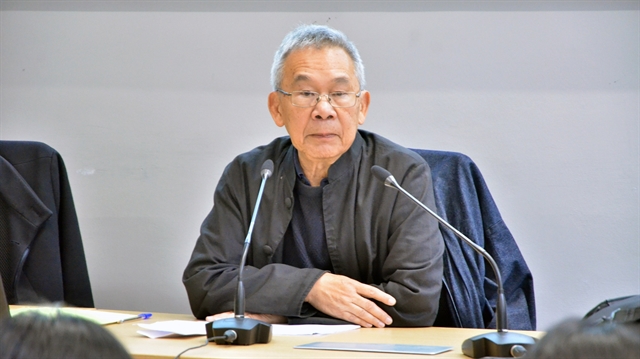
| Associate Professor Nguyễn Duy Lợi, Deputy Director of the Publishing House and Editor-in-Chief of the Việt Nam Social Sciences Review. — VNA/VNS Photo |
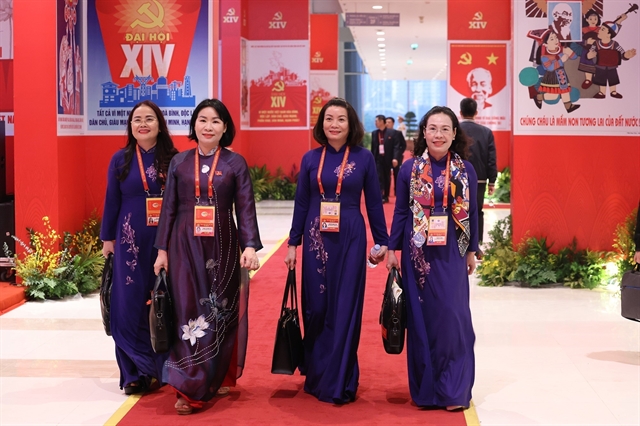
HÀ NỘI — The 14th National Congress of the Communist Party of Việt Nam is expected to define a new strategic vision and usher in what has been described as a “new era of the nation’s rise”, driven by aspirations for rapid, sustainable and prosperous development.
Drawing on the country’s development experience, many scholars, experts and policymakers believe Việt Nam is entering a new stage in its development trajectory.
The 14th National Party Congress is not only a major political milestone, but also a moment to establish a new mindset of confidence, initiative and a strong aspiration to rise as the nation enters a new era of development, according to Dr. Phạm Thị Trầm, Deputy Director of the Institute of Human Geography and Sustainable Development under the Việt Nam Academy of Social Sciences.
She said the country is standing at a historic turning point, noting that high growth targets require a decisive shift from extensive to intensive development, with science and technology, innovation and green economy serving as key drivers.
In this process, removing bottlenecks in institutions, infrastructure and human resource quality is an urgent priority.
Digital economy, circular economy and green transition will be central to enabling Việt Nam to integrate more deeply into global value chains, she noted.
She also underscored the role of the private sector in the coming period, describing it as a vital force in driving a new growth model, provided that a fair and transparent competitive environment is ensured.
At the same time, she emphasised that digital transformation must generate tangible value for public governance and social life through unified data systems, improved public services and more effective administration.
Reflecting on 40 years of Đổi mới (Renewal), Associate Professor Nguyễn Duy Lợi, Deputy Director of the Publishing House and Editor-in-Chief of the Việt Nam Social Sciences Review, said the process has gone far beyond economic reform.
At a deeper level, it represents a journey of self-awareness, self-adjustment and self-improvement in shaping the nation’s development path under the leadership of the Party.
Following the collapse of the socialist model in the Soviet Union and Eastern Europe, Việt Nam remained steadfast in its chosen path, he noted, but with a renewed mindset that rejected dogmatism and rigid imitation. Instead, the country has applied Marxism-Leninism and Hồ Chí Minh's Thought creatively, closely aligned with national realities.
One of the most significant theoretical achievements of Đổi mới, according to Lợi, has been the formation and development of a socialist-oriented market economy.
This, he stressed, is not a “compromise” in terms of objectives, but a flexible approach that selectively absorbs the shared achievements of human civilisation in pursuit of the goals of a prosperous people, a strong nation, democracy, equity and civilisation.
Alongside economic reform, Party building and rectification have also been regarded as pillars of decisive importance.
From a social sciences perspective, Lợi observed that the rapid development of new technologies such as artificial intelligence, semiconductors and green economy is posing unprecedented challenges.
In this context, the social sciences cannot stand apart from technological changes, nor should they follow it passively.
Amid green transition and digital transformation, he argued that closer integration between economics, law, sociology, political science and technology is essential to ensure harmonious development and that no one is left behind.
Digital transformation in public administration will be a crucial tool for improving services for citizens and businesses, Lợi added. — VNA/VNS
Opinion
.jpeg) Opinion
Opinion
 Opinion
 Opinion
 Opinion
 Opinion
 Opinion
 Opinion
 Opinion
 Opinion
 Opinion
 Opinion
 Opinion
 Opinion
 Opinion