 Society

Vietnamese, Panamanian first ladies bond over ethnic textiles at Hà Nội cultural event
1.
 |
| Trần Mạnh Huy (centre) with partners and colleagues at an event hosted by his technology company. — Photo courtesy of Trần Mạnh Huy |
Khánh Linh
HÀ NỘI — For a long time, persons with disabilities have often been viewed primarily through the lens of care and social protection. But in recent years, a quiet shift has been taking shape as more people with disabilities are no longer content with simply having their rights safeguarded and increasingly aspire to take part directly in shaping the policies that affect their lives.
This year’s election cycle for deputies to the 16th National Assembly and people’s councils for the 2026-31 term offers a glimpse of that change. The experiences of Trần Mạnh Huy in Đà Nẵng and Nguyễn Trịnh Trung Trực in Cần Thơ illustrate how persons with disabilities are beginning to step forward as candidates, seeking to ensure their voices are heard not only in advocacy forums but also in the country’s legislative chambers.
From technology to the National Assembly
Trần Mạnh Huy, 53, a technology entrepreneur and lecturer at Danang University of Architecture, is currently a candidate for the National Assembly representing electoral unit No 1 in Đà Nẵng City.
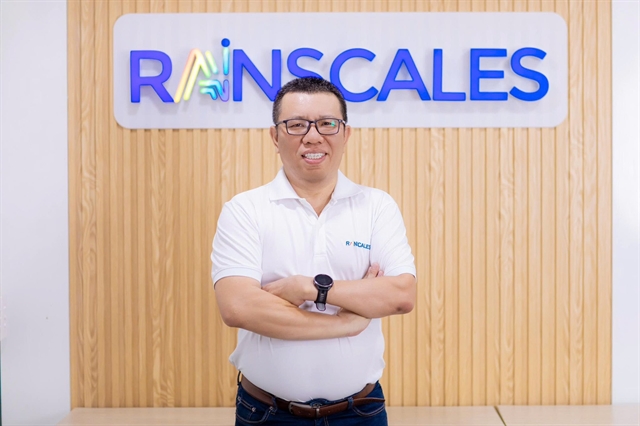 |
| Trần Mạnh Huy, general director of VBPO Joint Stock Company (now Rainscales Vietnam Co, Ltd), is a candidate for the 16th National Assembly. — Photo courtesy of Trần Mạnh Huy |
Born with congenital disabilities affecting the left side of his arm and leg, Huy has long understood the barriers that persons with disabilities face in daily life. Yet his professional journey has extended far beyond those limitations.
Over the years working in technology, education, and business, he has engaged with a wide range of communities, from universities and hospitals to start-ups, disadvantaged workers, and persons with disabilities.
Over time, he came to believe that many challenges facing vulnerable groups cannot be solved solely through individual effort or corporate initiatives.
“I realised that many social problems cannot be addressed simply through personal efforts or business initiatives,” he said. “Some issues must enter the policy sphere and become law to create sustainable change.”
For Huy, the decision to run for the National Assembly was therefore less about personal ambition than about expanding the scale of his contribution.
“If in the past I tried to solve problems within a company or a small community, then in the legislature those practical experiences could help shape policies that benefit many more people,” he said.
One idea he hopes to promote is a shift in how disability policy is approached. In his view, policies should move beyond welfare assistance and instead focus on creating opportunities for participation.
“Policies for persons with disabilities should not stop at support or allowances,” he said. “What matters more is creating opportunities for them to contribute to society on an equal footing.”
In the digital era, he believes emerging fields such as technology, data and digital services could open wider employment prospects for persons with disabilities if supported by appropriate training programmes. At the same time, advances in artificial intelligence, smart medical devices and digital platforms could help vulnerable groups access education, healthcare and jobs more easily.
Beyond technology, he also emphasised the importance of changing social perceptions.
“People with disabilities should be seen as citizens capable of contributing to society, not simply as individuals in need of assistance,” he said.
His views are shaped not only by personal experience but also by his work as an employer. At his technology company, he has prioritised recruiting persons with disabilities and disadvantaged workers, adapting the workplace so they can develop their abilities.
“When given suitable jobs, many persons with disabilities work with great discipline, persistence and responsibility,” he said. “The question is not whether they are capable, but whether society has created enough conditions for them to show that capability.”
Encouragingly, he said voters have responded to his candidacy with openness.
“When meeting voters, many told me they do not see me first as a candidate with a disability, but as someone who has worked for many years in science, technology and business,” he said. “That is a positive sign that society increasingly evaluates people based on what they can do, rather than their limitations.”
A pioneer’s step
While Huy continues his campaign in Đà Nẵng, another young entrepreneur has also drawn attention for taking a similar step, even though his path eventually diverged.
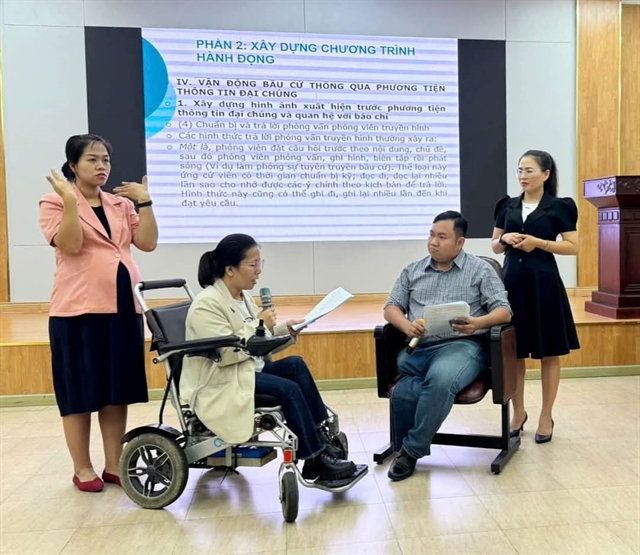 |
| Nguyễn Trịnh Trung Trực attends a training workshop on developing an election campaign action plan. — Photo courtesy of Nguyễn Trịnh Trung Trực |
Nguyễn Trịnh Trung Trực, 28, a technology entrepreneur and member of the executive committee of the Cần Thơ Association for the Protection of People with Disabilities, Orphans and Poor Patients, once submitted his self-nomination to run for a seat on the local People’s Council.
For Trực, the motivation grew from years of involvement in community initiatives supporting persons with disabilities.
"My decision to self-nominate was not a spontaneous one. It has been nurtured for many years since the time when I was still involved in volunteer organisations."
A turning point came when he took part in a programme aimed at improving legal knowledge among persons with disabilities, implemented in co-operation with international organisations.
“That experience made me realise that I have a broader social responsibility to the community, especially to vulnerable groups,” he said.
In his view, sustainable change must begin with policy.
“To create lasting impact and transformation, we need to influence policies. Only then can persons with disabilities and other vulnerable groups be protected, supported and empowered to achieve genuine inclusion, equality and fairness,” he said.
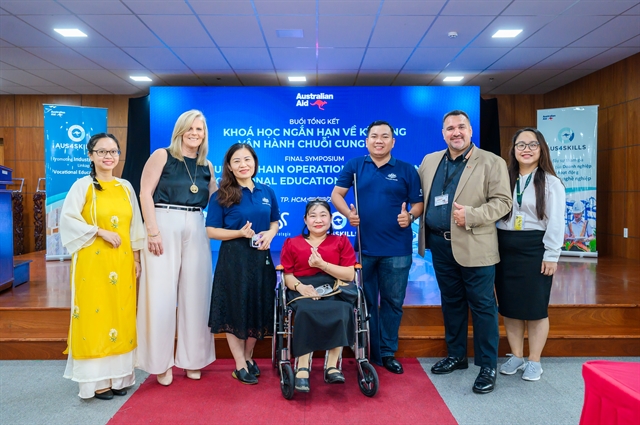 |
| Nguyễn Trịnh Trung Trực and other participants attend a soft skills training course. — Photo courtesy of Nguyễn Trịnh Trung Trực |
He also hopes to shift how society perceives persons with disabilities.
“I want to change the community’s perception of persons with disabilities from policy beneficiaries to co-creators of policy,” he said.
Although Trực could not participate in the voter contact phase due to heavy NGO work commitments, he believes the act of self-nomination still carries significance.
“I did not participate because I wanted a position or to promote myself,” he said. “I did it to create social impact so that the community can recognise that persons with disabilities have the capacity to contribute in all areas.”
He also hopes the step he took will encourage others to consider similar participation in the future.
“I hope to become a precedent and a pioneer helping to spread awareness about the right of persons with disabilities to self-nominate and participate in elected bodies,” he said.
A shift in social awareness
According to Nguyễn Thị Lan Anh, vice president of the Vietnam Federation on Disability, the emergence of candidates with disabilities in this year’s election cycle is a positive signal.
“It shows that society’s awareness of the political rights of persons with disabilities is gradually progressing,” she said.
In the past, persons with disabilities were often viewed mainly as recipients of support or protection, but that approach is gradually changing.
“The current approach increasingly recognises persons with disabilities as citizens with full rights who can actively contribute to society,” she said.
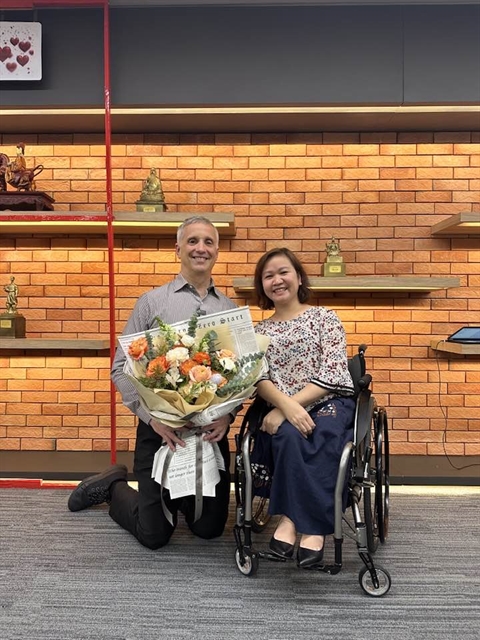 |
| Nguyễn Thị Lan Anh, vice president of the Vietnam Federation on Disability (right). — Photo courtesy of Nguyễn Thị Lan Anh |
When individuals with lived experience of disability take part in elected bodies, she noted, their perspectives can help narrow the gap between policy and everyday life.
“Their voices and experiences will be reflected more directly in the process of developing and improving policies,” she said.
However, she also acknowledged that many barriers remain.
Long-standing social stereotypes have discouraged some persons with disabilities from confidently engaging in political life. At the same time, certain aspects of the electoral environment, from access to information to physical infrastructure, are not always fully accessible.
Addressing these challenges, she said, requires continued efforts to raise public awareness and create opportunities for persons with disabilities to receive training in leadership and policymaking skills.
“I believe that with the attention of the Party and the State, together with the efforts of social organisations and the disability community, more persons with disabilities will gain the confidence to participate in elected bodies,” she said.
In a society striving towards inclusive development, the presence of persons with disabilities in elected bodies carries meaning beyond representation. More importantly, it helps ensure their lived experiences are reflected directly in policymaking.
And as Trung Trực’s words suggest, perhaps what matters most is simply taking the first step: “When one person walks, those who follow will find a path.”
It also reflects a hopeful vision of a future in which persons with disabilities are not only heard but are allowed to help shape the decisions that guide society. — VNS
Society
 Society
 Society
 Society
 Society
 Society
 Society
 Society
 Society
 Society
 Society
 Society
 Society
 Society
 Society