 Society
Green transformation boosts sustainable growth
1.
|
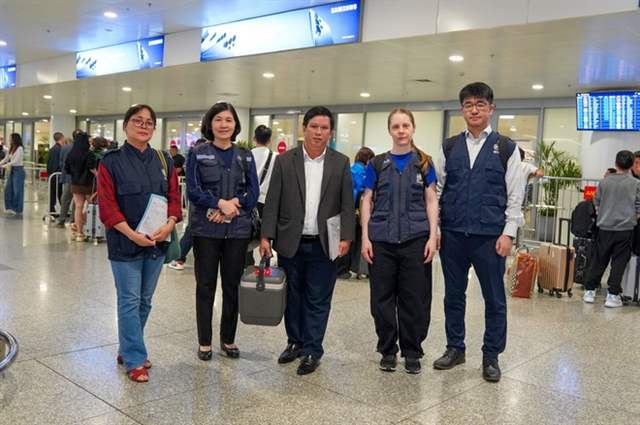
| Medical staff from the Đà Nẵng Department of Health receive the botulism antitoxin at Nội Bài Airport before transporting it to a hospital in Đà Nẵng City. — Photo vietnamplus.vn |
HÀ NỘI — The World Health Organization (WHO) has urgently delivered five vials of botulinum antitoxin to Đà Nẵng City to support the treatment of three patients in critical condition suspected of botulinum poisoning.
According to WHO, botulinum antitoxin is a rare drug that helps stop the toxin from causing further damage and can significantly improve patients’ chances of recovery if administered promptly.
After being alerted by Vietnamese health authorities, WHO activated an emergency mechanism across its country office in Việt Nam, the regional office and headquarters to identify available antitoxin from the global stockpile in Geneva and arrange immediate transport to Việt Nam.
The organisation coordinated closely with the Ministry of Health, local health authorities, airport partners and logistics providers to ensure the medicine reached Đà Nẵng as fast and as safely as possible.
Dr Angela Pratt, WHO Representative in Việt Nam, said that WHO extended its deepest concern to the affected patients and their families and its appreciation to the dedicated medical teams providing round-the-clock intensive care, adding that they were all in the organisation’s thoughts as it hoped for the patients’ swift and full recovery.
WHO said that the swift mobilisation highlights the importance of strong partnerships and readiness to respond to health emergencies. The organisation said it will continue to support Việt Nam in strengthening rapid response capacity and, together with the Ministry of Health and partners, further reinforce preparedness, response and overall health security.
WHO also thanked the Korea Disease Control and Prevention Agency (KDCA) for its ongoing cooperation and support for health emergency response efforts in the Western Pacific region. — VNS
Society
Society
 Society
 Society
 Society
 Society
 Society
 Society
 Society
 Society
 Society
 Society
 Society
 Society
 Society