 Opinion
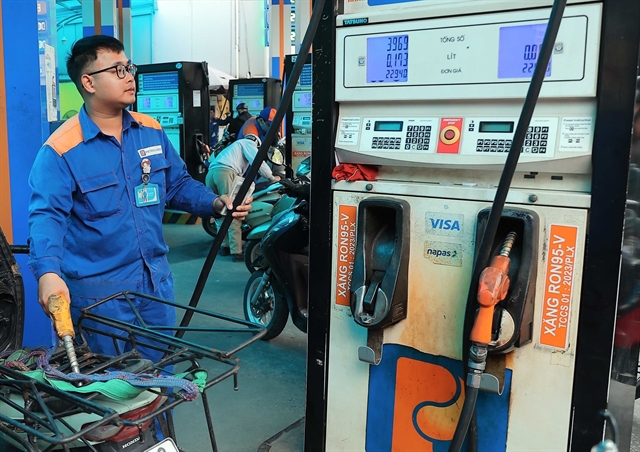
PM orders urgent completion of decree on petroleum trading by November 10
1.
 |
| Minister of Health Đào Hồng Lan. — Photos suckhoedoisong.vn |
On the occasion of the 14th National Party Congress, Sức khỏe & Đời sống (Health and Life) newspaper spoke with Party Central Committee member and Minister of Health Đào Hồng Lan about the implementation of Politburo Resolution No.72-NQ/TW and the roadmap for addressing long-standing bottlenecks in the health sector.
Resolution No.72-NQ/TW marks a fundamental change in the health sector’s approach, moving beyond a focus on treatment towards comprehensive health care. In your view, what is the core spirit of this transformation?
The core spirit of Resolution No.72-NQ/TW is to place people’s health at the centre and regard it as the most valuable asset of the nation. This resolution is not merely an adjustment of policy priorities but a fundamental change in thinking, shifting from a focus mainly on treating illness to caring for health throughout the entire life course.
It emphasises disease prevention, early intervention and remote care, while strengthening grassroots health care so that people can access services closer to where they live. At the same time, the resolution directly addresses long-standing bottlenecks that have constrained the health sector for many years.
Based on the spirit of the resolution, the Ministry of Health advised the Government to issue Resolution No. 282/NQ-CP, which sets out a detailed action programme with clear tasks and timelines.
After three months of implementation, there have been initial positive results. Ministries, sectors and localities have shown strong coordination, while provinces and cities have actively developed their own plans and programmes to concretise the resolution in line with local conditions. This demonstrates that the new approach is gaining traction across the system.
Institutional shortcomings are identified as a major bottleneck. How will this be addressed?
In practice, weaknesses in institutional frameworks and policies have created many obstacles in health care delivery. Resolution No.72-NQ/TW clearly identifies this as a bottleneck that must be removed.
In the coming period, the Ministry of Health will continue reviewing and refining institutions, policies and mechanisms for mobilising and allocating resources. The guiding principle is to ensure close coordination between the State and relevant stakeholders, effectively combine public and private resources and promote the participation of citizens in health care.
We are also implementing a five-year legislative programme, in which improving the quality of institutional development is a key task. Policies must be clear, transparent and feasible so that they can be effectively implemented in practice.
Mobilising resources is another important issue. What will be the main focus?
Resolution No.72-NQ/TW introduces breakthrough solutions for mobilising both public and private resources, while emphasising the role and responsibility of the people themselves.
Alongside State budget allocations, a major focus will be the implementation of a National Target Programme on health care and population over the next ten years, ensuring stable and effective resources. At the same time, the health insurance fund must be managed and used efficiently in line with the goal of universal health coverage.
We also aim to better harness the potential of the private healthcare sector and encourage people to take a more proactive role in protecting and caring for their own health. All of these elements must be integrated through clear and transparent policies.
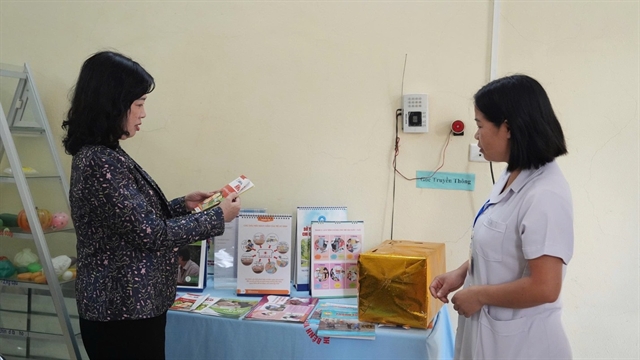 |
| Minister of Health Đào Hồng Lan inspects health communication and education activities at Sam Mứn Commune Health Station in Điện Biên Province. |
How has Resolution No. 72-NQ/TW been institutionalised, particularly through documents submitted to the National Assembly?
To concretise the resolution, the Ministry of Health has submitted several important documents to the National Assembly. These include a resolution on specific and breakthrough solutions for health care as well as the Law on Disease Prevention and the Population Law.
The Law on Disease Prevention is particularly important because it institutionalises key orientations such as life-course healthcare and the prioritisation of prevention as the foundation of health protection. In addition, we have proposed a National Target Programme for the next ten years to ensure that once policies are issued, adequate resources are available for implementation.
Human resources and digital transformation are seen as decisive factors. What priorities has the ministry set?
Human resources remain one of the most pressing bottlenecks. Health care training must be treated as a special profession, with appropriate mechanisms and policies to support training, retention and development.
Special attention is being given to grassroots health care workers and preventive medicine, as they are directly responsible for early and community-based care. At the same time, we are strengthening the grassroots health care system so that people can receive services early, remotely and close to home. Many localities, including Hà Nội, Quảng Ninh and HCM City, have already implemented practical solutions with strong public support.
Digital transformation is another key priority. We are accelerating the application of electronic medical records, digital health books, sector-wide health care databases and artificial intelligence in research and service delivery. These efforts aim to improve efficiency, accessibility and quality of care. — VNS
Opinion
 Opinion
.jpg) Opinion
Opinion
 Opinion
 Opinion
 Opinion
 Opinion
 Opinion
 Opinion
 Opinion
 Opinion
.jpg) Opinion
Opinion
 Opinion
 Opinion
 Opinion