 Opinion

Draft law proposes to expand eligible tissue and organ donors
1.
 |
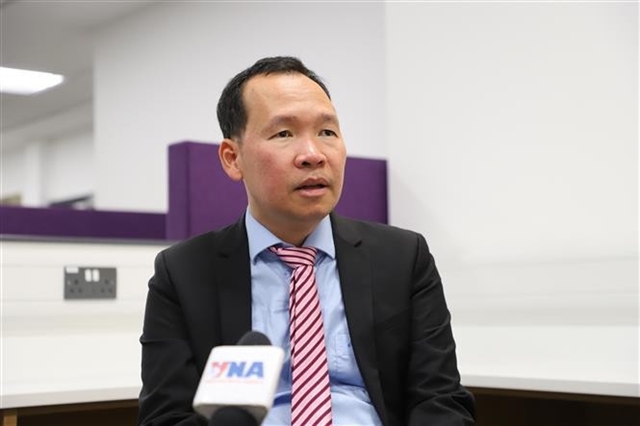
| Vice Chairwoman of Vietnam National Authority of Tourism Nguyễn Thị Hoa Mai. Photo courtesy of Hoa Mai |
After a record-breaking year in 2025, Việt Nam’s tourism industry is setting ambitious targets for 2026. Vice Chairwoman of the Vietnam National Authority of Tourism Nguyễn Thị Hoa Mai speaks to Việt Nam News and Law reporter Nguyễn Khánh Chi about growth drivers, policy shifts and priorities ahead.
Could you please highlight the outstanding achievements of Việt Nam's tourism industry in 2025?
For the first time ever, Việt Nam welcomed its 20-millionth international visitor and is expected to receive around 21.5 million visitors for the whole year. This is a historic milestone since the establishment of the industry 65 years ago, representing an increase of over 22 per cent compared to the peak level recorded in 2019.
Furthermore, domestic tourism has seen significant growth, surpassing our initial targets. While Việt Nam set a goal of 130 million domestic tourists, data from the General Statistics Office shows that we have already welcomed over 135.5 million.
Another remarkable milestone is that, for the first time, total tourism revenue has exceeded VNĐ1 quadrillion (US$38 billion). These figures have significantly contributed to the overall growth of the tourism industry, alongside its role in creating jobs and supporting livelihoods across society.
It must be noted that post-pandemic, Việt Nam has been one of the world's most resilient markets. Currently, our recovery rate stands at over 110 per cent, while the global average is approximately 90 per cent.
According to UN Tourism, Việt Nam and Japan were the two destinations with the world’s highest growth rates in the first half of 2025. Tourism in both countries grew by 21 per cent compared with the same period last year, far exceeding the global average growth of 5 per cent and the Asia-Pacific rate of 8 per cent.
These results are a testament to the effort, determination and decisive leadership of the Government and the Prime Minister, as well as the proactive execution by the Ministry of Culture, Sports and Tourism and the entire industry.
Another bright spot is our visa policy. So far, the Government has granted unilateral visa exemptions to 38 countries. Furthermore, it has issued a limited-term visa waiver scheme for foreign nationals in specially designated categories, including tourists and related investors.
We believe another highlight lies in our policy framework. Most notably, for the first time, we have successfully addressed electricity pricing for the tourism industry. We secured a mechanism for electricity price incentives and exemptions for businesses operating in the sector.
While electricity has long been a mandatory overhead cost, it actually accounts for 40 - 45 per cent of operating expenses, particularly for hotels and restaurants. I consider this a major driver to boost tourism – an incentive that encourages businesses to dedicate their efforts and financial resources to the industry’s overall development.
These comprehensive results demonstrate that 2025 is truly a pivotal year, marking a powerful acceleration of Vietnamese tourism in terms of scale, quality and prestige. This creates a vital foundation for the industry to continue its breakthrough, aiming for sustainable development and affirming its role as a spearhead economic industry for the country.
How would you evaluate the impact of the flexible visa policies implemented recently as a strategic lever for boosting foreign tourism to Việt Nam?
We recognise that visa policy is not the sole prerequisite for tourism development but it serves as an effective lever, paving the way for us to welcome visitors. It streamlines the process so that when tourists want to visit Việt Nam, they can book a tour immediately rather than being held up by administrative procedures. This approach reflects a clear global trend.
 |
| MOVING BEAUTY: The Mường Hoa mountain train promotes eco-tourism in Sa Pa. VNA/VNS Photo |
We are currently coordinating with relevant sectors to look into countries that do not yet have visa exemptions but show high growth potential. In 2026, our goal is to diversify our markets, with a specific focus on long-stay, high-spending travellers – those who are already familiar with our destinations and have a genuine affection for Việt Nam.
Consequently, we are proposing to expand bilateral and unilateral visa waiver arrangements for countries we have identified as target and high-potential markets in the near future.
Given the current growth momentum, what tourism products will the industry prioritise in 2026 to reach the target of 25 million visitors?
We are well aware of the intense competition, not only globally but also within the ASEAN region. While our rising tourism rankings serve as a great motivation, regardless of whether those rankings go up or down, we must constantly reassess where Việt Nam stands and how it differentiates itself.
Our goal is to further improve service quality and implement more liberal policies and mechanisms that prioritise convenience, safety and satisfaction for visitors.
In addition to our current offerings, such as sea and island tourism, cultural tours, and the events industry, in 2026, we will place a strong emphasis on emerging tourism products, including railway, golf and health tourism.
In 2025, the Ministry of Culture, Sports, and Tourism signed a memorandum of understanding (MoU) with the Ministry of Health, reflecting a shared determination to unlock Việt Nam’s potential in wellness and medical tourism, which will be a core focus in the coming years.
For 2026, our vision is centred on sustainable, smart and green tourism. To prepare for these objectives, throughout 2025, we organised numerous workshops and conferences, conducting field surveys, and collaborated closely with local authorities to prioritise green practices.
Việt Nam holds a distinct advantage thanks to our abundant natural resources and relatively well-preserved environment. Furthermore, local residents are becoming increasingly skilled in tourism: they love their homeland and are learning how to share it with the world. We are leveraging these strengths to raise awareness and expand community-based and green tourism models.
How should the tourism industry transform Việt Nam from an attractive destination into a must-return destination?
This is a challenging question, not only for me personally but for the entire tourism industry. When we travel, we all hope that the destination and its people will leave a lasting impression on us. The return rate of visitors is one of the most critical metrics for evaluating the success of our industry.
Ensuring that guests return requires a collective effort across multiple sectors – from infrastructure such as railways to aviation and transport, to service quality, hospitality standards and payment systems. It truly requires strong cross-sector coordination.
From the tourism industry’s perspective, we are developing a strategic plan for promotion and marketing in the coming period. A key highlight is Vietnamese cuisine: we want to work with local communities to tell the story of Vietnamese food by inviting tourists to experience it firsthand.
To encourage visitors to return, we must not only enhance state management but also improve service quality, infrastructure, and attitudes toward service. We must refine our destinations, so that every citizen becomes an ambassador – someone who cherishes their environment, protects our natural resources and shares their own unique stories with international friends.
During my field trips, I have seen how resourceful and creative our local people are. They know how to take their culture and transform it into unique products through diligent labour and a deep love for their homeland, turning indigenous knowledge into tangible experiences.
For example, a scarf woven by the Thái ethnic people is distinct from one made by the Tày or the Khmer ethnic communities. Hidden behind each is an entire traditional culture, a unique story, and immense craftsmanship.
In short, we need concerted efforts across regions and industries to ensure that we welcome tourists back not just once, but many times over. VNS
Opinion
.jpg) Opinion
Opinion
 Opinion
 Opinion
 Opinion
 Opinion
 Opinion
 Opinion
 Opinion
 Opinion
 Opinion
 Opinion
 Opinion
 Opinion
 Opinion