 Opinion
Swiss President Guy Parmelin arrives in Hà Nội, beginning official visit to Việt Nam
1.
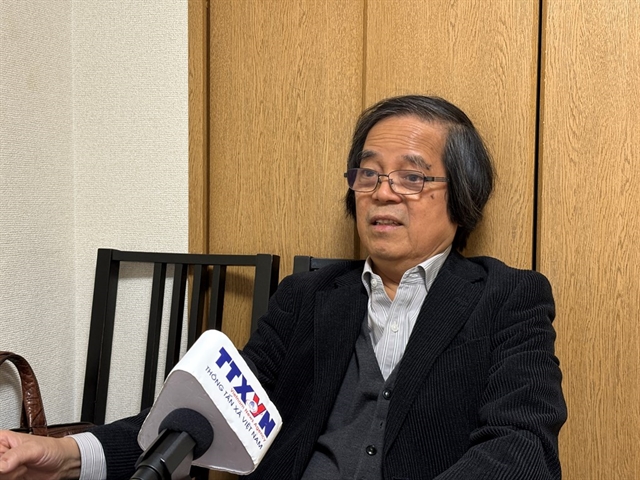 |
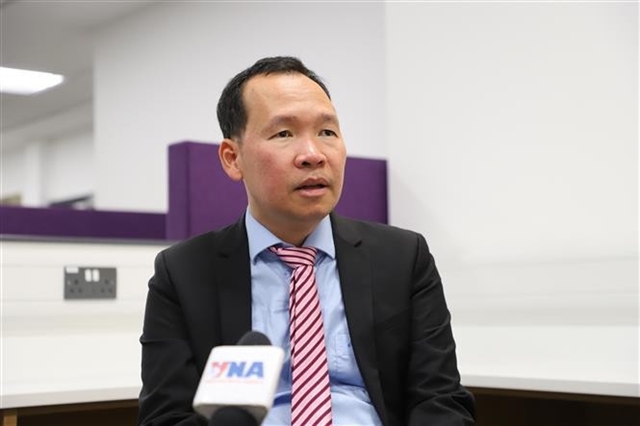
| Trần Văn Thọ, Emeritus professor at Waseda University in Japan. — VNA/VNS Photo |
Amid fast-changing global dynamics and rising strategic rivalry among major powers, strategic autonomy has emerged as a key theme in the draft documents for the 14th National Congress of the Communist Party of Việt Nam. Vietnam News Agency spoke with Trần Văn Thọ, Emeritus professor at Waseda University in Japan and a respected scholar on Việt Nam’s economy and national development, for deeper insight into the issue.
What is the significance of introducing the concept of strategic autonomy in the draft documents of the 14th Party Congress for Việt Nam’s economy and why is this the right time to set such a goal?
Based on a close reading of the draft Political Report to be submitted to the 14th Party Congress, the emphasis on strategic autonomy reflects the requirement to build an economy capable of self-adjustment and adaptation in an increasingly volatile international environment.
Strategic autonomy in the context of globalisation does not mean closing off or withdrawing from the international division of labour. On the contrary, Việt Nam still needs to continue deep and substantive integration into the global economy, closely linking itself with global markets in order to harness external capital, technology and markets for rapid and sustainable development.
After nearly 40 years of Đổi mới (Renewal) and around 30 years of deep international integration, Việt Nam has benefited greatly from globalisation. However, a high level of integration has also made the economy more vulnerable to geopolitical shocks, supply chain disruptions and competition among major powers. As global risks continue to rise, setting the goal of strategic autonomy is both timely and necessary. It underscores the principle that integration must go hand in hand with strengthening internal capacity so the country does not fall into a passive position when external shocks occur.
In reality, Việt Nam’s industrial sector remains heavily dependent on foreign direct investment (FDI). In your view, what should Việt Nam do to build strong internal capacity and strike a balance between attracting FDI and developing domestic strengths?
Việt Nam is one of the few countries with a large population whose industrial sector remains highly dependent on FDI enterprises. At present, this sector contributes around 20 per cent of GDP and more than 70 per cent of export turnover. These figures clearly reflect a significant level of dependence. The root cause lies in the still weak capacity of domestic enterprises.
Resolution 68 on private sector development is a correct and necessary orientation, as the private sector constitutes the most important foundation for building internal capacity. However, in practice, Việt Nam’s large private enterprises remain limited in their investment in industrial production, while small- and medium-sized enterprises face numerous procedural barriers and difficulties in accessing capital.
Meanwhile, State-owned enterprises tend to concentrate on banking, real estate and services rather than playing a leading role in industrial development at a time when the private sector remains weak.
When domestic enterprises lack sufficient strength, foreign corporations tend to invest with 100 per cent foreign ownership and are less inclined to form joint ventures. This limits opportunities for Vietnamese firms to access advanced technologies. Moreover, due to weak supporting industries and domestic value chains, FDI enterprises are forced to import most components and intermediate inputs.
To reduce dependence on FDI, Việt Nam needs to strongly develop its domestic private sector, especially small- and medium-sized enterprises; improve the business environment by reducing informal costs and administrative barriers; and enhance access to capital, technology and markets. Only when domestic enterprises become sufficiently strong, can Việt Nam truly balance integration with strategic autonomy.
Which areas should be given top priority to lay the foundation for strategic autonomy?
Strategic autonomy is a comprehensive issue encompassing the economy, science and technology, education, culture and institutions. In the long term, these factors must be addressed in a coordinated manner. However, the most fundamental and root factor remains institutions and governance mechanisms. An effective state apparatus provides the foundation for scientific and technological development, improvements in human resource quality and the construction of appropriate infrastructure.
Việt Nam has entered the group of upper-middle-income countries, a noteworthy achievement. Nevertheless, to become a high-income country by 2045, science and technology and education must be significantly upgraded. Currently, spending on research and development stands at around 0.7 per cent of GDP, far below the 1–1.5 per cent of GDP invested by East Asian economies when they were at a comparable stage of development.
Education and training remain overly focused on qualifications and degrees and are not sufficiently aligned with labour market needs, resulting in a shortage of high-quality human resources.
In addition, Việt Nam’s current foreign trade structure relies heavily on imports of intermediate inputs from China and the Republic of Korea, while exports are concentrated mainly on the US market. This is a model I refer to as the Pacific Triangle. This structure leaves the economy highly vulnerable to external shocks. Strategic autonomy requires gradually breaking out of this structure by strengthening domestic production capacity and diversifying export markets.
What are the greatest opportunities and challenges as Việt Nam seeks to transform the Pacific Triangle into a polygon in its pursuit of strategic autonomy?
Việt Nam possesses several important advantages, including a multilateral foreign policy, good relations with major powers, a favourable geographical location and a stable political environment. These are fundamental conditions for expanding its network of partners and participating more deeply in new value chains, thereby transforming the current triangle into a more flexible and less risky polygon.
However, the greatest challenge remains institutional capacity. Strategic orientations at the highest level are sound and timely, but implementation at lower levels remains slow and insufficiently coordinated. This is not merely a technical issue; it is also closely linked to public service culture, the sense of responsibility and ethics of civil servants, as well as business culture and broader social norms.
Only when institutions are reformed transparently and effectively, can policies be implemented in substance, creating a stable and healthy environment for enterprise development.
Looking ahead, if Việt Nam successfully pursues strategic autonomy over the next 15–20 years, what significant changes could the country achieve?
I believe that if Việt Nam remains steadfast in pursuing the goal of strategic autonomy, the country can become a high-income developed nation by 2045. However, economic growth must go hand in hand with improvements in people’s quality of life.
The experiences of Japan and China are instructive. Japan maintained high growth for nearly two decades while preserving a large share of household consumption, enabling living standards to improve rapidly. China, by contrast, achieved even higher growth, but an excessively high share of investment meant that household incomes and consumption grew more slowly.
To achieve high growth, Việt Nam must raise productivity, and the most effective way to do so is through institutional reform rather than relying solely on large-scale investment or technology. With sound institutions, productivity can increase without mobilising massive resources while ensuring that the benefits of growth are more widely shared among the population.
At the same time, greater attention must be paid to social issues, including support for low-income groups, improving healthcare and education in remote and disadvantaged areas, and increasing investment in disaster prevention and mitigation to reduce risks for citizens. If these efforts are carried out effectively, over the next 15–20 years Việt Nam will not only attain high-income status, but also emerge as a country with a high quality of life, civilised social values and harmoniously developed cities. — VNS
Opinion
 Opinion
 Opinion
.jpeg) Opinion
Opinion
 Opinion
 Opinion
 Opinion
 Opinion
 Opinion
 Opinion
 Opinion
 Opinion
 Opinion
 Opinion
 Opinion